
Implant Dentures in Northern Virginia: The Complete Restorative Guide
Traditional dentures treat missing teeth as a cosmetic gap, but tooth loss is fundamentally an architectural challenge. Without root stimulation, the underlying jawbone inevitably shrinks, causing uncomfortable shifting, embarrassing clicks during conversation, and an inability to chew crisp apples or savory steaks. If you’re exhausted by unreliable adhesives and changing facial contours, you already know how frustrating that daily compromise feels. By choosing modern implant dentures Northern Virginia patients can permanently halt bone resorption while securing a rock-solid, fully stabilized bite.
Implant-supported restorations are far more than aesthetic fixes; they are vital structural anchors engineered to preserve your facial profile and return natural biting power. In this comprehensive guide, you’ll discover how modern implant technology transforms loose prosthetics into permanent, worry-free smiles. We’ll walk through clinical candidacy, surgical planning, and clear recovery expectations, giving you the trusted insight needed to make the right restorative choice for your long-term health.
Key Takeaways
- Learn how modern implant dentures Northern Virginia dentists provide protect your jawbone health while restoring up to 80% of natural chewing strength.
- Compare the functional differences between loose conventional dentures and securely anchored restorations that eliminate messy adhesives entirely.
- Find out what qualifies you as a candidate and how comfortable 3D CBCT imaging maps your bone structure with pinpoint precision.
- Understand each phase of the restorative journey, from digital treatment planning to the gentle placement of your custom prosthetic.
- Discover the key clinical capabilities and advanced technologies to look for when choosing a trusted partner for your smile rehabilitation.
What Are Implant Dentures? Understanding Modern Tooth Replacement
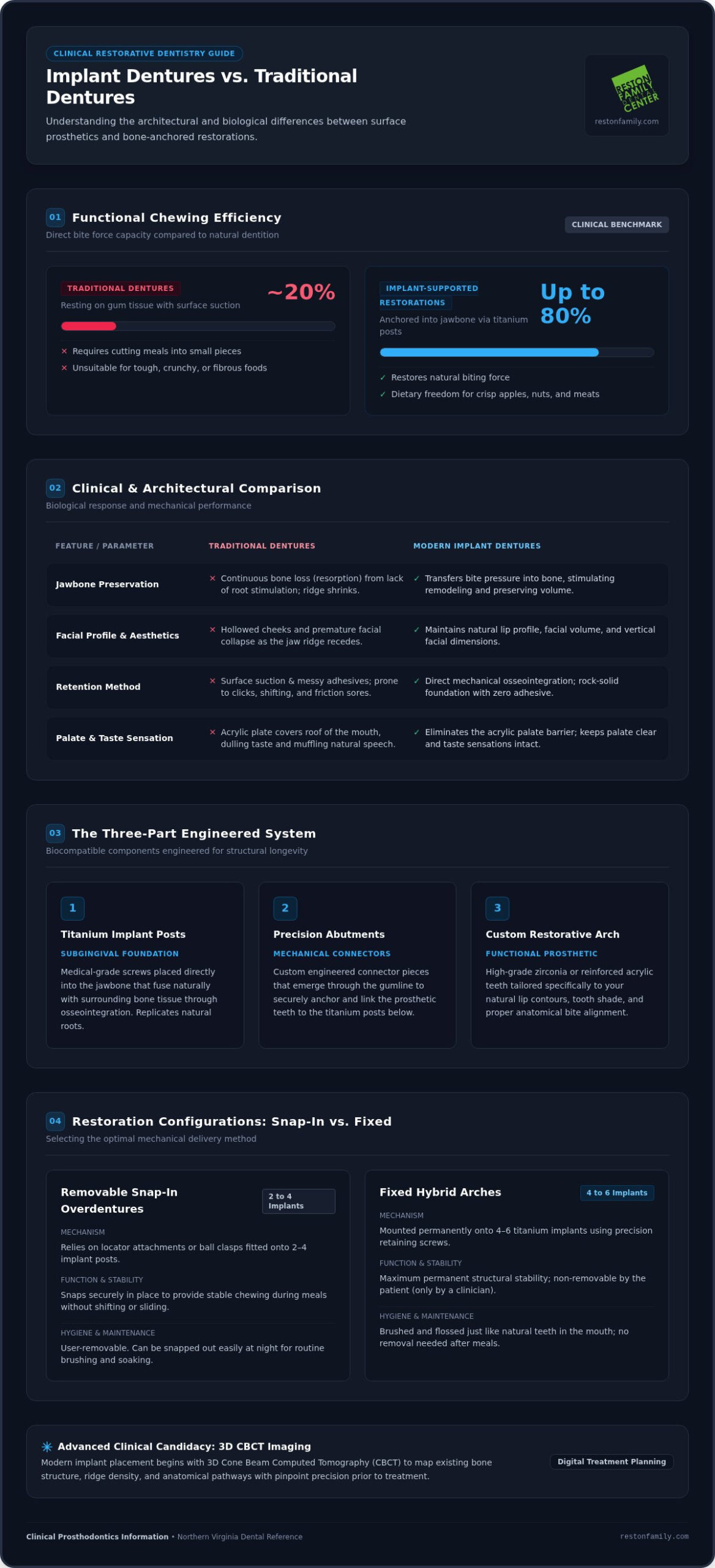
Implant dentures merge structural engineering with restorative dentistry. Rather than resting loosely on gum tissue, these custom prosthetics anchor into biocompatible titanium posts placed directly in the jawbone. This mechanical connection prevents shifting plates, eliminates messy adhesives, and spares you the painful friction sores common with traditional acrylic models. As you explore options for Understanding Modern Tooth Replacement, the central advantage becomes clear: the embedded posts replicate natural roots, transferring bite force into the jaw to stimulate bone growth and preserve facial volume over time.
When considering implant dentures Northern Virginia patients generally choose between two delivery methods, each tailored to specific functional needs, lifestyle preferences, and anatomic conditions.
The Core Components: Posts, Abutments, and Restorations
An implant denture functions as a three-part system designed for lasting stability and lifelike aesthetics:
- Titanium Implant Posts: Small medical-grade screws surgically positioned beneath the gums that fuse naturally with surrounding bone via osseointegration.
- Precision Abutments: Custom connector pieces that emerge above the gumline to secure the teeth to the underlying posts.
- Custom Restorative Arch: High-grade zirconia or reinforced acrylic prosthetics designed to match your natural lip profile, bite alignment, and tooth shade.
Removable Snap-In Dentures vs. Fixed Hybrid Arches
Mechanical mechanics distinguish these two primary configurations. Removable overdentures rely on locator attachments or ball clasps fitted to two to four implants. The appliance snaps firmly onto these housings, providing reliable chewing stability during meals while still letting you snap the bridge out for simple nightly brushing and soaking.
In contrast, fixed hybrid arches mount permanently onto four to six implants using precision retaining screws. Only a dental clinician can remove them. You brush and floss around the bridge just like real teeth, without removing hardware after meals. Patients seeking implant dentures Northern Virginia dental teams design will find that deciding between snap-in convenience and permanent fixed stability depends on your remaining bone structure, personal hygiene routine, and restorative goals.
Traditional Dentures vs. Implant Dentures: A Clinical Comparison
Conventional dentures rest directly on delicate gum tissue, relying entirely on surface suction and messy pastes to stay put. While they offer a fast way to replace missing teeth visually, their mechanical shortcomings quickly become apparent. Because conventional plates press down on the alveolar ridge without engaging the underlying bone, the jaw steadily shrinks over time. In contrast, choosing modern implant dentures Northern Virginia residents rely on provides a rock-solid foundation anchored directly into bone tissue. This fundamental difference transforms your oral health, bite strength, and daily comfort.
Bone Resorption and Facial Structure Changes
Natural teeth channel biting pressure through their roots, triggering cellular signals that tell your body to maintain jawbone density. When teeth are missing, that stimulation vanishes. Traditional dentures accelerate bone loss because continuous friction wears down the ridge, leading to hollowed cheeks and premature facial collapse. Implant posts reverse this cycle. By transmitting functional force directly into the jaw, they stimulate healthy bone remodeling. If you are assessing your physiological suitability, the FDA overview on whether are you a candidate for implant dentures highlights how bone preservation protects long-term oral architecture.
Chewing Efficiency, Dietary Freedom, and Comfort
Bite capacity directly defines your quality of life. Traditional dentures deliver roughly 20% of natural chewing efficiency, forcing you to cut meals into tiny bites and avoid tough or crunchy textures. Implant-supported arches restore up to 80% of natural chewing strength, letting you enjoy fibrous vegetables, nuts, and steaks with complete peace of mind.
Upper conventional dentures also require an acrylic plate covering the entire roof of your mouth, muffling speech and dulling taste sensations. Modern implant designs eliminate this palate barrier, leaving your palate clear and your sense of taste intact. For an in-depth clinical breakdown, review our detailed guide on implant supported dentures reston. When you’re ready to leave shifting plates behind, schedule a personalized consultation to start planning your smile renewal.
Are You a Candidate for Implant Dentures in Northern Virginia?
Many patients assume extensive tooth loss or years spent wearing conventional plates automatically rules them out from receiving implants. Fortunately, advanced diagnostic technology makes candidacy broader than ever before. Whether you are dealing with failing bridge work, periodontal challenges, or significant tooth loss, qualifying for modern implant dentures Northern Virginia practices provide centers on your current structural foundation and overall healing capacity rather than your age.
Evaluating Bone Volume and Advanced Bone Grafting
Sufficient bone height and density provide the foundation for long-term stability. Using low-dose 3D cone-beam computed tomography (CBCT), clinicians capture panoramic, cross-sectional views of your oral architecture in seconds. This scan reveals exact bone dimensions while mapping nerve canals and maxillary sinus cavities. If you have experienced prolonged bone loss, targeted bone grafting procedures can rebuild ridge dimensions prior to surgery. In many instances, strategically angled implants can anchor securely into your existing native bone, avoiding the need for supplemental grafting entirely.
Managing Systemic Health, Smoking, and Gum Tissue
Your systemic wellness plays a key role in how effectively bone cells integrate around titanium hardware. Managed conditions like type 2 diabetes or controlled cardiovascular concerns rarely prevent successful treatment. As detailed in the FDA patient guide to dental implants, clear communication with your clinical team ensures individual risk factors are properly addressed. While active gum disease must be resolved first, patients who smoke can still succeed by committing to temporary cessation protocols that safeguard post-operative blood flow and tissue healing.
Overcoming Dental Anxiety Through Modern Comfort Protocols
Apprehension surrounding oral surgery is completely normal, but restorative treatment should never feel stressful. Gentle practices prioritize a calm environment by combining local anesthetics with personalized dental sedation. Whether you benefit from light oral conscious relaxation or deeper sedation methods, the procedure itself remains entirely pain-free. Most individuals discover that recovery involves little more than mild tenderness, managed easily with simple over-the-counter pain relief. To explore clinical prerequisites in greater detail, consult our companion guide covering dental implants reston va.
The Treatment Journey: Step-by-Step Implant Denture Placement
Modern full-mouth restoration replaces guesswork with digital clarity. Through computer-guided planning and gentle clinical protocols, receiving implant dentures Northern Virginia dentists provide follows a structured, predictable timeline. Understanding each phase helps you feel supported and informed from your first consultation through to the moment your finished teeth are placed.
Step 1: Digital Consultation, Scans, and Virtual Planning
The journey starts with comprehensive diagnostics. High-resolution intraoral scanners capture detailed optical impressions of your oral tissues in minutes, bypassing gooey, gag-inducing physical trays. Clinicians merge these 3D surface models with your CBCT scan within specialized surgical software. This enables your dental team to calculate the exact angle, depth, and spatial orientation for every post. Digital facial mapping also evaluates your lip line and facial proportions, ensuring the planned prosthetic delivers balanced, youthful aesthetics before any physical step begins.
Step 2: Gentle Surgical Placement and Temporary Teeth
On procedure day, your clinician uses custom 3D-printed positioning guides to place the titanium posts directly into targeted bone sites. This guided approach keeps incisions tiny, protects surrounding soft tissue, and speeds early recovery. In most cases, you won’t leave the office with an empty gap. A temporary healing denture is fitted over the sites or secured to protective caps. Over the subsequent 3 to 6 months, osseointegration occurs as your native bone cells naturally bond with the titanium surfaces, creating a rigid foundation for your final smile.
Step 3: Custom Prosthesis Design and Final Delivery
Once bone healing is confirmed, your restorative team takes precise digital records of the matured gum contours and abutment positions. Skilled dental technicians craft your permanent restoration from high-grade ceramic or durable acrylic, matching your preferred tooth shade, natural light translucency, and ridge contour.
- Hardware Engagement: Locator housings or a custom-milled titanium bar are checked to ensure smooth, effortless connection.
- Occlusal Balancing: Your bite alignment is carefully adjusted to distribute biting forces evenly across all posts.
- Long-Term Guidance: You receive tailored home-care tips and specialized tools to keep your new restoration spotless.
Ready to experience the confidence of a fully secured bite? Contact our team at Reston Family Dental Center to begin mapping your personalized treatment path today.
Choosing Your Implant Denture Specialist in Northern Virginia
Full-mouth rehabilitation requires seamless coordination between surgical planning and restorative artistry. When seeking implant dentures Northern Virginia patients often experience frustration when referred back and forth between separate surgical offices and restorative clinics. Choosing a provider that handles both precision placement and custom prosthesis design under one roof ensures cohesive care, clear communication, and predictable clinical results.
Why Northern Virginia Patients Trust Reston Family Dental Center
Reston Family Dental Center pairs advanced in-office restorative technology with a warm, patient-first approach. By managing digital diagnostics, guided surgical planning, and final prosthesis fabrication within a single modern facility, our team ensures every phase of your care aligns perfectly with your goals. You won’t have to navigate disconnected offices or conflicting instructions. Conveniently located in Reston, we serve individuals and families throughout Herndon, Vienna, Great Falls, and Ashburn seeking dependable, stress-free full-arch rehabilitation.
Long-Term Maintenance and Protecting Your Restorative Investment
Caring for your new smile is straightforward, but consistency makes all the difference. Daily hygiene practices keep peri-implant tissues healthy and prevent biological complications:
- Removable Overdentures: Remove your appliance each night to clean it thoroughly with a soft brush and non-abrasive cleanser, then store it in an approved soaking solution.
- Fixed Hybrid Bridges: Clean around permanent abutments daily using water flossers, specialized floss threaders, or angled interdental brushes designed to sweep beneath the arch.
- Professional Cleanings: Schedule regular dental visits so your clinician can evaluate soft-tissue margins, confirm structural stability, and replace worn locator retention caps as needed.
A proactive hygiene routine preserves jaw integrity and ensures your prosthetic functions smoothly for years. Learn how ongoing preventative dental care reston clinicians provide can protect your oral health and safeguard your new smile for a lifetime.
Take the First Step Toward Lasting Smile Stability
Living with unstable dentures or progressive tooth loss shouldn’t dictate how you eat, speak, or smile. By anchoring custom prosthetics to biocompatible titanium roots, implant dentures Northern Virginia patients rely on provide a lasting defense against bone resorption while restoring genuine, reliable chewing strength. Advanced 3D digital planning and guided techniques ensure your care is precise, gentle, and customized to your unique facial anatomy.
You deserve a full, functional bite that feels completely secure every single day. At Reston Family Dental Center, our compassionate team brings advanced diagnostics, surgical precision, and restorative artistry together under one welcoming roof, proudly serving Reston, Herndon, and neighboring communities. Schedule your implant denture consultation with Reston Family Dental Center to protect your jawbone health, revitalize your smile, and regain total peace of mind.
Frequently Asked Questions About Implant Dentures
Can implant dentures be placed if I already have bone loss in my jaw?
Yes, existing bone loss rarely prevents you from receiving implant dentures. Clinicians use 3D CBCT scans to assess remaining bone volume with high precision. If resorption is significant, targeted bone grafting can rebuild ridge dimensions prior to surgery. In many instances, strategically angled posts maximize native bone contact, allowing patients throughout Northern Virginia to proceed without extensive reconstructive surgery.
How much do implant-supported dentures cost in Northern Virginia?
Total treatment costs depend on the number of implants placed, chosen prosthetic materials, and necessary preparatory treatments. When planning implant dentures Northern Virginia dental practices assess whether you need extractions, bone grafting, or specialized zirconia arches. Dental insurance plans occasionally cover specific restorative stages. Many practices also coordinate with third-party healthcare financing lenders to help break total fees into predictable, manageable monthly payments.
Is the dental implant placement procedure painful?
No, the placement procedure is virtually painless thanks to targeted local anesthesia and modern dental sedation options. Bone tissue contains very few pain-sensing nerve endings, so most patients report feeling light pressure rather than pain during surgery. After treatment, minor tenderness around the gum tissue is normal and easily managed with standard over-the-counter pain relievers within three to five days.
What is the primary difference between snap-in dentures and All-on-4 implants?
The primary difference centers on whether the restoration is removable by the patient or permanently anchored in place. Snap-in overdentures clip onto two to four implant posts with locator attachments, letting you remove the appliance nightly for cleaning. All-on-4 systems use four to six posts to secure a fixed hybrid bridge that only your dentist can remove, offering maximal chewing power without daily removal.
How long do implant-supported dentures typically last?
Titanium implant posts are designed to last a lifetime when properly integrated and maintained through routine cleanings. Clinical studies document long-term implant success rates between 95% and 98%. While the metal posts remain permanently fused to your jawbone, the custom prosthetic arch experiences natural chewing friction and may require relining or replacement after 10 to 15 years of daily use.
Can my existing conventional denture be converted into an implant denture?
In select cases, an existing conventional denture can be retrofitted with locator housings to attach to newly placed implants. However, your dentist must first examine the acrylic thickness, structural integrity, and tooth wear. If your current plate is worn down or out of alignment, fabricating a new custom prosthetic ensures better long-term durability, balanced bite forces, and an aesthetically pleasing smile.
How do I properly clean and care for my implant dentures daily?
Daily care depends on whether your appliance is removable or permanently fixed. For snap-in dentures, remove the plate each night, brush gently using a non-abrasive cleanser, and soak it in water. For permanently fixed arches, clean underneath the bridge daily using water flossers, specialized floss threaders, and small interdental brushes. Biannual professional cleanings keep peri-implant gums healthy and free of harmful plaque.