
Loose Dental Implant in Great Falls? What to Do Next
What if the part that feels loose isn’t the implant itself? A moving crown or connector can feel alarming, and the difference matters when deciding what to do next. If you’re searching for “fixing a loose dental implant Great Falls,” avoid putting pressure on the area and arrange a dental evaluation rather than trying to tighten anything yourself.
Until a dentist assesses it, limit chewing on that side and contact a dental practice promptly for guidance, especially if you have pain or swelling. An examination can help determine what’s moving and what may be causing the sensation.
This guide explains what to do before your appointment, how a dentist may assess a loose crown, connector, or implant fixture, and why the cause guides the next steps. Reston Family Dental Center provides dental implant and emergency dental care from its Reston location and serves Great Falls and nearby communities, including Ashburn, Chantilly, Herndon, and Vienna. You’ll also learn what information to share when arranging an implant evaluation.
Key Takeaways
- Movement alone doesn’t reveal whether the crown, abutment, or implant fixture is loose. An evaluation can help identify the source.
- The cause matters when considering repair or replacement, and a dentist will assess the relevant parts before discussing options.
- Protect the area before your appointment. Don’t glue, tighten, or remove components yourself.
- Learn the next steps for fixing a loose dental implant Great Falls patients may take when seeking care.
- Reston Family Dental Center serves Great Falls and offers dental implant and emergency dental care.
Loose Dental Implant in Great Falls: What May Be Moving?
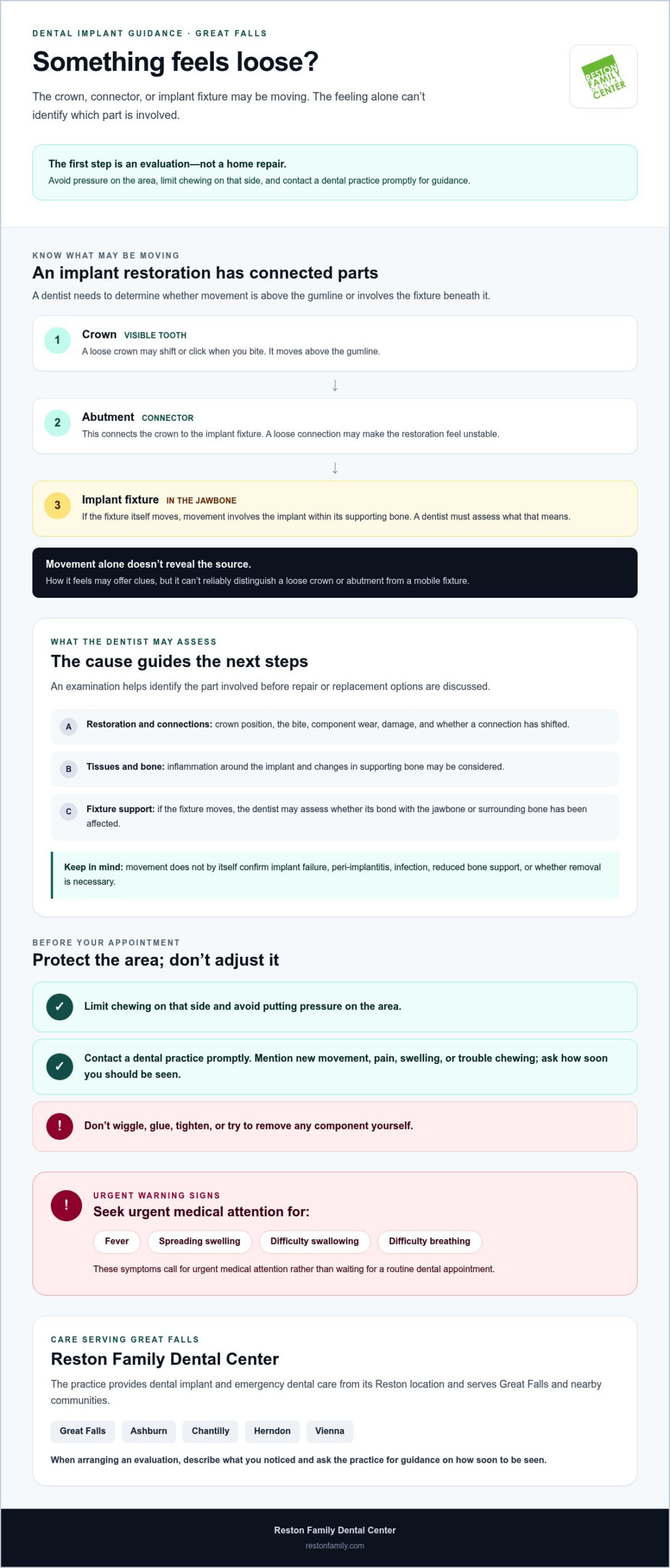
Movement is a reason to have your implant checked, but it doesn’t identify the cause on its own. The visible part may be loose while the implant fixture remains stable, or movement may involve the fixture beneath the gumline. Don’t keep testing it. Avoid chewing on that area and contact a dentist promptly to arrange an assessment.
An implant restoration has several connected parts. The crown is the visible tooth. An abutment connects the crown to the implant fixture, which is placed in the jawbone. A loose crown or abutment may shift or click when you bite. If the fixture itself moves, the sensation may seem deeper or involve the implant as a whole. These sensations can offer clues, but they can’t reliably identify what’s happening.
Is the implant loose, or is the crown moving?
It’s difficult to distinguish the source of movement by feel alone. The crown’s position, how your bite comes together, and the condition of parts below the gumline all matter. A dental examination is needed to determine whether the crown, abutment, or implant fixture is involved. That distinction guides what the dentist checks and which options may be appropriate.
The tissues and bone around an implant can also be relevant. For example, peri-implantitis refers to inflammation around an implant that can affect its supporting tissues. A loose sensation doesn’t confirm this or any other cause, so an assessment is the practical next step.
When should Great Falls patients seek urgent dental advice?
Contact a dentist promptly if you notice new movement, pain, swelling, or trouble chewing. Describe what you’ve noticed and ask how soon you should be seen. Reston Family Dental Center serves Great Falls from its Reston location and lists dental implants and emergency dental work among its services. Contact the practice to discuss your concern and appointment options.
Some symptoms call for urgent medical attention rather than waiting for a routine dental appointment. Seek urgent care for fever, spreading swelling, or difficulty swallowing or breathing. Don’t try to diagnose the problem or manage these warning signs at home.
If you’re looking into fixing a loose dental implant Great Falls, the first step is identifying what has moved. Until a dentist assesses it, avoid chewing on the area and don’t wiggle, tighten, glue, or try to remove any component yourself.
Why a Dental Implant Can Feel Loose: Causes a Dentist Checks
A loose sensation can come from different parts of the implant restoration. The crown or abutment connection may have shifted, or the implant fixture itself may be moving in the jaw. A dentist may assess component wear, damage to the restoration, inflammation, or changes in supporting bone. The feeling alone can’t identify which cause applies.
A loose crown moves above the gumline; a mobile implant fixture moves within its supporting bone. The distinction matters because the next step depends on which part is affected. Symptoms don’t confirm implant failure or determine whether removal is necessary. An examination is needed before a dentist can discuss the cause and options.
What can cause an implant crown or connection to move?
A crown or the small screw connecting it to the implant may loosen, making the restoration feel unstable. Damage to the crown or changes in how it fits may also contribute. These are possibilities, not a diagnosis. A dentist can check the restoration and its connections to determine what has shifted and whether repair or replacement should be considered.
The assessment helps distinguish an issue with a replaceable component from one involving the fixture. Don’t try to tighten or adjust anything yourself. Doing so can make it harder to assess the parts and may cause further damage.
What might movement of the implant fixture indicate?
Osseointegration is the process by which the implant bonds with the surrounding jawbone, providing support. If the fixture itself moves, a dentist may assess whether that bond or the surrounding bone has been affected. Infection and reduced bone support are possible concerns, but movement alone doesn’t prove either one.
The American Academy of Periodontology explains conditions affecting the tissues around implants in its guide to peri-implant diseases. These conditions require professional assessment. Symptoms such as soreness or swelling can’t establish a specific diagnosis on their own. A dentist can examine the implant and determine what further evaluation is appropriate.
If you’re searching for “fixing a loose dental implant Great Falls,” focus first on identifying the source of movement rather than assuming the implant must be removed. Reston Family Dental Center serves Great Falls from its Reston location and provides dental implant care. Learn more about dental implant care or contact the practice to discuss an evaluation.
Loose Implant Repair or Replacement? How Great Falls Patients Can Compare Options
Movement doesn’t automatically mean a dental implant must be removed. The next step depends on which component is loose and what the dentist finds during an examination. If the implant fixture is stable, the concern may involve the crown or its connection. If the fixture moves, the dentist will assess the implant and surrounding tissues before discussing possible treatment.
An examination, with imaging when appropriate, can help clarify the situation. The table outlines possible pathways, not a diagnosis or a promise of a particular result.
| What may be moving | What the dentist may assess | Possible discussion |
|---|---|---|
| Crown or connecting component | Stability, fit, and condition of the restoration and connection | Whether repair, adjustment, or replacement of a component may be appropriate |
| Implant fixture | Fixture movement and the condition of the surrounding tissues and supporting bone | Whether further treatment is needed and what options may be considered |
When might a dentist repair or secure the restoration?
If the fixture is stable, a dentist may consider addressing the crown or connection rather than the implant itself. The clinician first needs to identify which component has shifted and check for wear or damage. The right approach depends on those findings, so don’t assume repair or replacement before the evaluation.
When might the implant fixture need further treatment?
Movement of the fixture calls for careful assessment of the implant and surrounding tissues. Inflammation and bone-support concerns are among the issues a dentist may evaluate. The American Academy of Periodontology describes conditions affecting implant-supporting tissues in its overview of peri-implant diseases, but a loose sensation alone can’t establish a diagnosis or determine whether removal is needed.
After the assessment, ask what the clinician found, which options may fit those findings, and what follow-up each option involves. That conversation can help you consider next steps without committing to treatment before the cause is clear. For patients researching fixing a loose dental implant Great Falls, an evaluation is the way to move from uncertainty to an informed discussion. Reston Family Dental Center serves Great Falls from its Reston location and offers dental implant care. Review its dental implant services or contact the practice about arranging an evaluation.
What to Do Before Your Implant Appointment Near Great Falls
A few careful steps can help protect the area and give the dentist useful information. Don’t try to identify the loose component by moving it repeatedly. Instead, take these precautions while arranging professional advice:
- Stop testing the movement. Avoid wiggling, pushing, or repeatedly biting down to see whether the implant shifts.
- Protect the area. Avoid hard or sticky foods and chew on the other side. Keep up gentle oral hygiene, but don’t force a brush or other object around the implant or manipulate the crown, denture, or connector.
- Contact a dentist. Describe what you’ve noticed and ask about arranging an evaluation. Don’t glue, tighten, or attempt to remove any implant component at home.
These are temporary precautions, not a substitute for personalized dental advice. For broader background on implant care and treatment, you can read this complete guide to dental implants in Reston.
What information should you share when you call?
Clear details can help the dental team understand your concern and advise you on what to do next. Note when the movement began, whether it seems to involve the crown, an implant-supported denture, or the implant area, and whether chewing has changed. Mention pain, bleeding, swelling, or fever, as well as any recent impact to the mouth.
If you know when the implant was placed or have relevant implant records, share that information too. You don’t need to determine the cause before calling. Describe what you feel and what you’ve observed.
How to protect the area until a dentist assesses it
Choose softer foods if needed, and avoid chewing on the affected side until you’ve received professional guidance. Brush gently around the area without pressing or trying to reposition anything. Don’t rely on home devices, rinses, or medication as a replacement for advice tailored to your situation. If symptoms change or worsen, let the dental team know.
If you’re in Great Falls and need an implant evaluation, Reston Family Dental Center serves the area from its Reston location. Share your symptoms and ask about appointment options through the practice’s contact page. A dentist can assess what’s moving and discuss appropriate next steps.
Arrange a Dental Implant Evaluation Serving Great Falls
An implant evaluation can help identify whether movement involves the restoration, its connection, or the implant fixture. That finding gives you and the dentist a clearer basis for discussing next steps. Depending on the assessment, the conversation may cover repair, monitoring, or further treatment. No single option can be recommended before the cause is understood.
Reston Family Dental Center offers dental implant and restorative care from its Reston location and serves Great Falls, Ashburn, Chantilly, Herndon, and Vienna. If you’ve noticed movement, contact the practice to explain your concern and ask about arranging an evaluation. The team can discuss appointment options without assuming in advance what treatment you’ll need.
What may happen during an implant assessment?
The dentist will typically ask about your symptoms and implant history, then examine the restoration and surrounding tissues. Share when you first noticed movement and whether you’ve had discomfort, swelling, or a recent impact. If clinically appropriate, the dentist may recommend imaging to learn more about the implant and its support.
After reviewing the findings, the dentist can explain what may be involved, discuss suitable options, and outline any recommended follow-up. Ask questions if you’re unsure why a particular next step is being considered. Understanding what the assessment showed can help you make an informed decision about care.
How to choose your next step in Great Falls
Contact a dentist familiar with implant restorations promptly, and bring prior implant records or details about the original treatment if you have them. This information may help the clinician understand the implant’s history. If your restoration is an implant-supported denture, you can also read this guide to implant-supported dentures.
For help with fixing a loose dental implant Great Falls, reach out to Reston Family Dental Center to discuss your concern and ask about an evaluation. A careful assessment is the practical starting point for understanding what’s moving and which options may be appropriate. Contact the Reston practice to take that next step.
Take the Next Step Toward Clear Answers
A loose-feeling implant doesn’t automatically mean the fixture has failed or needs removal. The crown, connector, and implant itself can each be involved, so an evaluation is the way to identify what’s moving and discuss appropriate options. Until then, avoid chewing on the area and don’t try to adjust any component yourself.
If you’re looking into fixing a loose dental implant Great Falls, Reston Family Dental Center offers dental implant and restorative care from its Reston location and serves Great Falls and nearby communities, including Ashburn, Chantilly, Herndon, and Vienna. Emergency dental work is also among the practice’s listed services. Contact the practice to describe what you’ve noticed and ask about arranging an evaluation. The assessment findings will guide the discussion, whether that involves repair, monitoring, or further treatment.
Contact Reston Family Dental Center to discuss an implant evaluation. A careful assessment can help you understand what to do next.
Frequently Asked Questions
Can a loose dental implant be tightened at home?
No. Don’t try to tighten, glue, wiggle, or remove an implant crown, connector, or other component yourself. You may damage the restoration or make it harder for a dentist to assess what’s moving. Avoid chewing on the affected side, and contact a dentist for guidance. Even if the movement seems minor, an examination is the reliable way to identify the source and discuss an appropriate next step.
Does a loose dental implant always need to be removed?
No. Movement doesn’t automatically mean the implant fixture has failed or needs removal. Sometimes the crown or a connecting component has shifted while the fixture remains stable. A dentist needs to examine the restoration and implant, and may recommend imaging when appropriate. The findings guide whether repair, monitoring, or further treatment is discussed. Don’t assume the outcome before the cause has been assessed.
What should I do if my dental implant feels loose in Great Falls?
If you searched “fixing a loose dental implant Great Falls,” start by avoiding pressure on the area and contacting a dentist promptly. Don’t chew on that side or repeatedly test the movement. Reston Family Dental Center is located in Reston and serves Great Falls, Ashburn, Chantilly, Herndon, and Vienna. Describe what feels loose and any pain or swelling when you call, and ask about arranging an evaluation.
Can a loose implant crown be repaired without replacing the implant?
It may be possible if the crown or connection is loose and the implant fixture is stable, but an examination is needed to confirm that. The dentist will assess which component has moved and check its condition before discussing repair or replacement options. A loose crown doesn’t, by itself, establish that the implant needs replacing. Don’t attempt to secure the crown at home. Let a dentist determine the appropriate approach.
What causes a dental implant to become loose years later?
Several factors may contribute, including a crown or connecting component becoming loose or damaged, inflammation around the implant, or changes in the supporting bone. The cause can’t be determined from the sensation alone, even if the implant has been in place for years. A dentist can review your implant history and examine the restoration and surrounding tissues to identify what may be involved and whether further assessment is needed.
Is a loose dental implant an emergency?
New movement should be discussed with a dentist promptly, particularly if you also have pain, swelling, bleeding, or trouble chewing. Contact the practice and explain your symptoms so you can ask how soon you should be seen. Fever, spreading swelling, or difficulty swallowing or breathing call for urgent medical attention. Don’t try to manage these warning signs by adjusting the implant or relying on home care alone.
What happens during an appointment for a loose dental implant?
The dentist will ask when the movement began, review relevant implant history, and examine the crown, connection, implant area, and surrounding tissues. Imaging may be recommended if clinically appropriate. The assessment helps identify which component is involved and informs a discussion of possible next steps, which may include repair, monitoring, or further treatment. Bring implant records or details about the original treatment if they’re available.