Toothache Emergency Dentist Near Me: Urgent Care in Reston, VA
Could the toothache keeping you awake signal a problem that shouldn’t wait? If you’re searching for a toothache emergency dentist near me in Reston, pain or swelling may already be affecting eating, work, or sleep. It can be hard to know whether you need a dentist or emergency medical care.
Severe, persistent pain, facial swelling, an abscess, uncontrolled bleeding, or a damaged tooth calls for prompt attention. Trouble breathing or swallowing needs emergency medical care. Reston Family Dental Center provides emergency dental work and can assess urgent tooth pain.
This guide explains which symptoms warrant urgent dental assessment, which signs require medical attention, and what temporary steps may help while you arrange care. You’ll also learn what to expect during an emergency dental visit, from an exam and diagnostic imaging to a discussion of treatment options such as root canal therapy or a crown when appropriate. The cause and condition of the tooth guide the next steps, so a timely assessment can help you understand what’s happening and how to move forward.
Key Takeaways
- Sudden or worsening tooth pain deserves professional assessment; symptoms alone can’t identify the cause.
- Decay, a crack, infection, or gum problems may lead to toothache, so treatment depends on an examination.
- Gentle rinsing with warm water and careful flossing may help if food is trapped, but home care is only temporary.
- At an emergency visit, you’ll describe your symptoms, receive an assessment, and review findings and possible next steps.
- Searching for a toothache emergency dentist near me in Reston? Reston Family Dental Center assesses urgent tooth pain for patients in Reston and nearby communities.
Toothache Emergency Near Reston: When Should You Seek Urgent Dental Care?
Sudden or worsening tooth pain can disrupt sleep, meals, and your ability to focus. It’s natural to wonder whether you can wait or need help now. A dental emergency needs prompt professional assessment. You aren’t expected to diagnose it at home. Tooth pain can have different causes, and learning what a toothache is doesn’t replace an examination of the tooth and surrounding tissues.
If you’re searching for a toothache emergency dentist near me, consider how severe the pain is and whether it’s changing. Severe, persistent, or worsening pain merits timely dental attention, even if you can’t see a visible problem. Swelling, a broken tooth, or an injury to your mouth or teeth also calls for prompt assessment. Bleeding that doesn’t stop needs urgent attention.
Which toothache symptoms need prompt dental attention?
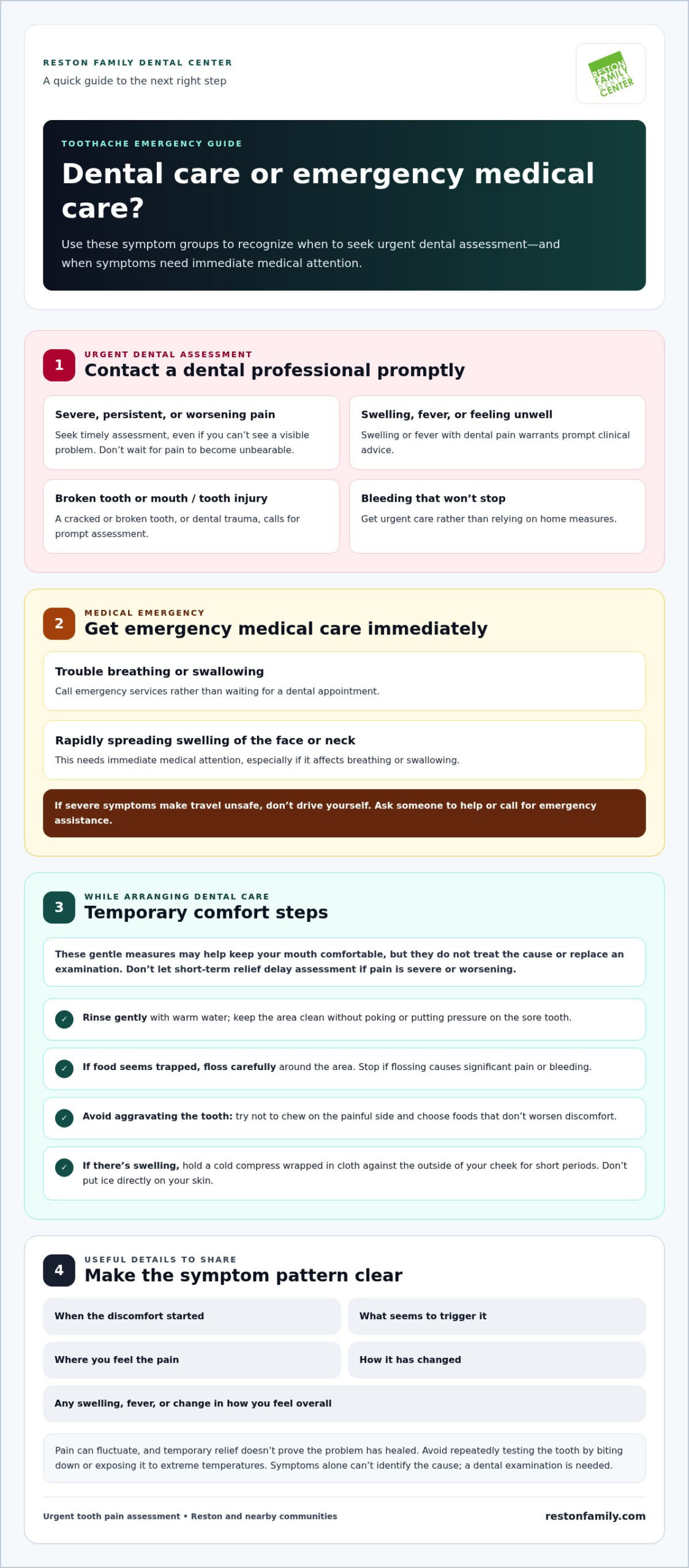
Contact a dental practice promptly about significant pain, swelling, a cracked or broken tooth, or dental trauma. Don’t wait for pain to become unbearable. Symptoms can’t reliably show whether the cause is decay, a crack, infection, or another problem. If swelling comes with a fever or you feel unwell, seek prompt clinical advice. For uncontrolled oral bleeding, get urgent care rather than relying on home measures.
When should tooth pain mean calling emergency services?
Trouble breathing or swallowing is a medical emergency. Rapidly spreading swelling of the face or neck also needs immediate medical attention, especially if it affects breathing or swallowing. Call emergency services rather than waiting for a dental appointment. If severe symptoms make it unsafe to travel, don’t drive yourself. Ask someone to help or call for emergency assistance.
Quick guide: Severe or persistent tooth pain, swelling, a broken tooth, dental trauma, or bleeding that won’t stop calls for urgent professional assessment. Trouble breathing or swallowing, or rapidly spreading facial or neck swelling, calls for emergency medical care.
If symptoms are less clear, describe what you’re experiencing and how it’s changing to a dental professional. They can guide you toward an appropriate next step. If symptoms become severe or you develop emergency warning signs, seek medical help immediately.
What Causes an Emergency Toothache, and Why Can Pain Change?
Tooth pain can have several causes, and the sensation alone can’t pinpoint which one is responsible. A cavity, a crack, infection, or gum problems may all cause discomfort, but similar symptoms can have different explanations. A dental examination is needed to identify the source of tooth pain and determine what care may help.
That’s why a search for a toothache emergency dentist near me is a useful next step when pain is severe, persistent, or getting worse. Temporary relief doesn’t necessarily mean the underlying problem has healed. Pain may ease while the tooth or surrounding tissue still needs professional attention.
Can a cavity, crack, or infection cause severe tooth pain?
As decay progresses, it may reach deeper tooth structures and irritate sensitive tissue. A cracked tooth can hurt when you bite or when your teeth meet, though the pattern can vary. Infection is another possibility, particularly when pain occurs with swelling or fever. These clues can help you describe what you’re experiencing, but they can’t confirm the cause. Swelling or fever alongside dental pain warrants prompt clinical assessment.
Why might tooth pain come and go?
Pain may flare in response to hot, cold, or sweet foods, or when chewing. It may also lessen and return. A change in intensity doesn’t prove that the problem has resolved. Symptoms can fluctuate even when the cause remains. Notice what seems to trigger the pain and whether it’s becoming more frequent or stronger.
Before your assessment, note when the discomfort started, what brings it on, where you feel it, and whether you’ve noticed swelling, fever, or a change in how you feel overall. These details give the dental team useful context alongside an examination. Avoid testing the tooth repeatedly by biting down or exposing it to extreme temperatures, which may provoke more discomfort.
Reston Family Dental Center provides emergency dental work, including assessment of urgent tooth pain. The appropriate next step depends on the findings and the tooth’s condition. If pain is continuing or changing, arrange a professional emergency dental assessment rather than relying on temporary symptom relief.
Toothache Care: Home vs. Emergency Dentist Safety
While arranging professional care, a few gentle steps may help keep your mouth comfortable. They’re temporary measures, not treatment for the cause of the toothache, and they don’t replace a dental examination. If pain is severe or worsening, don’t let short-term relief delay arranging an assessment with a toothache emergency dentist near me.
What can you do for tooth pain before an appointment?
Keep the area clean without poking or putting pressure on the sore tooth. Rinse gently with warm water. If you think food is trapped, carefully floss around the area, and stop if flossing causes significant pain or bleeding. Try not to chew on the painful side, and choose foods that don’t aggravate the tooth.
If swelling is present, hold a cold compress wrapped in cloth against the outside of your cheek for short periods. Don’t put ice directly on your skin. While waiting to speak with a dental professional, note when the pain began, what seems to trigger it, how it has changed, any other symptoms, and any medicines you’ve taken. This record can help the dental team understand your situation.
Which toothache remedies should you avoid?
Don’t place aspirin or other pain medicine directly on a tooth or gum. It can irritate or injure the tissue and won’t address the underlying dental problem. Avoid unprescribed remedies, applying heat to facial swelling, or trying to puncture or drain a swollen area yourself.
If you use an over-the-counter medicine, follow its label and any guidance from your clinician. Don’t take more than directed or combine medicines without checking that it’s safe for you. If you’re unsure what’s appropriate, seek professional advice rather than guessing.
Before your dental assessment:
- Rinse gently with warm water and floss carefully only if food may be trapped.
- Use a cloth-wrapped cold compress outside the cheek if there’s swelling.
- Avoid chewing on the painful side and keep track of symptom changes and medicines taken.
Even if these steps ease discomfort, the pain may return. Temporary relief doesn’t establish that the tooth has healed. An examination helps identify what’s causing the problem and what care may be appropriate. If symptoms are urgent, contact a dental professional promptly. If you have difficulty breathing or swallowing, seek emergency medical care.
What to Expect From an Emergency Dentist Visit Near Reston
Not knowing what an urgent dental visit involves can add stress to an already difficult day. The process focuses on understanding the problem, assessing the affected tooth and surrounding tissues, and explaining possible next steps. If you’re searching for a toothache emergency dentist near me, sharing clear details can help the dental team understand your concern from the start.
What information should you share when calling about tooth pain?
Describe where the pain is, when it began, and whether it’s becoming more intense or frequent. Mention what seems to trigger it, such as chewing or temperature changes, and share any swelling, fever, injury, bleeding, or difficulty opening your mouth. Let the dental team know about medicines you take, allergies, and relevant health conditions. These details help the team understand your situation and guide the next step.
How does a dentist decide which treatment may help?
At the visit, the dentist will assess the problem area and may use appropriate imaging to evaluate the tooth and surrounding tissues. They’ll review the findings and explain the options in terms you can understand. The right treatment depends on the cause of the pain and the tooth’s condition, so no particular procedure should be assumed before the assessment.
If a tooth is damaged or infected, root canal therapy may be considered when clinically appropriate. A crown may be recommended to protect a tooth, depending on the examination findings. In other cases, a different approach may better address the problem. The dentist can explain the reasoning behind the options and discuss next steps with you.
You can think of the visit as a straightforward sequence:
- Describe: Share your symptoms, their timing, and relevant health information.
- Assess: The dentist examines the affected area and uses imaging when appropriate.
- Review: Discuss the findings and what they may mean for the tooth.
- Plan: Consider suitable care based on the diagnosis and your tooth’s condition.
Emergency care focuses first on the concern that brought you in. If you’d also like guidance on maintaining oral health between visits, explore the practice’s comprehensive preventative dental care guide. For urgent tooth pain in Reston, schedule an emergency dental assessment with Reston Family Dental Center to have the problem evaluated and your options explained.
Find Toothache Emergency Dental Care in Reston and Nearby Communities
If you’re in Reston and tooth pain is worsening, Reston Family Dental Center provides emergency dental assessment. The practice also serves nearby Northern Virginia communities, including Great Falls, Ashburn, Chantilly, Herndon, and Vienna. A prompt assessment can help clarify what’s causing the discomfort and which next steps may be appropriate.
Care depends on the examination and the condition of the tooth. Depending on the findings, treatment may involve restorative care, such as a crown, or root canal therapy. If a tooth can’t be saved, your dentist can discuss options for replacing it, including dental implants when appropriate. The goal is to understand your choices and make a plan based on your needs, not to assume a procedure before the assessment.
How to prepare for urgent dental care in the Reston area
When you contact the practice, be ready to describe where the pain is, when it began, and whether it’s changing. Have a list of current medicines and relevant health details handy. If readily available, bring relevant dental records or insurance information. Follow any direct instructions the dental team gives you before your visit.
These details help the team understand your concern and prepare for a focused assessment. You don’t need to know what’s causing the pain before you reach out. Share what you’ve noticed, including any injury or other symptoms.
When should you contact Reston Family Dental Center?
Contact the practice promptly if tooth pain is severe, persistent, getting worse, or follows an injury. Describe your symptoms to the team and discuss the appropriate next steps. If you have difficulty breathing or swallowing, seek emergency medical care immediately rather than waiting for a dental assessment.
If you’re searching for a toothache emergency dentist near me in Reston or a nearby community, you don’t have to work out the cause on your own. Reach out to Reston Family Dental Center to discuss urgent symptoms and arrange professional assessment. After an examination, the dental team can explain care options suited to the findings.
Take the Next Step Toward Toothache Relief
Severe, persistent, or worsening tooth pain deserves professional attention, and symptoms alone can’t tell you what’s causing it. Gentle home measures may offer temporary comfort, but they don’t replace an examination. If you have trouble breathing or swallowing, seek emergency medical care right away.
If you’re searching for a toothache emergency dentist near me in Reston, Reston Family Dental Center provides emergency dental work for urgent concerns. After assessing the tooth, the dentist can explain next steps based on the findings. Depending on what’s needed, care may include root canal therapy or a same-day dental crown. The practice serves Reston and nearby Northern Virginia communities.
Don’t let uncertainty keep you from asking for help. Contact Reston Family Dental Center about your toothache to discuss your symptoms and next steps. Reaching out is a practical first step toward understanding the problem and your care options.
Frequently Asked Questions
Is a toothache considered a dental emergency?
It can be, especially if the pain is severe, persistent, worsening, or accompanied by swelling, injury, or bleeding that won’t stop. A dentist can assess the problem and determine how urgently it needs care. Pain alone can’t reveal its cause. If you’re searching for a toothache emergency dentist near me, describe your symptoms clearly when contacting a practice serving Reston and nearby communities.
Can I go to the emergency room for a toothache?
Go to an emergency department or call emergency services if you have trouble breathing or swallowing, or rapidly spreading swelling of your face or neck. These symptoms may need immediate medical attention. For tooth pain without those warning signs, a dental practice can examine the tooth and discuss dental treatment. If severe symptoms make travel unsafe, don’t drive yourself. Call for emergency help or ask someone to assist you.
What should I do for a toothache before seeing a dentist?
Rinse gently with warm water and carefully floss if food may be trapped. Avoid chewing on the painful side. If your cheek is swollen, you can hold a cold compress wrapped in cloth against it for short intervals, but don’t put ice directly on your skin. Follow the label and clinician guidance for any over-the-counter medicine. Don’t put aspirin on the tooth or gum, and arrange a dental assessment.
How do I know if tooth pain is caused by an infection?
You can’t confirm an infection from symptoms alone. Tooth pain with swelling, fever, or feeling unwell can be concerning and warrants prompt clinical advice, but other dental problems can cause similar discomfort. A dentist needs to examine the tooth and surrounding tissues to assess the cause. If swelling spreads quickly or you have trouble breathing or swallowing, seek emergency medical care rather than waiting for a dental appointment.
Can an emergency dentist save a badly damaged tooth?
Possibly, but the dentist must first examine the tooth and determine its condition. Depending on the findings, treatment may include restorative care, root canal therapy, or a crown to protect the tooth. Whether it can be saved depends on the damage and clinical assessment, so no specific outcome can be promised beforehand. If the tooth can’t be preserved, the dentist can explain appropriate next steps and replacement options.
What happens during an emergency dentist appointment for a toothache?
You’ll describe your symptoms and relevant health information, then the dentist will assess the affected area. Appropriate imaging may help evaluate the tooth and surrounding tissues. The dentist will explain the findings and discuss possible next steps based on the cause and condition of the tooth. Reston Family Dental Center provides emergency dental work for urgent concerns, with care options explained after assessment.
Should I wait for a toothache to go away on its own?
Don’t rely on pain easing as proof that the problem has resolved. Tooth pain can fluctuate, and temporary relief doesn’t identify or treat the underlying cause. Arrange dental assessment if pain is severe, persistent, worsening, or follows an injury. Note when it began and what triggers it. If you’re in Reston, Great Falls, Ashburn, Chantilly, Herndon, or Vienna, seek professional guidance for concerning symptoms.