Emergency Dental Care for Vienna, VA College Students
A toothache that starts during a lecture can feel easy to postpone, especially when you’re unsure whether it’s truly urgent. But severe pain, bleeding, or a damaged tooth deserves prompt attention. Searching “emergency dental care for college students Vienna” often starts with one question: what should you do right now?
It’s understandable to worry about pain getting worse during class or overnight, or about finding care while you’re away from home. First, recognize signs that need emergency medical help, then protect your tooth or mouth while arranging dental care. This guide explains safe first steps for common dental emergencies, when to seek urgent medical attention, and what a dental evaluation may involve. Reston Family Dental Center serves patients in Vienna and nearby Northern Virginia communities, including Reston, Great Falls, Ashburn, Chantilly, and Herndon, with emergency dental work and restorative care guided by your condition. Knowing what to do can make a stressful moment feel more manageable.
Key Takeaways
- Learn how to tell when a dental problem needs prompt professional attention and when symptoms may call for emergency medical help.
- Find safe first steps for a chipped, cracked, or knocked-out tooth, and what to avoid when you have a toothache.
- Understand what to expect during emergency dental care for college students Vienna, from describing symptoms to discussing possible next steps.
- Prepare for an urgent visit by noting when symptoms began and gathering identification, medication information, and available dental or insurance details.
- See how an evaluation can guide emergency and restorative care based on your individual condition.
Emergency dental care for college students in Vienna: what needs attention now?
A sudden toothache or injury can make it hard to decide whether to pause your day and seek help. Start by distinguishing a problem that needs prompt dental assessment from symptoms that could signal an immediate threat to your health.
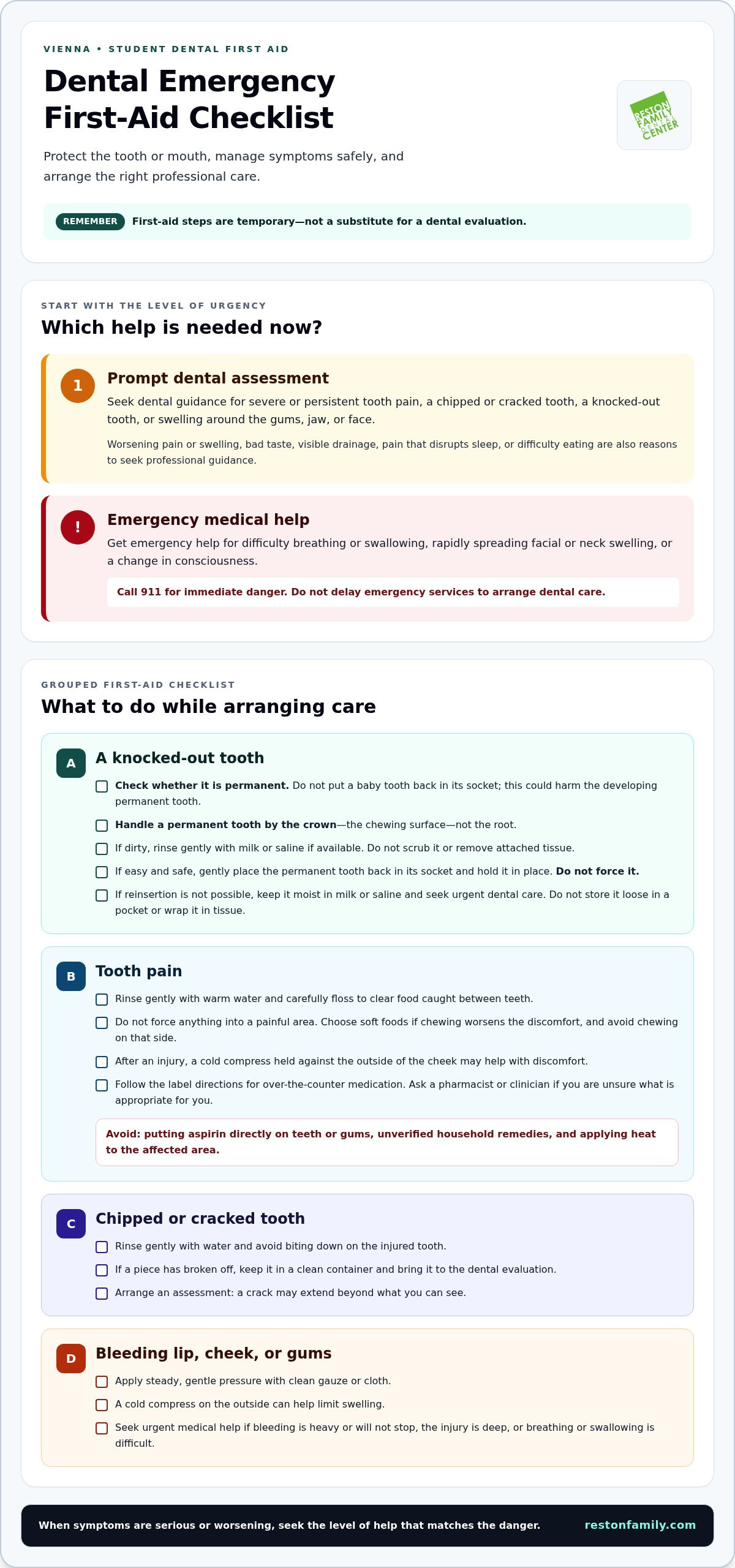
A dental emergency is a problem involving the teeth or mouth that needs timely professional assessment for significant pain, injury, bleeding, or possible infection. The overview What is a Dental Emergency? describes common causes and why professional care may be needed. In short, a dental emergency calls for prompt dental evaluation, while difficulty breathing, swallowing, or staying conscious may require emergency medical help first.
For emergency dental care for college students Vienna-area students can use, the right next step depends on your symptoms and whether they are changing. A symptom alone doesn’t confirm a diagnosis. A dental professional can assess the problem and discuss an appropriate plan.
Which symptoms call for prompt dental attention?
Arrange a dental assessment for severe or persistent tooth pain, a chipped or cracked tooth, a tooth knocked out by an injury, or swelling around the gums, jaw, or face. Pain that disrupts sleep or makes it difficult to eat also deserves attention, even if it comes and goes.
Pay attention to changes. Worsening pain, increasing swelling, or signs that may suggest infection, such as a bad taste or visible drainage, shouldn’t be ignored. These symptoms don’t confirm the cause, but they are reasons to seek professional guidance rather than wait and see.
When is emergency medical help more appropriate?
Get emergency medical help if you have difficulty breathing or swallowing, rapidly spreading facial or neck swelling, or a change in consciousness. These symptoms can indicate a serious, potentially life-threatening situation. Call 911 for immediate danger, and don’t delay emergency services while trying to arrange dental care.
Once the immediate danger is addressed, dental follow-up may still be needed to evaluate the tooth or mouth problem. If you’re unsure whether a symptom is becoming dangerous, treat breathing, swallowing, or consciousness changes as urgent and seek emergency help.
Quick guide:
- Prompt dental assessment: severe or persistent tooth pain, dental injury, or swelling that needs evaluation.
- Emergency medical help: difficulty breathing or swallowing, rapidly spreading facial or neck swelling, or loss of consciousness.
When symptoms are serious or worsening, don’t wait for a convenient break between classes. Seek the level of help that matches the danger, then follow through with dental evaluation as needed.
Dental emergencies in Vienna: understand common problems and first steps
Knowing what to do in the first few minutes can help protect an injured tooth while you arrange professional care. Avoid further trauma, manage discomfort or bleeding safely, and get dental guidance promptly. These measures are temporary, not a substitute for an evaluation.
What should you do after a tooth is knocked out?
First, determine whether it’s a permanent tooth. Don’t try to put a baby tooth back into its socket, since doing so could harm the developing permanent tooth. If a permanent tooth is knocked out, handle it by the crown, the chewing surface, rather than the root. If it’s dirty, rinse it gently with milk or saline if available; don’t scrub it or remove attached tissue.
If you can do so easily and safely, gently place the permanent tooth back in its socket and hold it in place. Don’t force it. If reinsertion isn’t possible, keep the tooth moist in milk or saline while you seek urgent dental care. Avoid storing it loose in a pocket or wrapping it in tissue. Arrange care promptly, and don’t assume the tooth can or can’t be saved without an assessment.
How can you manage tooth pain while arranging care?
For a toothache, rinse gently with warm water and carefully floss to clear food that may be caught between teeth. Don’t force anything into a painful area. If chewing makes the discomfort worse, choose soft foods and avoid chewing on that side. A cold compress held against the outside of the cheek may help with discomfort after an injury.
Follow the label directions for any over-the-counter medication, and ask a pharmacist or clinician if you’re unsure what’s appropriate for you. Don’t put aspirin directly on your tooth or gums; it can irritate or damage the tissue. Avoid unverified remedies, including applying household substances or heat to the affected area.
What can you do for a chipped tooth or soft-tissue injury?
For a chipped or cracked tooth, rinse gently with water and avoid biting down on it. If a piece has broken off, keep it in a clean container and bring it to the dental evaluation. A dentist can assess the injury and determine appropriate care; a crack may extend beyond what you can see.
If your lip, cheek, or gums are bleeding, apply steady, gentle pressure with clean gauze or cloth. A cold compress on the outside can help limit swelling. Seek urgent medical help if bleeding is heavy or won’t stop, the injury is deep, or you also have trouble breathing or swallowing. For emergency dental care for college students Vienna students can take these first-aid steps while arranging professional assessment.
Safe first aid for dental injuries means handling a knocked-out permanent tooth by its crown, keeping it moist, avoiding force or scrubbing, and seeking urgent dental care; never reinsert a baby tooth.
After these immediate steps, a dental evaluation can clarify the injury and guide next care. Reston Family Dental Center provides emergency dental care in Vienna and nearby Northern Virginia communities.
What happens during emergency dental care for a college student?
Not knowing what to expect can add stress to an uncomfortable situation. An urgent dental visit usually follows a clear sequence: you describe what’s happening, the dentist examines the affected area, findings are assessed, and you discuss appropriate next steps. The evaluation depends on your symptoms and the condition of your tooth or mouth.
For emergency dental care for college students Vienna students need, the goal is to understand the cause of the problem and guide care based on individual findings. Not every toothache or injury requires the same treatment.
How does a dentist assess urgent tooth pain or injury?
The dentist will ask when symptoms began, where you feel pain, whether it has changed, and whether an injury or other event preceded it. You may also be asked about relevant medical history, medications, allergies, and previous dental treatment. Clear details help the clinician understand the situation, so mention changes such as pain with biting or sensitivity to temperature.
Next comes a focused examination of your teeth, gums, and the surrounding area. Depending on what the dentist finds, they may recommend imaging, such as dental X-rays, or other diagnostic tests. These are considered when clinically appropriate, rather than automatically included in every evaluation.
Similar symptoms can have different causes. Pain when biting, for example, might relate to damage, decay, or another concern, and symptoms alone can’t determine which. The examination and any indicated tests help the dentist assess the problem and explain the findings.
What treatment options may be discussed?
After assessing the findings, the dentist can explain options suited to your condition. Care may focus on stabilizing an injured tooth, addressing the source of pain, or restoring damaged tooth structure. Ask what each option involves and whether additional care may be needed after the urgent concern is addressed.
Root canal therapy may be discussed when the tooth’s inner tissue is affected and the dentist determines that treatment is suitable. A crown may be considered to restore a tooth with significant damage. Reston Family Dental Center offers root canal therapy and same-day dental crowns. Your evaluation determines which treatment, if any, is appropriate.
Before moving forward, make sure you understand the proposed next step and any follow-up care the dentist recommends. A careful assessment gives you a clearer basis for deciding how to proceed and keeps treatment focused on your specific needs.
How Vienna college students can prepare for urgent dental care
A little preparation can make it easier to explain what’s happening and help the dental team understand your concerns. If you’re seeking emergency dental care for college students Vienna, focus on useful details rather than trying to identify the cause yourself. Note your symptoms, when they began, and any changes since then.
What information should you have ready?
Before you speak with the practice or attend an evaluation, gather a few essentials. You don’t need a perfect timeline; clear, honest details are helpful. Bring what you can, and don’t delay urgent care just because you can’t locate every document.
- Symptoms: Describe the affected tooth or area, what you feel, and when it started.
- Changes: Note whether pain, swelling, bleeding, or sensitivity has improved or worsened.
- Injury details: Explain how the injury happened and which tooth or area was affected.
- Health information: Bring a current medication list and be ready to mention allergies and relevant medical history.
- Documents: Take identification and any dental or insurance information you have available.
Share concerns about pain, accessibility, or scheduling directly with the practice. If speaking is uncomfortable, writing down the details on your phone can help you communicate them clearly.
How can you fit urgent care around college responsibilities?
A worsening dental problem deserves attention even when your class or work schedule is full. Let an instructor, supervisor, or trusted person know you may need to step away, and focus on arranging appropriate care rather than waiting for a more convenient gap. You can explain the situation without sharing private medical details.
Plan how you’ll get there. If pain, an injury, or medication could make driving unsafe, arrange a ride with someone you trust or use another safe way to travel. If you’re alone, consider telling a trusted person where you’re going and how to reach you. Don’t drive if you feel impaired.
When contacting the practice, describe your symptoms and any changes clearly, and share practical concerns that may affect your visit. Bringing insurance details can help with administrative questions, but coverage depends on your individual plan.
After the immediate concern has been assessed and addressed, return to routine oral health care to stay attentive to your teeth and gums. Reston Family Dental Center’s preventative dental care guide offers information for ongoing care. For urgent dental care in Vienna, contact Reston Family Dental Center.
Emergency dental care in Vienna with Reston Family Dental Center
A sudden dental problem can feel harder to manage when you’re studying away from home. Reston Family Dental Center serves patients in Vienna, Reston, Great Falls, Ashburn, Chantilly, Herndon, and nearby Northern Virginia communities, providing emergency dental work and restorative care. The next step starts with understanding your symptoms and having a dentist assess what’s happening.
For emergency dental care for college students Vienna, a professional evaluation helps identify what needs attention and which options may fit your condition. The dentist considers your symptoms, examination findings, and individual circumstances before discussing care. Treatment is tailored to the specific urgent problem.
How can the practice help address an urgent dental problem?
Emergency dental work is guided by the problem found during your evaluation. The dentist may discuss ways to address the cause of discomfort, stabilize an affected tooth, or restore damaged tooth structure. The aim is to explain the findings and possible next steps clearly, so you can make informed decisions about your care.
Root canal therapy may be considered when the tooth’s inner tissue is involved and the dentist determines that treatment is suitable. A crown may be discussed when a tooth needs restoration. Reston Family Dental Center provides root canal therapy and same-day dental crowns. Your assessment guides whether either option is appropriate and whether further care is needed.
What should you do next?
Contact the practice to describe what you’re experiencing and arrange dental care. Be ready to explain where the problem is, when it began, and whether symptoms have changed. Mention any injury, swelling, or difficulty eating, and share relevant medication or health information. These details help the team understand your concern and guide the next step.
If you’re experiencing difficulty breathing or swallowing, rapidly spreading swelling in your face or neck, or a change in consciousness, seek emergency medical help immediately by calling 911. Address immediate danger first. Dental follow-up may still be needed after the urgent medical issue has been handled.
If an evaluation determines that a tooth can’t be saved, your dentist can discuss appropriate next steps for your situation. Dental implants may be one restorative option to explore; learn more in this dental implant guide.
You don’t have to work out the treatment plan on your own. Contact Reston Family Dental Center to share your symptoms and take the next step toward an informed dental evaluation.
Take your next step toward feeling more prepared
A dental problem can disrupt class, work, and sleep, but you don’t have to solve it by yourself. Acting on a concern gives a dental professional the chance to assess what’s happening and help you understand your options. For emergency dental care for college students Vienna, the next step can be a straightforward conversation about your symptoms and what to do from here.
Reston Family Dental Center provides emergency dental work, with root canal therapy and same-day crowns among its services. Your individual evaluation determines whether either treatment is appropriate. Clear information can help you move forward without guesswork.
Contact Reston Family Dental Center about urgent dental care to share your concern and request guidance.
Frequently Asked Questions
Is severe tooth pain a dental emergency?
Yes. Severe tooth pain warrants prompt dental assessment, particularly if it persists, returns, or worsens instead of settling. Pain that keeps you from sleeping, eating, or concentrating is a practical reason to contact a dentist rather than wait for a routine checkup. A clinician can examine the tooth and identify the cause; pain intensity alone can’t show whether the problem is decay, a crack, or another condition.
Can a college student go to the dentist without a parent?
Adult college students can generally arrange their own dental visits. For students under the age of adulthood, consent requirements may depend on age, circumstances, and applicable rules. If you’re unsure, ask the dental practice what information or guardian involvement is needed before the visit. Don’t let uncertainty about paperwork delay emergency medical help for a serious symptom such as difficulty breathing or swallowing.
What should I do if I knock out a permanent tooth?
Pick up the tooth by its crown, the part you normally see, and avoid touching the root. If it’s dirty, gently rinse it with milk or saline without scrubbing. If it goes back into the socket easily, place it gently and don’t force it; otherwise, keep it moist in milk or saline. Contact a dentist for urgent guidance, and don’t assume the tooth can or can’t be saved.
Can a tooth infection cause facial swelling?
Yes, a dental infection can be associated with swelling in the face, but swelling has other possible causes too. New or worsening facial swelling alongside tooth pain needs prompt professional evaluation; don’t try to diagnose or treat the cause at home. If swelling spreads quickly or you have trouble breathing or swallowing, call 911 or seek emergency medical help immediately. Dental assessment may still be needed after the immediate danger is addressed.
How do I find emergency dental care in Vienna, Virginia?
To find emergency dental care for college students Vienna, contact Reston Family Dental Center through its website and describe your symptoms, when they began, and whether they’re getting worse. The practice serves patients in Vienna, Reston, Great Falls, Ashburn, Chantilly, and Herndon. For immediate danger signs, call 911 first.
Can a dentist save a chipped or cracked tooth?
Sometimes, but the appropriate care depends on how extensive the damage is and what the examination shows. A small chip may need a different approach from a crack that reaches deeper into the tooth. Avoid biting on the injured area and arrange a dental assessment so the clinician can evaluate the damage. A visible chip doesn’t reveal the full extent of an injury, and no outcome can be promised before evaluation.
Should I go to the emergency room or a dentist for a dental emergency?
Choose emergency medical help for immediate threats such as difficulty breathing or swallowing, rapidly spreading facial or neck swelling, or loss of consciousness. Call 911 if someone may be in immediate danger. For tooth pain, a broken tooth, or other problems that need dental assessment without those danger signs, contact a dentist. A medical emergency may still require dental follow-up once the immediate threat has been addressed.