
Dental Crowns for Molars: Choosing the Right Material
The most natural-looking crown isn’t always the strongest choice for a back tooth. For heavy chewing forces, the best type of dental crown for molars is often full-contour zirconia or gold alloy, both durable options; the right fit also depends on how much tooth remains and whether you grind your teeth.
If a molar has had root canal treatment, you may be weighing strength against appearance and wondering whether the crown material makes a lasting difference. Those are important considerations: a crown is often placed after a root canal to help protect the tooth’s structure.
This guide compares zirconia, metal, porcelain-fused-to-metal, and other crown materials, including options for molars after root canal treatment. Learn how chewing pressure, grinding, remaining tooth structure, and appearance can shape the choice, so you can discuss your restoration with a clearer understanding of the trade-offs.
Key Takeaways
- Compare porcelain-fused-to-metal crowns with all-ceramic and metal options, including how their different layers can affect appearance and wear.
- When assessing zirconia, consider both its durability and how it interacts with the opposing tooth.
- Balance a crown’s visibility with its strength when choosing a material for a molar.
- If you grind your teeth, understand how that added pressure can affect crown materials and why a nightguard may help protect a restoration.
- After a molar root canal, consider how much tooth structure remains and how a crown can help protect the treated tooth.
What is a dental crown?
A dental crown is a custom cover placed over a tooth to restore its shape and protect it when substantial structure is missing. It can cover a weak, cracked, or chipped tooth, including one with extensive damage. For a molar, the material matters because the crown must withstand chewing while fitting comfortably with surrounding teeth. Porcelain-fused-to-metal, zirconia, and metal-alloy crowns each balance strength, appearance, and tissue compatibility differently.
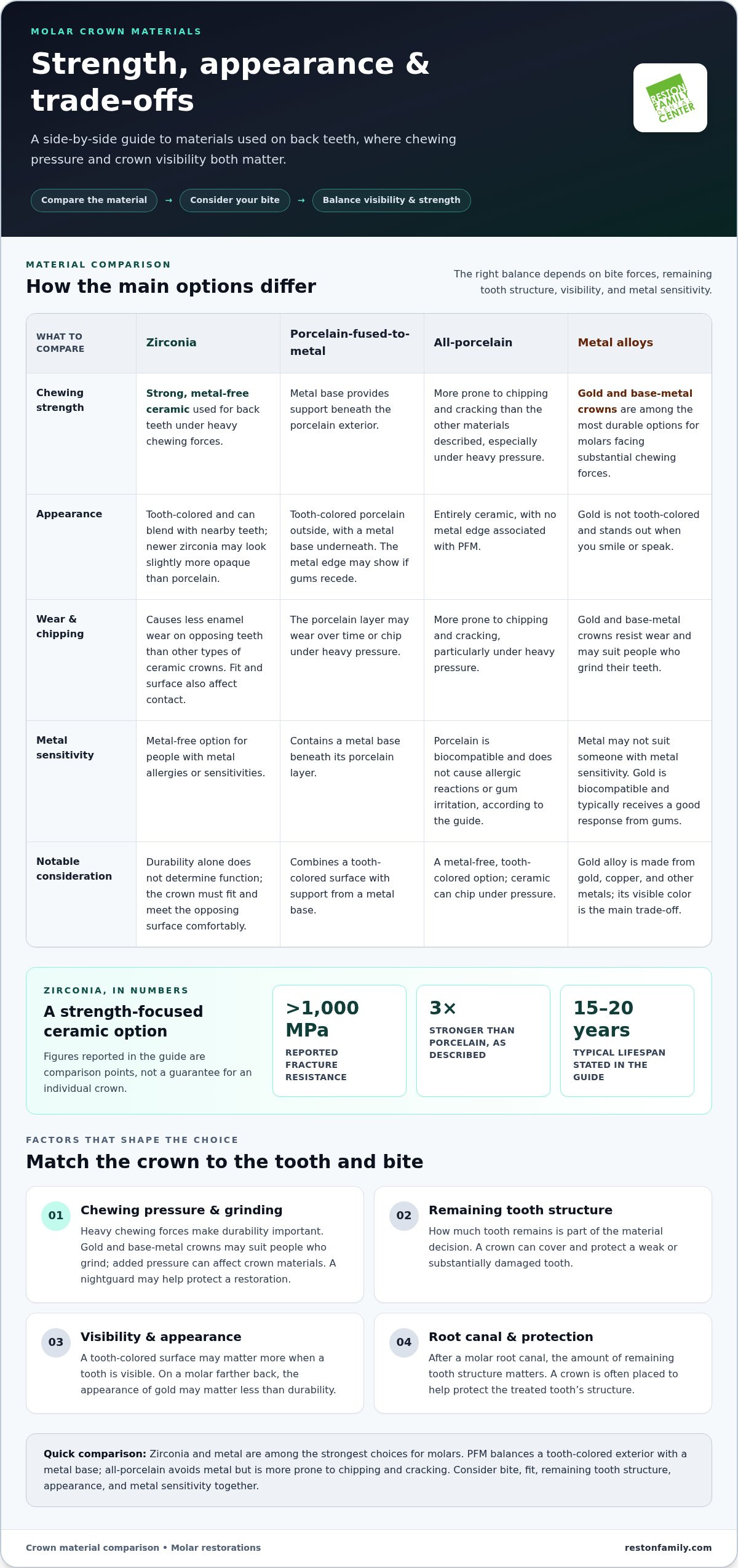
A porcelain-fused-to-metal crown, often shortened to PFM, combines a metal base with an outer porcelain layer. The porcelain gives the visible surface a tooth-colored appearance, while the metal provides support. This can suit a back tooth when you want a less metallic look without choosing an all-ceramic crown. However, the porcelain may wear over time or chip under heavy pressure. If gums recede, the metal base may become visible near the gumline.
All-porcelain crowns are made entirely from ceramic, so they don’t have the metal edge associated with PFM. Porcelain is biocompatible and doesn’t cause allergic reactions or gum irritation, which may matter if you have a metal sensitivity. Zirconia is another metal-free option for people with metal allergies or sensitivities. Its tooth-colored appearance can blend with nearby teeth, although newer zirconia may look slightly more opaque than porcelain. Material composition and appearance are separate considerations: ceramic avoids a metal base, while PFM has one beneath its porcelain exterior.
Gold crowns use an alloy made from gold, copper, and other metals. Gold alloys and base-metal crowns are among the most durable options for molars that face substantial chewing forces. They may also suit people who grind their teeth. Gold is biocompatible and typically receives a good response from gums. Its main visible trade-off is straightforward: gold is not tooth-colored, so it stands out when you smile or speak. On a molar farther back, that appearance may matter less than durability.
Choosing among these materials means weighing the tooth’s location, remaining structure, your appearance preferences, and any metal sensitivity. PFM offers a porcelain exterior over a metal base; gold and base metal prioritize durability; ceramic avoids metal and provides a tooth-colored surface. If metal sensitivity is a concern, zirconia or porcelain may be relevant options. As restorative providers like iCare Family Dental note, the best type of dental crown for molars depends on which trade-offs matter most for your tooth and bite.
How do I know which crown material is right for my tooth?
Compare the tooth’s remaining structure, bite forces, appearance goals, and any metal sensitivity. Each material has different trade-offs: ceramic can chip, PFM porcelain can wear or chip, and metal crowns are visibly metallic.
Zirconia Strength and Durability
Zirconia is a strong, metal-free ceramic used for crowns on back teeth that handle heavy chewing forces. Its reported fracture resistance exceeds 1,000 MPa, and zirconia is described as three times stronger than porcelain. These properties make it a durable option when a molar needs a tooth-colored restoration that can tolerate substantial bite pressure.
Zirconia crowns typically last 15 to 20 years. That lifespan is a useful comparison point, not a guarantee for an individual crown. The tooth’s condition, bite, and care all matter. A crown must also fit the tooth and meet its opposing surface comfortably, because durability alone doesn’t determine how well a restoration functions.
Zirconia Appearance and Biocompatibility
Zirconia crowns are tooth-colored and metal-free, making them an option for people with metal allergies or sensitivities. Their appearance can blend with neighboring teeth, though newer zirconia may look slightly more opaque than porcelain. That difference may matter more for a visible tooth than for a back molar, where appearance often has less influence on the decision.
Biocompatibility is another consideration if you’re concerned about metal. Zirconia avoids a metal base, unlike porcelain-fused-to-metal crowns. Your preference for a more translucent ceramic look or a durable material can help guide the choice. The crown’s position, shade, and bite contact help clarify which feature matters most.
Opposing-Tooth Wear and Material Risks
Zirconia crowns cause less enamel wear on opposing teeth than other types of ceramic crowns. This matters because a crown contacts another tooth during chewing. Fit and surface also affect that contact, so consider the material’s strength alongside how the crown meets the opposing tooth.
Other materials have different trade-offs. All-porcelain crowns are more prone to chipping and cracking than the other materials described here, especially under heavy pressure. PFM crowns combine a metal base with porcelain, but the porcelain layer may chip or wear over time. If gums recede, the metal edge can become visible. Gold and base-metal crowns resist wear, but gold is not tooth-colored, and metal may not suit someone with a metal sensitivity.
For a molar, weigh bite forces, the crown’s visibility, and metal sensitivity together. If you’re considering a ceramic restoration, same-day dental crowns can be one treatment option to discuss.
Q: What is the strongest crown material for molars?
Zirconia and metal crowns are among the strongest choices for molars because they withstand heavy chewing forces. The right comparison also includes appearance, tooth structure, and insurance coverage.
Molar Crown Material Options
Molar crown materials range from tooth-colored ceramics to metal alloys, each balancing strength and appearance differently. That balance matters because a back tooth absorbs chewing pressure, while its visibility depends on its position.
Full-contour zirconia offers a tooth-colored option designed for strong chewing forces. Gold-alloy and base-metal crowns are durable choices, particularly when appearance matters less. Porcelain-fused-to-metal (PFM) crowns combine a metal base with an outer porcelain layer, while all-porcelain crowns are ceramic throughout. These designs have different trade-offs: PFM can chip at its porcelain surface, while gold is visibly metallic.
Comparing Zirconia, Gold, and PFM Crowns
Zirconia is generally a stronger molar option than PFM when resisting heavy forces is the priority. It can withstand greater forces than other ceramic crowns, while PFM’s porcelain layer may chip or wear over time. PFM still offers a tooth-colored surface over its metal base.
Gold crowns resist wear and fracture, and documented gold-crown longevity exceeds 30 years. Compared with zirconia, gold offers a metal appearance, while zirconia is tooth-colored and metal-free. Gold may also be gentle on opposing teeth. A dentist weighs these differences against the tooth’s position, bite, and your aesthetic priorities when deciding how to restore a molar.
Cost varies with material and treatment needs. Crown price depends on the tooth’s condition, material, and restoration requirements, and is provided after a quote request. Insurance can reduce your share, but plan limits and deductibles affect the amount.
Dental PPO plans typically cover approximately 50% of the allowed amount for crowns after the deductible. Dental plans’ annual maximums are typically $1,000-$2,500, so coverage for a crown may use part of that yearly benefit. Your plan’s allowed amount, remaining annual maximum, and deductible shape what coverage contributes.
Gold and zirconia both offer strong performance, but neither is the universal winner. The best type of dental crown for molars depends on whether you prioritize a tooth-colored appearance, metal durability, or how the crown interacts with your bite. PFM is another option, with a porcelain exterior and metal foundation, but its outer layer can chip or wear.
Choosing crowns for patients who grind their teeth
Grinding adds repeated pressure to a crown and the natural teeth it contacts. For a molar, resistance to chipping, fracture, and wear is especially relevant. Gold-alloy and base-metal crowns are durable options for people who grind, while zirconia is a strong tooth-colored choice for back teeth. Material selection should account for both the restored molar and its opposing tooth.
Porcelain can be the vulnerable part of a layered crown. A PFM crown has a metal base, but its outer porcelain layer can chip under heavy pressure. Porcelain crowns may also chip or break more readily for people who grind their teeth or have a strong bite. PFM crowns can be used for front and back teeth, though their porcelain surface may wear over time and gradually wear enamel on the opposing tooth.
Gold and other metal crowns resist wear and rarely chip, making them practical for a molar that takes substantial force. Gold is also described as gentle on opposing teeth. Its visible, non-tooth-colored appearance may matter less on a back molar than on front teeth, where a cosmetic match is more noticeable. Zirconia offers a tooth-colored alternative and can withstand heavy chewing forces, but its contact with the opposing tooth still matters.
A nightguard is often recommended for people who clench or grind, helping protect a crown over the long term. It doesn’t change the crown material, but it can add a protective barrier between upper and lower teeth. Tell your dentist if you wake with jaw soreness, notice worn tooth surfaces, or have a history of grinding. These details help assess bite forces and crown risks before treatment.
After placement, pay attention to changes. A chipped porcelain edge, a new rough spot, or a crown that feels different against the opposing tooth can be worth discussing with your dentist. Don’t treat a temporary crown as equivalent to the final restoration: a resin crown may protect a prepared tooth while a permanent metal or PFM crown is being made. Consider the final material in light of your grinding pattern and the tooth’s role in chewing.
For example, a back molar with heavy bite contact and frequent grinding calls for different priorities than a visible front tooth. Metal may favor durability, zirconia combines strength with a tooth-colored appearance, and PFM pairs a porcelain exterior with a metal base. A nightguard and attention to crown condition complement the material choice by helping address the repeated forces grinding places on the restoration and opposing teeth.
Crown options after a molar root canal
A crown is often placed after root canal treatment to protect the affected tooth’s structure. This matters for molars because chewing puts repeated force on the restored tooth. A filling may not provide enough support when a large cavity, fracture, or earlier damage has left too little healthy structure. The crown covers the remaining tooth and restores its shape and function.
The amount of remaining tooth helps guide the material choice. If the molar has substantial structure and the bite is manageable, a tooth-colored ceramic may suit your appearance preferences. For heavy chewing forces, full-contour zirconia or gold offers greater durability. Gold crowns require minimal tooth reduction and are gentle on opposing teeth, while zirconia provides a metal-free, tooth-colored option.
Porcelain-fused-to-metal crowns offer another balance: a metal base supports an outer porcelain layer. The porcelain surface can wear over time, and heavy pressure can chip it. Gold or other metal crowns resist wear, while zirconia can withstand heavier forces than other ceramic crowns. The best fit depends on the tooth’s condition, bite, and how visible the molar is when you smile.
Longevity also varies by crown material. With proper care, metal dental crowns can last 20 years or more. Porcelain-fused-to-metal and lithium disilicate crowns typically last 10 to 15 years. These are general material estimates, not a promise for an individual tooth. The remaining tooth structure, bite forces, and care all affect how a crown performs over time.
A traditional crown process usually involves two appointments. A temporary crown protects the prepared tooth while a laboratory makes the permanent restoration, typically over two to three weeks. A resin crown may provide temporary protection during that period. Don’t treat the temporary crown as the final restoration: it covers the tooth while fabrication continues, but the permanent crown is designed for longer-term function.
CAD/CAM technology can allow crown placement in one office visit. Digital scans create a three-dimensional model for fabrication, and same-day crowns can use ceramic materials such as zirconia or lithium disilicate. For a molar after root canal treatment, the practical choice depends on remaining structure, chewing demands, material preferences, and whether temporary protection is needed during fabrication.
If you need root canal treatment for a damaged molar, discuss root canal care and crown options as part of planning how to restore its function.
Reston Family Dental Center: Dental Implants
Reston Family Dental Center provides root canal therapy and restorative care, including same-day dental crowns, for molars that are damaged or need support to function. If a tooth cannot be preserved, dental implants and implant-supported dentures are other restorative options. Routine dental cleaning also supports ongoing oral care.
If a molar may need root canal treatment or a crown, discuss its condition, remaining structure, bite, and material options with your dentist. This connects the treatment plan to your chewing needs and preferences, rather than choosing a crown based on material alone.
Contact Reston Family Dental Center to discuss your tooth, or visit restonfamily.com.
Take the Next Step Toward a Comfortable Bite
Choosing the best type of dental crown for molars is one part of protecting your ability to chew comfortably. Connect the material choice with your tooth’s condition and broader oral health goals. Bring questions about appearance, grinding, or a treated molar to your dental visit, so the discussion can focus on what matters to you and your everyday function.
Reston Family Dental Center offers root canals as well as dental implants and implant-supported dentures. These services can support different restorative needs, from treating a tooth to addressing tooth loss. If you’re ready to discuss the next step for your smile, contact Reston Family Dental Center. A clear conversation can help you move forward with greater confidence and a plan tailored to your needs.
Frequently Asked Questions
How long do crowns last?
Most permanent dental crowns last 10 to 15 years with proper care. The material, fit, chewing forces, and condition of the tooth can affect how long yours lasts. For example, a crown on a heavily used molar may experience different wear from one on a tooth with lighter bite contact. Regular dental visits can help identify changes, such as a loose fit or damaged crown edge.
Is getting a crown painful?
Mild sensitivity after crown placement usually fades within a few days, though it can sometimes last a couple of weeks. You may notice it with hot or cold foods, or when biting. Track whether it improves or changes, and contact your dental office if discomfort persists or worsens. A crown should restore the tooth’s function, so don’t ignore ongoing pain.
Do I need a crown after a root canal on a molar?
A crown is often placed after root canal treatment to help protect the molar’s structure. It’s especially relevant if a large cavity or other damage has left too little tooth to support a filling securely. Remaining tooth structure and chewing demands help determine the restoration. For patients in Reston, discussing the tooth’s condition and how you chew can clarify the next step.
Types of Crowns: Which Is Best for You?
The best material depends on your priorities and the tooth’s needs. Zirconia combines a tooth-colored appearance with strength, while gold and other metal alloys are durable choices when visibility matters less. PFM offers a porcelain exterior over a metal base. Consider tooth position, bite forces, metal sensitivity, and appearance together. A material that suits a hidden molar may not be your preference for a visible tooth.
What Happens During the Crown Procedure?
A traditional crown process usually involves two appointments. The tooth is prepared, and a temporary crown protects it while the permanent restoration is fabricated, typically over two to three weeks. At the second appointment, the permanent crown is placed. CAD/CAM technology can also make a crown in one office visit, using digital scans to create a three-dimensional model for fabrication.
What types of dental crowns are used for molars?
Molar crown options include zirconia, gold or other metal alloys, porcelain-fused-to-metal, and all-ceramic materials. Each balances strength, appearance, and material composition differently. For example, someone who prefers a tooth-colored restoration may weigh zirconia against the visible appearance of a metal crown. The tooth’s location and bite also matter, especially if the molar takes heavy chewing pressure.
Which dental crown material is strongest for molars?
Zirconia and metal crowns are among the strongest options for molars because they can withstand heavy chewing forces. Gold crowns resist wear and fracture, while zirconia offers strength with a tooth-colored appearance. PFM crowns have a metal base, but their porcelain layer can chip under heavy pressure. The best type of dental crown for molars depends on which trade-offs suit your bite and appearance preferences.
What is the average cost of a molar crown in the United States?
There isn’t one average that fits every molar crown because material, tooth condition, and restoration needs affect the amount. Dental PPO plans typically cover approximately 50% of the allowed amount after the deductible; annual maximums are typically $1,000-$2,500. For treatment at this practice, case-based pricing is provided after a quote request, with cost factors considered for your specific tooth and care.