What to Eat After a Root Canal While Your Tooth Heals
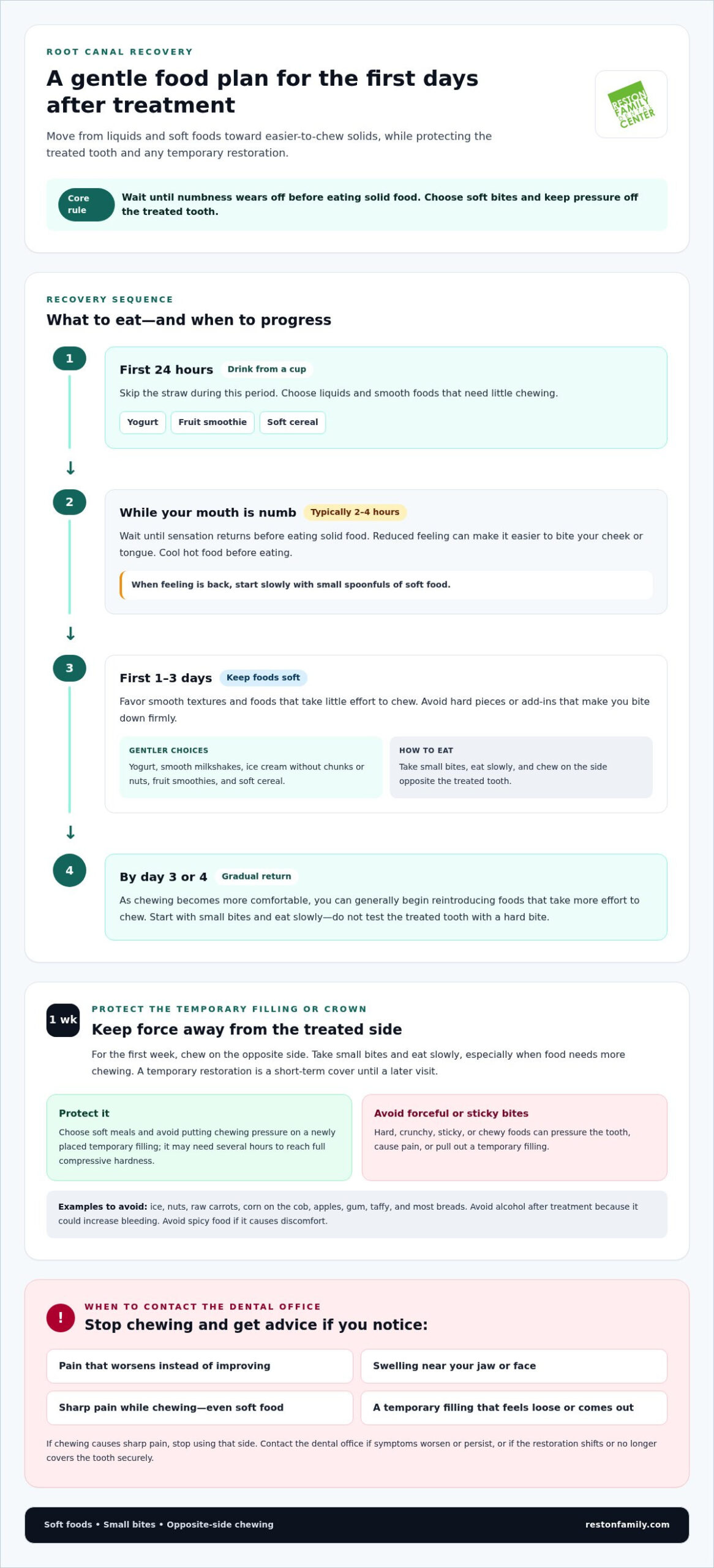
A straw can wait: drink directly from a cup during the first 24 hours after a root canal. For what to eat after a root canal, choose soft foods that need little chewing, and wait at least 2 to 4 hours after treatment, until the numbness has worn off, before eating solid food. Cool food before eating, and take care not to bite your cheek or tongue while sensation is reduced.
It’s natural to wonder what to eat after a root canal and whether food or drink could bother the treated tooth or disturb a temporary filling. A gentle approach can help you stay comfortable while protecting the tooth as it heals. Choose soft foods, wait until numbness wears off before eating solid food, and gradually return to foods that take more effort to chew. Here’s how to protect a temporary filling or crown and when to contact your dental office.
Key Takeaways
- Avoid hard, crunchy, sticky, and spicy foods that may irritate the treated tooth or disturb a temporary filling.
- Eat slowly and favor the opposite side of your mouth to reduce pressure on the healing tooth.
- Protect a temporary filling or crown, and contact the dental office if a temporary filling becomes loose or comes out.
- Pay attention to how you feel: worsening pain, swelling near your jaw or face, or sharp pain while chewing are reasons to contact the dental office.
1. Why is it dangerous to chew hard food on a root canal tooth with a temporary filling?
After a root canal, avoid crunchy foods such as raw carrots, corn on the cob, and apples. Also skip hard foods like ice and nuts, chewy gum, taffy, and most breads. These foods can put pressure on the treated tooth, cause pain, or pull out a temporary filling. Choose soft bites instead, and chew away from the treated side.
Let hot food cool before eating, since heat can trigger sensitivity. Avoid spicy food if it causes discomfort around the treated tooth. Avoid alcohol after root canal treatment because it could increase bleeding. If you’re still numb, wait until sensation returns before eating solid food. Reduced feeling can make it easier to bite your cheek or tongue.
A temporary filling protects the tooth until its permanent restoration is placed, but it needs care. A temporary filling may begin to experience microleakage within two to three weeks of placement. Avoid hard and sticky foods to limit pressure on it. Eat slowly, take small bites, and stop if chewing causes sharp pain.
Contact a dentist if pain worsens instead of improving, swelling develops near your jaw or face, or chewing soft food causes sharp pain. Call the dental office if the temporary filling feels loose or comes out. These changes need attention, especially if they make eating difficult or leave the treated tooth uncovered.
Choosing what to eat after a root canal means balancing comfort with protection. Soft, mild foods are gentler than crunchy apples, sticky taffy, spicy dishes, or hot meals. Don’t test the treated tooth with a hard bite. If a food triggers pain, stop eating it and contact the dental office if symptoms worsen or persist.
2. Can I drink through a straw after a root canal procedure?
For the first 24 hours after treatment, drink from a cup instead of using a straw. Choose soft foods and liquids that need little chewing, such as yogurt, a fruit smoothie, or soft cereal. Smooth textures are easier to manage while your mouth feels tender, and they avoid the chewing effort of firmer meals.
Wait until the local anesthetic has worn off before eating solid food. Numbness typically lasts two to four hours after your appointment. Eating before sensation returns can lead to biting your cheek or tongue. Once feeling is back, eat slowly and try small spoonfuls of yogurt or cereal softened with milk.
For the first two days, choose gentle foods. Yogurt and smooth milkshakes are soft options that contain protein. If you want something cold, choose ice cream without chunks or nuts. Fruit smoothies and soft cereal are other options, including while swelling is present. Avoid adding hard pieces that require chewing.
Keep foods soft during the first one to three days of recovery. As chewing becomes more comfortable, gradually move from smooth foods to soft solids that require little effort. By the third or fourth day after treatment, you can generally begin reintroducing foods that take more effort to chew. Start with small bites and eat slowly.
Soreness can make chewing uncomfortable early in recovery, so yogurt, soft cereal, and smooth drinks may make meals easier. Once sensation has completely returned, gentle solid foods are suitable during the first one to three days. Contact the dental office if pain worsens instead of improving or sharp pain occurs while chewing soft food.
With a temporary filling or crown, continue choosing foods that don’t demand forceful chewing. If you have questions about your recovery or root canal treatment, the dental office can help you understand the next steps.
3. Protecting a temporary filling or crown
After a root canal, a temporary filling or crown may protect the tooth until a later visit. Treat the restoration gently while eating. A temporary filling may need several hours after placement to reach full compressive hardness, so avoid putting chewing pressure on it right away. Choose soft meals, take small bites, and don’t test the treated tooth.
For the first week after treatment, chew on the opposite side of your mouth to reduce direct pressure on the restored tooth. Keep bites small and eat slowly, especially when food requires extra effort to chew. If the filling shifts as you chew, stop using that side and contact the dental office.
A temporary crown also needs care while it covers the treated tooth. Avoid chewing directly on it and choose soft meals. Root canal treatment may be followed by a temporary filling or crown, with a permanent restoration placed at a later visit. The temporary restoration is a short-term cover, so avoid forceful chewing.
When a root canal leaves a temporary filling or crown, protect the treated tooth and chew on the opposite side during the first week. If a crown was placed without root canal treatment, the procedure is different. Follow the eating instructions for that treatment rather than assuming the recovery is the same.
Check the restoration gently after eating. If a temporary filling becomes loose or comes out, contact the dental office instead of chewing around the gap. A loose filling no longer covers the treated tooth securely. Also report sharp pain while chewing, especially if it continues with soft food. Prompt attention can address the restoration or discomfort before you return to normal chewing.
4. Why diet matters during root canal recovery
Food choices help protect a treated tooth, but they don’t replace dental care. Root canal treatment cleans the inside of the tooth, removes dead pulp, and replaces it with filling material before the tooth is sealed and secured with a crown. Until the final restoration is placed, avoid foods that make you bite forcefully on that tooth.
Consider pressure when planning each meal. Cut food into small pieces, take manageable bites, and chew away from the treated area. This helps limit the work your healing tooth has to handle. If a bite causes sharp pain, stop chewing on that side rather than pushing through the discomfort.
A temporary restoration makes meal choices important between visits. Sticky or hard foods can tug at a filling or put extra force on the tooth. Soft meals let you eat without testing the restoration. Keep foods gentle until your dentist places the permanent restoration, and follow any specific instructions for your tooth.
Avoid alcohol after root canal treatment because it could increase bleeding. Choose nonalcoholic drinks during recovery, and keep meals simple if chewing feels uncomfortable. Diet cannot complete the treatment or replace a restoration, but careful food choices can help avoid unnecessary stress on the treated tooth.
For a posterior tooth treated with root canal therapy, going without a protective crown carries a six-fold higher failure rate within five years compared with crowned teeth. This underscores why food choices are only one part of recovery: protecting the tooth also means completing the planned restoration. If you need care for a treated tooth, schedule root canal care and discuss how to protect it through recovery.
Reston Family Dental Center: Dental Implants
Reston Family Dental Center provides in-house root canal therapy and restorative care in Reston, serving patients from nearby Great Falls, Ashburn, Chantilly, Herndon, and Vienna. If you’re recovering from treatment, contact the practice about worsening pain, facial or jaw swelling, sharp pain while chewing, or a temporary filling that becomes loose or comes out. The practice also offers dental implants and implant-supported dentures for tooth replacement.
Careful food choices can protect your tooth during recovery, but they don’t replace follow-up care or a planned permanent restoration. The next step depends on what your tooth needs, whether you’re managing symptoms after treatment or considering tooth replacement. Contact Reston Family Dental Center or visit restonfamily.com to learn more.
Make recovery easier, one meal at a time
Give yourself time to adjust your meals while your tooth recovers. Planning a few satisfying options ahead can make eating easier and help you focus on rest and your usual routine. Consider food texture and how comfortable chewing feels, then choose meals that suit you without putting unnecessary pressure on the treated area.
Knowing what to eat after a root canal can help you feel more prepared for recovery. Follow the instructions you received for your treatment, and reach out if you have concerns about your tooth or restoration. Reston Family Dental Center provides in-house root canal therapy for patients in Reston and nearby Great Falls, Ashburn, Chantilly, Herndon, and Vienna. Contact the practice to discuss your next step.
Contact Reston Family Dental Center to discuss your dental care. You can move forward with clarity and confidence.
Frequently Asked Questions
Can I drink through a straw after a root canal procedure?
Avoid straws during the first 24 hours after treatment, and drink from a cup instead. For example, have a fruit smoothie by sipping it from the cup. Choose a smooth drink without chunks, and take small sips. If your mouth is still numb, be careful with hot drinks because reduced sensation can make it harder to judge their temperature.
How long after a root canal should I wait before eating solid food?
Wait at least 2 to 4 hours after your root canal, until the local anesthetic has worn off, before eating solid food. Numbness typically lasts two to four hours following your appointment. Start with small bites and eat slowly once you can feel your mouth normally. This helps you avoid biting your cheek or tongue while eating.
Why is it dangerous to chew hard food on a root canal tooth with a temporary filling?
Hard foods can put strong pressure on the treated tooth and cause pain or damage the tooth or filling. Sticky or chewy foods can pull out a temporary filling. Avoid biting directly into a hard apple or chewing gum on the treated side. If the filling becomes loose or comes out, contact the dental office.
How long should you wait to eat after a root canal?
For solid food, wait until numbness has worn off, usually at least 2 to 4 hours after treatment. The clock alone isn’t the only guide: if your mouth still feels numb, don’t start chewing yet. Once feeling returns, begin with a small portion of a soft food and eat slowly. This helps you notice discomfort before taking another bite.
What soft foods are best after a root canal?
Yogurt, soft cereal, fruit smoothies, milkshakes, and ice cream without chunks or nuts are gentle options. Soften cereal with milk and choose smoothies without pieces that need chewing. Keep portions manageable and eat slowly. Once sensation has fully returned, gentle solid foods can suit the first days of recovery without requiring forceful chewing.
When can you chew on the treated tooth after a root canal?
Chew on the opposite side during the first week after treatment to reduce pressure on the treated tooth. You can generally begin reintroducing foods that require more effort by the third or fourth day, but don’t immediately bite directly on the tooth. Follow your restoration instructions and return to chewing gradually.