Improve My Smile Without Braces: Compare Your Options
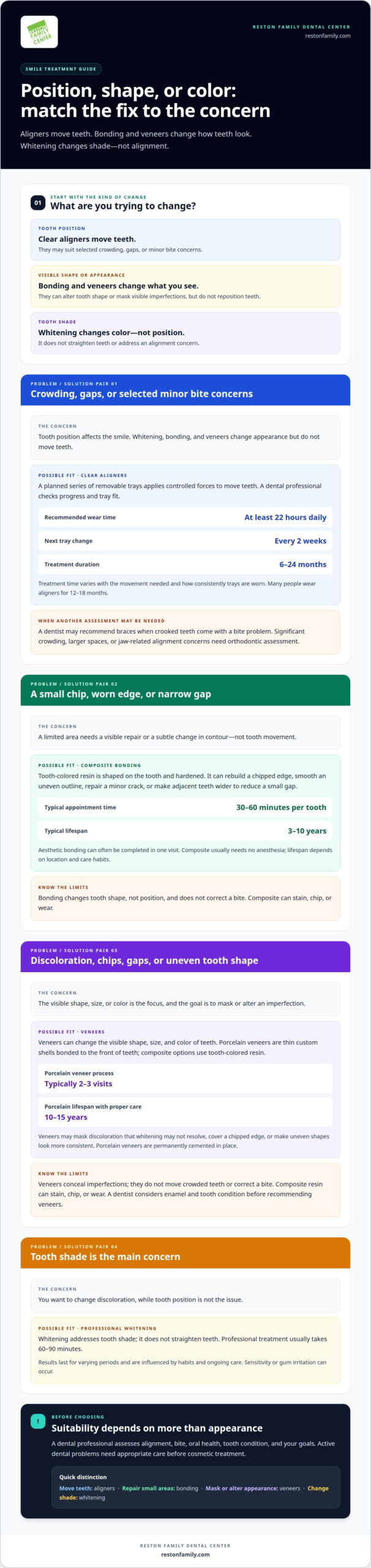
You can improve your smile without braces with clear aligners, dental bonding, or veneers, depending on what you want to change. If you’re wondering how to improve my smile without braces, start by distinguishing tooth position from tooth appearance: aligners move teeth, while bonding and veneers change how teeth look without repositioning them. Aligners may suit selected crowding, gaps, or minor bite concerns; bonding can repair small chips or gaps, and veneers can mask concerns such as discoloration or uneven tooth shape.
Wanting a noticeable change without traditional braces is understandable, but these options aren’t interchangeable. The right choice depends on whether you want to change tooth position, shape, or color, along with your bite and oral health.
This guide compares how aligners, bonding, and veneers work, what each can and can’t address, and practical factors that affect suitability and upkeep. You’ll also see why an examination matters before choosing cosmetic treatment, and when improving alignment or restoring a tooth may be more appropriate than changing its appearance.
Key Takeaways
- Match the treatment to the concern: aligners move teeth, while bonding and veneers change their visible shape or appearance.
- Learn which smile concerns bonding can address, and where its limits and upkeep matter.
- Compare porcelain and composite veneers, including when masking an imperfection may not address an underlying bite issue.
- See how oral health, tooth structure, and treatment goals shape a suitable plan, and when restorative dental care may be relevant.
Are Clear Aligners Effective Alternatives to Braces?
Clear aligners can straighten teeth without fixed brackets by applying controlled forces through a planned series of removable trays. Each custom-made tray represents a stage of tooth movement. Aligners can address selected cases of crowding, gaps, and minor bite concerns, making them an option when tooth position affects your smile. Unlike whitening, aligners move teeth; they don’t change discoloration. If you’re asking, “how to improve my smile without braces,” first identify whether alignment is your main concern.
Wear time matters. Penn Dental Family Practice recommends wearing aligners for at least 22 hours daily for optimal results. You remove them for eating, brushing, and flossing, then put them back in. Penn Dental Family Practice also describes changing to the next aligner every two weeks. Regular checkups let your dental professional monitor progress and how the trays fit.
Treatment duration varies with the movement needed and how consistently you wear the trays. Clear aligner treatment can last from 6 to 24 months, according to Penn Dental Family Practice. Many people wear aligners for 12 to 18 months, while Invisalign treatment can often be completed in about a year. The treatment plan and your progress influence the finish date.
Aligners aren’t the right alternative for every bite. A dentist may recommend braces when crooked teeth come with a bite problem, meaning the upper and lower teeth don’t line up correctly. Significant crowding, larger spaces, or jaw-related alignment concerns also need orthodontic assessment. Braces can address crooked teeth, overbites, underbites, and jaw alignment, while cosmetic dentistry such as whitening changes tooth shade, not position.
Professional teeth whitening usually takes 60 to 90 minutes, but it doesn’t straighten teeth. Its price depends on your case and is given after a quote request; treatment type and extent are cost factors. Results last for varying periods, influenced by habits and ongoing care. Whitening can also cause sensitivity or gum irritation, so it addresses color concerns rather than alignment.
A practical answer to “how to improve my smile without braces” starts with matching treatment to the concern. Removable aligners may suit selected alignment needs, while whitening changes shade. A dentist assesses your alignment and bite before recommending an approach.
What Is Dental Bonding, and Does It Help Fix My Smile?
Composite bonding can improve a tooth’s visible shape without moving it. It’s most useful for small imperfections, such as a chipped edge or a narrow gap.
Bonding for Minor Imperfections
Dental bonding applies tooth-colored composite resin to reshape or repair a tooth. A dentist forms the material to address a small contour irregularity, worn edge, or minor gap, then hardens it in place. Aesthetic bonding can often be completed in one visit, with treatment taking 30 to 60 minutes per tooth. That makes it a focused option for patients seeking a visible change to a limited area.
Bonding for Chips, Cracks, and Gaps
For a chipped tooth, cosmetic bonding adds resin to rebuild the missing edge; for a small gap, it can make adjacent teeth wider. Bonding can also smooth an uneven outline or repair a minor crack. It changes tooth shape, not position, so it won’t straighten teeth or correct a bite concern. This distinction helps you decide whether a visible imperfection is the main issue.
Composite resin usually needs no anesthesia, and the dentist shapes it directly on the tooth. For example, bonding may refine one chipped front tooth without covering its neighbors. Veneers are thin coverings that can change a tooth’s appearance more broadly, while bonding adds material only where needed. The choice depends on the area and the change you want.
Bonding has limits: composite can stain, chip, or wear. It typically lasts 3 to 10 years, depending on its location and care habits. A dentist considers the tooth’s condition and your oral health before treatment, since active dental problems need appropriate care first. Routine cleaning and careful brushing help support the surrounding teeth and gums.
If you’re considering a small cosmetic change, explore cosmetic dentistry options as part of a conversation about your goals and the tooth involved.
When Are Veneers a Good Option to Fix My Smile Without Braces?
Veneers can change the visible shape, size, and color of teeth without moving them. They may suit concerns such as discoloration, chips, gaps, or uneven tooth shapes, but they don’t correct a bite or reposition crowded teeth.
Porcelain and Composite Veneers
Porcelain veneers are thin, custom shells bonded to the front of teeth, while composite options use tooth-colored resin to alter a tooth’s appearance. The material and process matter: porcelain veneers typically take 2 to 3 visits, and porcelain can last 10 to 15 years with proper care. Composite resin offers another way to change tooth shape, but it can stain, chip, or wear.
Veneers for Tooth Shape and Color
Veneers can mask discoloration that whitening may not resolve and change the outline or apparent size of misshapen teeth. For example, a veneer can make a short-looking tooth appear more proportionate beside its neighbors. Porcelain veneers are permanently cemented in place, so this is a lasting cosmetic change, not a removable cover. A dentist considers your enamel and tooth condition before recommending one.
Veneers for Chips and Gaps
A porcelain veneer can cover a chipped edge or close the visible space between teeth by changing their apparent width. It can also make uneven tooth shapes look more consistent across your smile. Veneers conceal imperfections; they don’t move teeth. If crowding, rotations, or a bite discrepancy is the concern, clear aligners or another orthodontic approach may address tooth position more directly.
Porcelain veneers are typically about 0.5 millimeters thick, and treatment may require removing some enamel. Since enamel doesn’t regenerate, preserving healthy tooth structure is a key consideration. Cosmetic treatment also needs ongoing care: veneers can require repair or replacement over time. Comparing the intended change, tooth position, and available enamel helps distinguish a veneer case from one better suited to alignment treatment or conservative contouring.
Treatment suitability, affordability, and oral health maintenance
The right choice depends on what needs changing: tooth position, appearance, or damaged structure. Bite function, enamel, gum health, existing dental work, and the condition of each tooth all matter.
Suitability for Treatment Without Braces
Minor shifts may respond to clear aligner treatment, while crooked teeth with a bite discrepancy may need orthodontic care. Traditional braces can address overbites, underbites, and jaw alignment concerns that cosmetic treatments don’t correct. In the United States, clear aligner costs depend on the case; treatment complexity, planned duration, and monitoring affect the total. The American Association of Orthodontists warns that some patients have experienced tooth and gum loss after direct-to-consumer orthodontic treatment.
Conservative Options and Enamel Alteration
Conservative treatment aims to preserve healthy tooth structure while addressing your concern. Tooth contouring removes a very thin layer of enamel to refine minor outline irregularities, but enamel doesn’t regenerate after removal. Porcelain veneers may also require enamel removal. Whitening is often considered before veneers, bonding, or crowns because restorative materials don’t lighten afterward. A slightly overlapping tooth and a stained tooth therefore call for different approaches.
Dental Consultation and Treatment Selection
A dental examination helps identify oral health needs before cosmetic treatment and supports a realistic plan. The dentist considers enamel condition, gum health, bite function, existing dental work, and how much natural tooth structure treatment would alter. Active disease or structural problems generally need care before elective cosmetic work. Photographs, scans, or dental imaging may help with diagnosis and planning. Discuss Invisalign suitability as part of choosing an approach for your situation.
Comparing Veneers, Bonding, and Crowns
Veneers conceal visible imperfections, bonding adds composite resin to reshape or repair a localized area, and crowns cover substantially more of a tooth. A crown is commonly used when damaged or weakened tooth structure also needs restoration. Bonding may address the edge of a small chip; a crown may meet the restorative need of a weakened tooth. An examination helps distinguish cosmetic changes from structural treatment.
Reston Family Dental Center: Dental Implants
Reston Family Dental Center provides dental implants for patients considering replacement of a missing tooth. An implant may replace a missing tooth when clinically appropriate; suitability depends on gum health, available bone, bite forces, medical history, and the condition of the treatment site. For people missing several teeth, implant-supported dentures may also be part of a restorative plan.
A consultation can clarify whether restorative care addresses your concern or cosmetic treatment is a better fit. Root canal therapy treats teeth that need this care, while dental cleanings support ongoing oral health. These services address different needs, so the next step depends on the condition of your teeth and gums.
Contact Reston Family Dental Center or visit restonfamily.com to discuss your dental needs.
Take the Next Step Toward a Smile That Feels Like You
Before choosing a treatment, decide what change would make the biggest difference to you. Is your priority how your teeth meet, a concern about one tooth, or the overall look of your smile? Defining your goal can make a dental conversation more focused and help connect the result you want with an appropriate approach. For those considering broader aesthetic goals, exploring non-surgical treatments like Botox Burlington WA can illustrate how subtle facial rejuvenation pairs with smile enhancements to support overall balance.
Thinking about how to improve my smile without braces also means considering what you want to preserve, not only what you want to change. Bring questions about comfort, maintenance, and oral health to the conversation. A thoughtful plan should address your priorities while taking the condition of your teeth and gums into account. If a missing tooth or another restorative concern is part of your smile goals, discuss it directly rather than treating every concern as cosmetic.
Reston Family Dental Center can help you explore your dental needs and possible next steps. Contact Reston Family Dental Center to start a conversation about your smile. You deserve a plan that feels considered, personal, and grounded in your oral health.
Frequently Asked Questions
What Is a Smile Makeover?
A smile makeover is a personalized plan combining dental treatments to address several concerns. For example, someone with stained teeth and a chipped edge might discuss improving tooth color alongside repairing the chip. The plan should account for oral health and existing dental work, not just appearance. In Reston, an assessment at Reston Family Dental Center can help clarify which concerns are cosmetic and which need restorative attention.
Why Choose Smile Transformation Without Braces?
You might prefer an approach without traditional braces if you want to address a specific concern without fixed appliances. The important first step is identifying your priority: tooth color, a chipped edge, or tooth position. A treatment that changes appearance won’t necessarily correct how your teeth meet. Consider your daily routine, the change you want, and your willingness to maintain the result before settling on an option.
Do These Non-Braces Options Improve Oral Health or Just Appearance?
Some options primarily change appearance, while treatment that moves teeth may also affect function and hygiene. Cosmetic changes don’t replace care for tooth decay, gum disease, or a damaged tooth. For instance, covering a visible mark won’t treat an underlying dental problem. An examination can distinguish appearance goals from conditions that need attention first, helping keep your plan focused on comfort and oral health.
How Can I Make My Teeth Look Better Without Braces?
Start by naming the change you want: a brighter shade, a smoother edge, or a more even-looking smile. Regular brushing, flossing, and dental cleanings support a healthy appearance. If a specific tooth still concerns you, discuss cosmetic options after an examination. The best approach depends on whether the issue involves color, shape, position, or tooth damage.
What Misalignment Problems Can Be Treated Without Braces?
Some mild spacing or crowding concerns may be addressed with clear aligner treatment, while a small shift after earlier orthodontic treatment may call for a retainer. These options aren’t interchangeable: a retainer is mainly intended to maintain tooth position, though it can help with minor shifts. More involved alignment or bite concerns need assessment before choosing an alternative.
What Can I Do Instead of Braces?
Alternatives include clear aligners for selected alignment concerns, bonding or veneers for visible shape changes, and whitening for tooth shade. Each addresses a different issue, so begin with the result you want rather than choosing by treatment name. If you’re considering Invisalign in Reston, Reston Family Dental Center offers clear aligner treatment. Discuss how your alignment, bite, and oral health fit your goals before deciding.