Cosmetic Dental Bonding in Herndon for Minor Tooth Flaws
A small tooth flaw may call for a small, carefully planned change. Cosmetic dental bonding in Herndon can address minor chips, cracks, and similar imperfections by applying tooth-colored composite resin to the affected area and shaping it to blend with your smile. The resin is hardened with a dental light and polished, and bonding typically requires minimal enamel removal.
It’s natural to want a result that looks balanced and feels right for you. A consultation helps assess the tooth, discuss your goals, and determine whether cosmetic dental bonding suits the imperfection or another approach may better meet your needs. You’ll learn what the process involves, how the resin is matched and shaped, and why bonding may be practical for a minor flaw. The sections ahead explain the treatment, its limits, and the factors that guide a personalized plan for patients in Herndon.
Key Takeaways
- Learn which features of a tooth flaw can help guide a conversation about bonding, veneers, or crowns.
- Use a cosmetic consultation to connect your goals with a clear, individualized treatment plan.
- Understand why the extent of an imperfection matters when considering bonding for a minor cosmetic concern.
- Keep in mind that bonding may need refreshing or replacement after several years, so ongoing care is part of the decision.
What Is Cosmetic Dental Bonding?
Cosmetic dental bonding applies tooth-colored composite resin to a tooth and shapes it to address a minor flaw. A dentist may consider veneers or crowns when the concern calls for a different treatment approach.
Bonding Compared With Porcelain Veneers
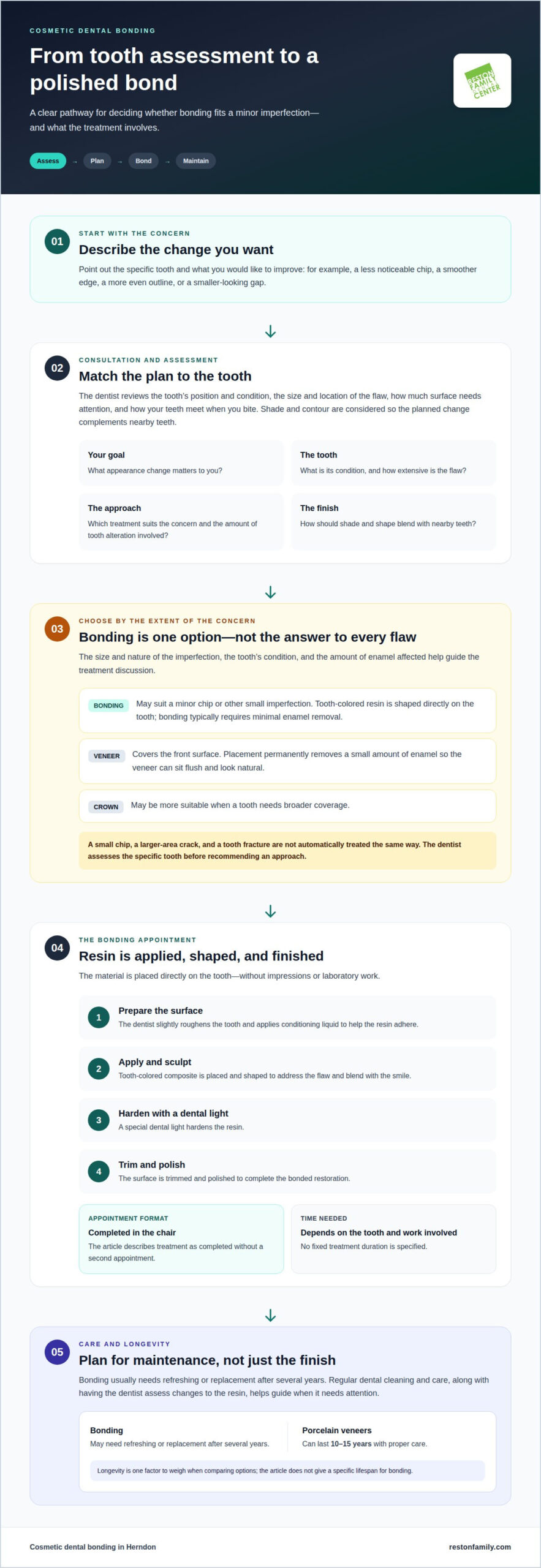
Bonding places resin directly on the tooth, while porcelain veneers cover the front surface. Bonding typically requires minimal enamel removal. Veneer placement permanently removes a small amount of enamel so the veneer can sit flush and look natural. The amount of tooth alteration and the size of the flaw help guide which option fits the treatment plan.
Dental insurance plans generally don’t cover procedures performed purely for appearance. Because bonding may be considered cosmetic, coverage depends on the reason for treatment and the plan’s terms.
The Bonding Appointment and Treatment Time
During bonding, the dentist slightly roughens the tooth and applies conditioning liquid to help the resin adhere. The dentist then applies and sculpts the composite, hardens it with a special dental light, and trims and polishes the surface. The resin is placed directly on the tooth, without impressions or laboratory work. Treatment is completed in the chair without a second appointment; the time needed depends on the tooth and the work involved.
Bonding Longevity and Maintenance
Bonding usually needs refreshing or replacement after several years. Porcelain veneers can last 10-15 years with proper care, so longevity is one factor to weigh when comparing options. Maintain bonded teeth with regular dental cleaning and care, and have the dentist assess changes to the resin. A consistent care routine supports the restoration and helps the dentist identify when it needs attention.
Bonding’s main tradeoffs are that it may need periodic refreshing and is suited to minor concerns, not every degree of damage. A crown may be more suitable when a tooth needs broader coverage, while a veneer may better address a change to the front surface. Discussing the flaw’s size and the amount of enamel affected helps clarify those choices.
Cosmetic consultations and treatment planning
A cosmetic consultation turns your goals into a practical treatment plan. The dentist reviews the tooth you want to change, listens to what concerns you about its appearance, and examines how it fits with nearby teeth. For example, a chip on a front tooth may call for a different plan than uneven color across several teeth. The assessment connects the visible concern with a treatment suited to address it.
Be specific about the result you want. You might want a chip to look less noticeable, a tooth’s outline to appear more even, or a visible gap to look smaller. The dentist can consider the location and size of the concern, the tooth’s condition, and how your teeth meet when you bite. These details help shape a plan that considers both appearance and function.
- Your goal: Identify the change you want, such as a smoother edge or a more balanced tooth shape.
- The tooth: Discuss its position, condition, and how much of its surface needs attention.
- The approach: Review bonding alongside other suitable cosmetic treatments, including the amount of tooth alteration involved.
- The finish: Talk through shade and contour so the planned change complements nearby teeth.
The consultation also gives you time to understand the proposed steps and care considerations. Ask how the treatment addresses your particular concern, what the finished tooth is intended to look like, and what maintenance it may need. Clear answers help you weigh the appearance you want against the treatment involved. The plan should explain the recommended approach in terms of your tooth, not just the cosmetic result.
If you’re considering a change to a minor imperfection, a cosmetic dentistry consultation can help organize your goals and treatment options. Bring up the specific tooth and the feature you’d like to improve. A focused discussion gives the dentist a clear starting point for planning care around your smile.
Dental bonding for minor imperfections
Composite bonding can repair minor chips, cracks, or fractures in teeth. The key distinction is the size and nature of the flaw. A small chip along one tooth edge, for example, differs from a crack that affects a larger area. During an assessment, the dentist examines the specific tooth and determines whether bonding fits the concern and your treatment goals.
Consider what you want changed, then describe it clearly during the appointment. You might point out a chipped corner that catches your eye when you smile. The dentist can assess the tooth’s shape and the flaw’s extent before discussing treatment. This keeps the plan focused on the imperfection you want addressed, rather than assuming every visible mark calls for the same approach.
- Small chip: Discuss whether resin can rebuild the chipped area and blend with the tooth.
- Minor crack: Have the dentist assess its location and extent before choosing treatment.
- Tooth fracture: Ask how much of the tooth is affected and which procedure addresses it.
Appearance is only one part of the decision. The dentist considers the condition of the tooth and your oral health before planning cosmetic work. If the concern involves more than a minor imperfection, the assessment can clarify whether another treatment is more appropriate. The goal is to match the procedure to the tooth, not to treat every flaw with bonding.
Use the consultation to understand the proposed change and its limits. Ask which part of the chip, crack, or fracture the treatment will address, how the result will blend with nearby teeth, and what follow-up care may involve. For example, a plan for a chipped front edge should identify the tooth and the area being reshaped. Clear details make it easier to decide whether the proposed treatment fits your priorities.
Cosmetic dental bonding in Herndon
Choosing a dentist for bonding in Herndon starts with the assessment, not a promise of a particular result. Look for a clear explanation of the tooth’s condition, the proposed change, and why bonding fits that concern. For example, a small edge chip should be discussed as a specific area to repair, not simply as a general smile makeover.
A useful treatment discussion covers practical details: how the resin shade will relate to nearby teeth, what part of the tooth will be reshaped, and how the finished contour will be reviewed. The dentist should also distinguish a localized flaw from broader concerns. If your main goal is brighter teeth overall, discuss whitening separately from bonding a single chipped tooth. These are different appearance goals, and the plan should address the one that matters to you.
- Assessment: Review the affected tooth and the size and location of the imperfection.
- Plan: Understand why bonding is being considered and what it is intended to change.
- Appearance: Discuss shade and contour in relation to nearby teeth.
- Maintenance: Include future care in your decision, since bonding may need refreshing or replacement after several years.
For affordability, separate the clinical recommendation from payment terms. The price depends on the case and is given after a quote request; the treatment details and the area involved shape the plan. Financing options vary by practice, so payment arrangements are a separate consideration from whether bonding suits the tooth.
A careful choice helps you understand both the cosmetic goal and the dental care involved. If you’re considering a minor repair, schedule a cosmetic dentistry consultation to discuss the tooth, your preferred appearance, and a treatment plan.
Reston Family Dental Center: Cosmetic Dentistry
Reston Family Dental Center offers Cosmetic Dentistry, including bonding, for patients considering a change to a minor tooth imperfection. If you’re weighing bonding, a consultation can connect your concern, such as a small chip, with a treatment plan tailored to the tooth and your appearance goals.
Use the visit to discuss what you’d like to improve, how the proposed treatment addresses it, and what care it may need afterward. If the assessment identifies a concern beyond appearance, the discussion can focus on the appropriate next step for your dental needs. Cosmetic treatment is not a substitute for care that addresses an underlying tooth problem.
For a minor flaw, bring your questions about the affected tooth and the result you hope to achieve. Contact Reston Family Dental Center to discuss your Cosmetic Dentistry needs.
Take the Next Step Toward a Treatment Plan
Choosing cosmetic dental bonding in Herndon can start a broader conversation about the care you want for your smile. Explain your priorities, ask how the proposed treatment fits them, and understand the next steps before deciding. A clear plan should connect your concern with care suited to your dental needs.
If your needs involve more than a cosmetic concern, Reston Family Dental Center also offers Dental Implants, Implant-Supported Dentures, and Root Canals. These services address different dental needs, so the right discussion depends on what you want evaluated and treated.
Bring your questions and describe the change you hope to make. Contact Reston Family Dental Center to discuss your next step. A thoughtful conversation can help you move forward with confidence.
Frequently Asked Questions
Can I get cosmetic work done here if I also need restorative treatment?
Yes. Cosmetic and restorative needs can be considered together in a coordinated treatment plan. For example, if a tooth needs restorative attention as well as an appearance change, the dentist can assess its condition and discuss how treatment steps fit together. Reston Family Dental Center offers Root Canal Therapy, Dental Implants, and Same-Day Dental Crowns alongside Cosmetic Dentistry.
How do I know which cosmetic procedure is right for me?
The right option depends on your goal and the tooth or teeth involved. Tell the dentist whether you’re focused on one chipped edge, an uneven outline, or the overall shade of your smile. The consultation can compare suitable treatments based on the concern and the changes each approach involves, helping you understand the plan before choosing how to proceed.
What Is Teeth Bonding?
Teeth bonding is a cosmetic procedure that uses tooth-colored composite resin to change or repair a tooth’s appearance. The dentist applies and shapes the resin on the tooth, then hardens it with a dental light and polishes the surface. For instance, bonding can rebuild the outline of a small chip so it blends more closely with the tooth.
Will cosmetic work look natural, or will people be able to tell?
Bonding is designed to blend with your teeth by matching the resin shade and shaping its contour. The dentist considers the treated tooth alongside nearby teeth, especially when the repair is near the front of your smile. During planning, discuss the shade and shape you prefer so the intended appearance is clear before treatment begins.
What is cosmetic dental bonding and what dental issues can it fix?
Cosmetic bonding uses tooth-colored resin to repair minor chips, cracks, or fractures. A small chip on a front tooth, for example, can be reshaped to restore a smoother edge. Bonding addresses the specific area treated; if your concern involves broader damage or another dental problem, describe it during the assessment so the treatment plan addresses the right need.
Which dentists in Herndon, VA offer cosmetic dental bonding?
Reston Family Dental Center offers Cosmetic Dentistry, including bonding, for patients in Herndon and nearby communities such as Reston, Great Falls, Ashburn, Chantilly, and Vienna. If you’re considering bonding for a minor tooth flaw, discuss the specific tooth and the appearance change you want during a consultation to understand the treatment approach.