Cost of Implant Dentures in Ashburn: What Shapes Your Price
The biggest reason implant denture estimates differ is that treatment plans are tailored to the patient. The cost of implant dentures in Ashburn depends on factors such as the type of denture, number of implants, available jawbone, and any additional treatment needed. Your price depends on your case and is provided after a quote request.
It’s understandable to want a clear picture of the investment before deciding. The total may include more than the denture itself: planning, implant placement, restoration, and healing time all shape the treatment plan and timeline.
This guide explains what can affect your estimate, how insurance and payment options may help, and what to expect during treatment and healing. You’ll find practical points to consider as you compare options.
Key Takeaways
- Compare treatment plans by looking beyond the denture itself: implant count, denture design, bone support, and additional procedures all shape the overall investment.
- Weigh removable and fixed implant-supported options against traditional dentures, including differences in support, maintenance, and long-term planning.
- Review your dental benefits and whether HSA or FSA funds, financing, or clinically appropriate phased treatment could help manage expenses.
- Plan for healing time: implants need time to bond with the jawbone, so the path to a final denture can take several months.
- An implant evaluation can clarify your options and help connect your oral health needs with a treatment plan that fits your circumstances.
Can dental implants replace multiple missing teeth?
Yes. Implant-supported dentures can replace several missing teeth without placing one implant for every tooth. The price depends on your case and is provided after a quote request; the main factors include the denture design, implant count, jawbone support, oral health, and restoration needs.
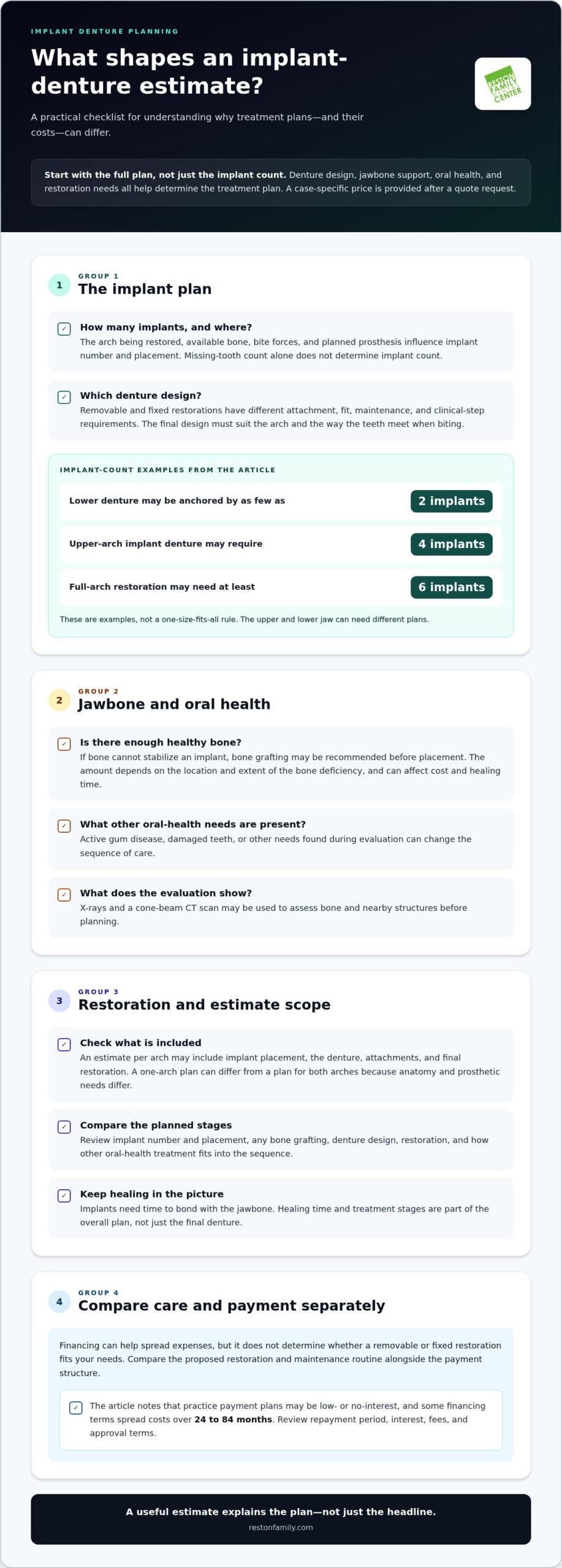
Implant count is one important factor, but it isn’t determined by the number of missing teeth alone. A lower denture may be anchored by as few as two implants, while a full-arch restoration may need at least six. The arch being restored, available bone, bite forces, and planned prosthesis all influence the design.
The upper and lower jaw may need different plans. An upper-arch implant denture may require four implants, while a lower-arch denture may use fewer. These examples show why estimates can differ even when people have similar tooth loss: anatomy and bite affect the support needed.
Bone health also shapes treatment. If the jaw doesn’t have enough healthy bone to stabilize an implant, bone grafting may be recommended before placement. This additional procedure affects treatment cost and healing time. The amount of grafting needed depends on the location and extent of the bone deficiency.
Oral health matters because implant placement and restoration depend on the condition of the supporting tissues. Active gum disease, damaged teeth, or other needs identified during an evaluation can change the sequence of care. Imaging, including X-rays and a cone-beam CT scan, may be used to assess bone and nearby structures before planning.
Denture design also affects the treatment. A removable implant denture and a fixed restoration require different plans for attachment, fit, and maintenance. The final restoration must suit the arch and the way your teeth meet when you bite. These choices affect the components and clinical steps involved.
To understand an estimate, review its full scope rather than the implant count alone. Compare the planned number and placement of implants, any bone grafting, denture design, and restoration. Ask how other oral-health treatment fits into the sequence. These details explain why implant dentures are planned individually, not priced by counting missing teeth.
Are there financing options available for dental implants in Ashburn?
Financing can help spread treatment expenses, while the restoration design determines what care involves. Dental practices may offer low- or no-interest payment plans, and some plans spread costs over 24 to 84 months. Terms, approval requirements, and treatment stages shape how payments fit your budget. Consider financing separately from clinical design: a manageable monthly payment doesn’t establish whether a removable or fixed restoration suits your needs.
Traditional dentures rest on the gums, while implant-supported dentures connect to implants for added support. Traditional dentures may need adjustments, relining, and eventual replacement. A removable implant denture comes out for cleaning; a fixed restoration stays in place. These differences affect daily care and how each option feels, as well as the treatment plan. Compare the practical routines alongside payment options.
Other restorations address different patterns of tooth loss. A dental crown restores an individual damaged tooth, while a bridge can replace 1-3 teeth. A denture can replace a larger span, and implants can support a crown, bridge, or denture after bonding with bone. Choosing among these options starts with the number and location of missing teeth, then considers how much healthy tooth structure remains.
An estimate per arch covers treatment for the upper or lower set, rather than a charge for every missing tooth. It may include implant placement, the denture, attachments, and final restoration. A plan for one arch may differ from one for both because each has distinct anatomy and prosthetic needs. Compare estimates by included stages and components, not by the headline alone.
All-on-4® is a full-arch implant approach that uses four implants to support a denture. It differs from a removable denture supported by attachments and from a traditional denture resting on the gums. The term describes an implant configuration, not a guarantee that every patient is suited to it. Ask how the proposed restoration will be secured, cleaned, and maintained, and how its treatment stages align with the financing term.
For a clearer comparison, pair each option with its planned restoration, care routine, and payment structure. Reviewing implant-supported denture options in that context can help you focus on fit and function, not financing alone.
Insurance, HSA and FSA benefits, financing, and phased treatment
Several payment approaches may help manage implant treatment expenses, including insurance benefits, tax-advantaged accounts, financing, and clinically appropriate treatment phases. Each works differently, so compare how it affects your expected out-of-pocket costs and treatment schedule.
Payment Plans and Third-Party Financing
A payment plan divides treatment expenses into scheduled payments, while third-party financing may provide credit for eligible care. Dental practices may offer low- or no-interest plans, and financing terms can spread costs over 24 to 84 months. Review the repayment period, interest, fees, and approval terms. A longer term can reduce each scheduled payment, but may increase total borrowing costs when interest applies.
Monthly Payments and Phased Treatment
Monthly payments spread expenses over time, while phased treatment separates care into stages. Phasing may spread costs when delaying a stage is clinically safe. For example, a plan may distinguish preparatory care from implant placement and final restoration. The sequence must still account for oral health, healing, and function. Delaying necessary care solely to reduce current expenses may affect treatment.
Before selecting financing, map the written treatment plan against expected payment dates. Identify which procedures occur first, which expenses are due at each stage, and how financing applies to those charges. This makes it easier to compare a practice payment plan with third-party credit. The lower monthly payment isn’t automatically the more affordable choice if it extends repayment or adds interest.
HSA and FSA funds can be used toward dental implant costs. These accounts use pre-tax funds, which may reduce the amount paid from other household income. Compare your balance and planned contributions with the timing of care. If treatment spans several stages, match eligible expenses to when each charge is expected.
Insurance may contribute toward parts of treatment, but coverage depends on your plan and the procedures involved. Medicare does not cover dentures, while some Medicare Advantage plans may cover them. Review your benefits alongside the treatment estimate rather than assuming a denture benefit applies to every implant-related procedure.
Phasing may help coordinate care with a budget, but clinical timing comes first. Missing teeth can affect chewing, and the jawbone can change after tooth loss. The dental team considers oral health and bone support when deciding whether a stage can safely wait. Use the proposed sequence to plan payments without separating financial decisions from healing needs.
Does dental insurance cover implants?
Dental insurance can contribute to implant treatment, but coverage depends on the plan and procedure. Some plans cover up to 10% of total implant costs. In Virginia, coverage may apply when treatment improves dental function or corrects functional impairment. That distinction matters: a plan may evaluate the purpose of care, not simply whether a tooth is missing.
Coverage may differ by treatment component. Even if a plan excludes the implant post, it may help pay for related services such as an exam, extraction, crown, or imaging. For example, a patient could have a crown benefit while the implant itself isn’t covered. Compare each procedure in the treatment plan with your plan’s benefit categories.
Denture benefits can differ from implant benefits. Dental insurance plans typically cover 50% of denture costs when classified as a major procedure. That benefit concerns the denture, and doesn’t automatically mean the implant posts or placement are covered. Check how the plan classifies each part of an implant-supported denture, including the prosthesis and related care.
Before treatment, compare the written estimate with your insurance benefit information. Review procedure names, covered amounts, exclusions, waiting periods, and annual limits in your plan documents. A crown, imaging, and implant post may be treated as separate services. This comparison helps clarify which charges insurance may reduce and which remain your responsibility.
Membership or dental discount plans work differently from insurance benefits. A dental discount plan may offer 15-20% off dentures, while insurance applies plan benefits to eligible services. Compare the discount against the denture portion of the estimate, rather than assuming it reduces implant placement too. Ask whether discounts can be combined with insurance, since the rules depend on the plan.
Public coverage varies by program. Medicare does not cover dentures, while some Medicare Advantage plans may cover them. Medicaid denture coverage varies by state. These distinctions matter when comparing a conventional denture with an implant-supported restoration. Identify your plan type, then review which denture or implant-related services it includes.
Start with the treatment estimate and your current benefits summary. Mark each planned service, then note whether it falls under implant, denture, crown, extraction, or diagnostic coverage. For example, separate imaging from implant placement instead of treating the full plan as one charge. This gives you a clearer picture of how dental insurance may contribute.
Treatment timeline and healing
Implant treatment moves through planning, placement, healing, and final restoration. At a consultation, you can discuss missing teeth, oral health, and your preferred denture design. Imaging helps assess the jawbone and nearby structures. This information shapes the proposed stages, what each includes, and the healing time built into the plan.
After implant placement, the implants need time to bond with the jawbone before supporting the final restoration. This healing often takes several months. A traditional multi-stage procedure may extend across months of healing between steps. The sequence depends on bone support, oral health, and whether bone grafting is part of treatment.
Some patients may receive temporary teeth on the day implants are placed, if stability and clinical factors allow. These provisional teeth are different from the final denture. Others need to wait for the surgical sites to heal before receiving a restoration. Your treatment plan should distinguish temporary teeth, implant integration, and final denture placement.
Swelling and soreness are common during the first several days after surgery. A softer diet is usually recommended while the surgical sites begin healing. Mild bruising or light bleeding can also occur and often improves over several days. Smoking or vaping, uncontrolled diabetes, active gum disease, certain medications, and prior radiation treatment can affect healing.
Compare advertised prices with complete written estimates by reviewing included services, not just the headline. A complete estimate should identify planned stages, such as imaging, implant placement, any grafting, and denture restoration. It should also distinguish temporary items from the final prosthesis. This helps reveal differences in treatment scope.
For Ashburn residents, treatment planning follows the same clinical considerations: jawbone support, denture design, oral health, and healing. The cost depends on those factors and the procedures included; your exact price is provided in a quote for your case. Discuss how each stage affects the timeline and what may change if healing takes longer.
Use the consultation to review the sequence, expected healing, and included services with the care team. A clear plan connects each procedure to the next, from imaging through final restoration. If you’re considering dental implant treatment, discuss how your oral health and jawbone support shape the timeline.
Reston Family Dental Center: Dental Implants
Reston Family Dental Center provides dental implants and implant-supported dentures for patients exploring tooth replacement. An evaluation connects your oral health, jawbone support, and restoration goals with a treatment plan. If you’re comparing options, discuss how implant treatment may fit your needs and which stages are involved.
Existing dental concerns can also affect planning. Root canal therapy treats teeth that need endodontic care, while dental cleanings support routine oral health. Considering these needs alongside implant planning can help you understand how treatment fits together.
To discuss dental implants or implant-supported dentures, contact Reston Family Dental Center or visit restonfamily.com.
Take the Next Step Toward a Personalized Plan
The cost of implant dentures in Ashburn is best understood in the context of your oral health and treatment goals. An evaluation can turn the information you’ve gathered into a plan that reflects your needs. Your cost breakdown is provided before treatment.
Before your consultation, consider what matters most in daily life: replacing missing teeth, improving denture support, or addressing another dental concern first. Sharing your priorities helps guide a focused discussion about treatment options and next steps.
Reston Family Dental Center offers dental implants, implant-supported dentures, and root canals. If you’re ready to discuss your options, contact Reston Family Dental Center. A thoughtful conversation can help you move forward with greater clarity and confidence.
Frequently Asked Questions
Why do dental implant prices vary so much between patients?
Different treatment plans require different components. One patient may need implants and a removable denture, while another may need bone grafting or a fixed restoration. The number and placement of implants, jawbone support, oral-health needs, and denture design all affect the work involved. For a useful comparison, look at what each plan includes, not just implant counts.
What Are Implant Dentures?
Implant dentures are replacement teeth supported by dental implants placed in the jaw. Depending on the design, the denture may be removable or fixed. The implants provide attachment points for a restoration that replaces several or all teeth in an arch. This differs from a conventional denture, which rests on the gums. The planned design determines how the denture is secured and cared for.
How long does the process take?
Implant denture treatment often takes several months because the implants need time to bond with the jawbone before final restoration. Some patients may receive temporary teeth on placement day when implant stability and clinical factors allow. Others follow a staged sequence with healing between procedures. Your schedule also depends on oral health and whether preparatory treatment, such as bone grafting, is part of the plan.
What happens if I have significant bone loss from wearing dentures?
Bone loss can affect how securely an implant is supported, so an evaluation assesses available jawbone and nearby structures. Tooth loss can lead to changes in the jaw, but wearing dentures doesn’t establish the cause of bone loss. If there isn’t enough healthy bone to stabilize an implant, bone grafting may be recommended. The amount and location of available bone help shape suitable treatment options.
What is the average cost of implant-supported dentures in Ashburn, Virginia?
The cost of implant dentures in Ashburn depends on the individual treatment plan, including denture design, implant placement, bone support, and any additional procedures. A single average may not reflect the care you need. Your cost breakdown is provided before treatment. For patients in Ashburn, comparing estimates by treatment components gives a more useful picture than comparing a headline figure.
How much do full-arch implant dentures cost per arch in Ashburn?
The price for a full-arch implant denture depends on the planned restoration and the procedures needed to support it. An upper arch and lower arch can require different designs because bone availability and bite forces vary. The exact figure is provided in a quote for your case. Review whether the estimate describes one arch or both, and which treatment stages it covers.
What do snap-in or overdenture implants cost in Ashburn?
Snap-in dentures are removable restorations that connect to implants through attachments. Their cost depends on denture design, implant placement, attachment components, and any preparatory care. Replacing attachment components may also be part of long-term maintenance. Since these details vary by treatment plan, compare the complete estimate rather than inferring a cost from a full-arch or fixed restoration estimate.
Are consultations, imaging, extractions, bone grafts, and temporary dentures included in quoted prices?
Inclusions depend on the scope of the individual treatment estimate. A consultation, imaging, extraction, bone graft, and temporary denture are separate potential parts of care, not automatically one package. One plan may require imaging and grafting before implant placement, while another may not. A complete estimate should identify the procedures and restoration stages included so you understand what the quoted treatment covers.