
How to Clean Invisalign Aligners With Soap and Soaking
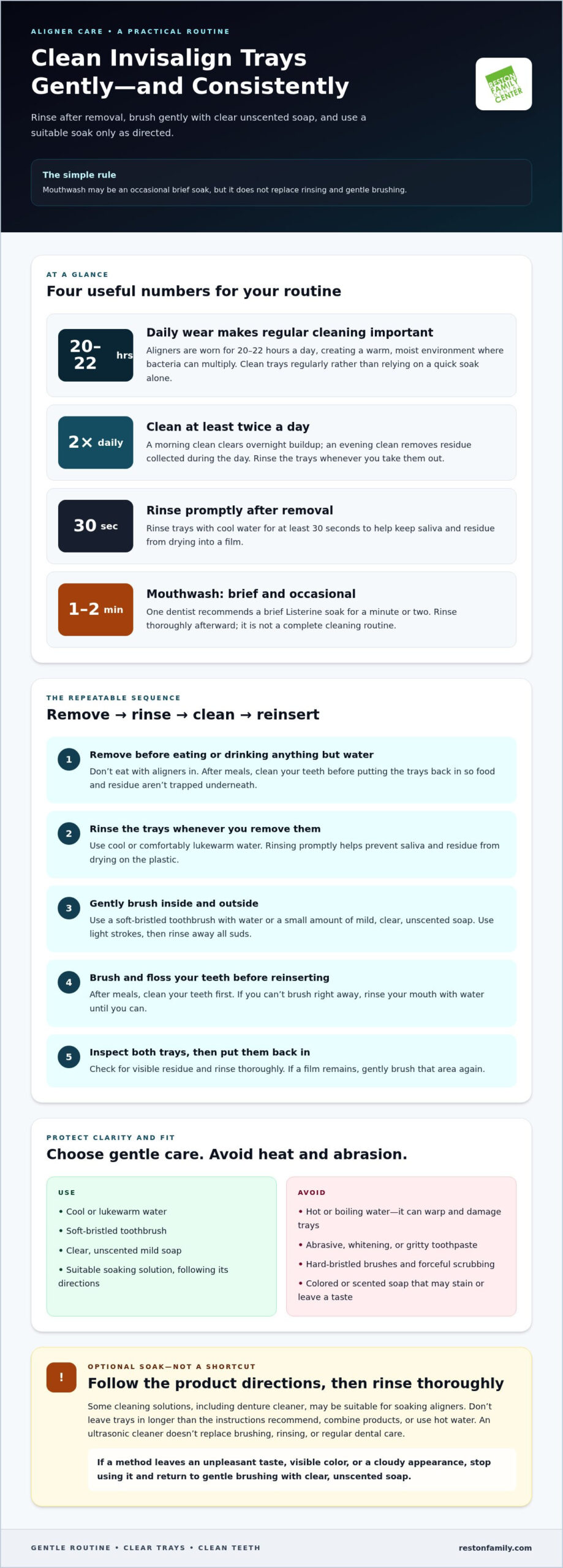
Mouthwash can be used for a brief soak, but a reliable routine for how to clean Invisalign aligners is to rinse them, gently brush with clear, unscented soap, and soak them in a suitable cleaning solution according to its directions. Rinse the aligners after removing them, and use cool or lukewarm water, never hot. These steps clean your trays without relying on mouthwash alone.
It’s easy to reach for mouthwash because it’s already part of your bathroom routine. But aligners need gentle care. The right approach helps keep them fresh without exposing the plastic to heat or abrasive scrubbing.
Here, you’ll learn when a mouthwash soak may fit, how to rinse and brush your trays, and how to soak them in a suitable cleaning solution. You’ll also learn what to do before putting your aligners back in, making cleaning a comfortable, repeatable part of your day.
Key Takeaways
- Use gentle cleaning methods for your trays, and avoid hot water and abrasive toothpaste that can affect their clarity or fit.
- Rinse aligners whenever you remove them, then clean your teeth before putting them back in to avoid trapping food and residue.
- Choose clear, unscented soap and a soft-bristled brush for routine cleaning.
- A soaking solution can complement brushing; follow its package directions and rinse the trays thoroughly before wearing them again.
- Mouthwash isn’t a substitute for regular brushing and cleaning, so understand when a brief soak may fit your routine.
Can I use mouthwash to clean Invisalign trays?
One dentist recommends a brief mouthwash soak, but it shouldn’t replace regular cleaning. The suggestion is to soak aligners in Listerine for a minute or two, then rinse them thoroughly before putting them back in.
- Keep mouthwash to an occasional, brief soak. A minute or two is the suggested duration for the Listerine method. Don’t treat mouthwash as your complete cleaning routine: aligners need rinsing and gentle brushing to remove residue. Because aligners are worn for 20-22 hours a day, bacteria can multiply in their warm, moist environment. Clean the trays regularly, rather than relying on a quick soak alone.
- Use warm or cool water, never hot water. Very hot water can warp and damage Invisalign aligners, affecting their shape. The product instructions specify warm water only, not hot water. When rinsing or preparing a cleaning solution, use water that feels comfortably warm or cool. Don’t use boiling water, a hot tap setting, or heated liquid to speed up cleaning.
- Skip abrasive toothpaste and gritty scrubbing. Toothpaste can contain abrasives that make aligners look cloudy over time. Instead of applying toothpaste directly, gently brush the trays with a soft-bristled toothbrush and water, or use mild, clear, unscented soap. Baking soda may be too gritty to scrub directly onto the plastic. A whitening toothpaste or a hard-bristled brush can also make rough scrubbing more likely.
- Choose clear, unscented soap, not colored or scented formulas. Colored soap may stain clear aligners, while scented soap can leave an unpleasant taste. Apply a small amount of mild soap to a soft brush, then gently clean the inside and outside surfaces. Rinse away all suds before wearing the trays. Don’t substitute hand soap with strong fragrance or visible dye just because it’s nearby.
- Use denture cleaner as a soak, not an ultrasonic shortcut. Some cleaning solutions may be suitable for soaking aligners; follow the product directions and rinse the trays well afterward. An ultrasonic cleaner doesn’t replace brushing, rinsing, or regular dental care. Avoid leaving aligners in a cleaning solution longer than its instructions recommend. Don’t combine products or use a cleaning method that exposes the trays to hot water.
For a reliable routine, rinse away mouthwash and cleaning residue, then inspect each tray before reinserting it. If a method leaves an unpleasant taste, visible color, or a cloudy appearance, stop using that product and return to gentle brushing with clear, unscented soap.
Brushing and flossing before reinserting aligners
For a simple routine, rinse and gently brush your aligners, brush and floss your teeth, then reinsert the clean trays. After eating, clean your teeth before wearing aligners again to avoid trapping food and saliva.
-
Brush and Floss Before Reinserting
After each meal, brush your teeth and floss before putting your aligners back in. This removes food particles that could otherwise stay between your teeth and trays. Pay attention to the gumline and spaces between teeth, where residue can linger. If you can’t brush right away, rinse your mouth with water until you can clean your teeth.
In the morning, brush and rinse your teeth before reinserting your trays. Plaque and bacteria can build up overnight, so cleaning your mouth helps reduce residue and bad breath. Don’t put aligners over teeth that still have food or a coating from a meal. A clean mouth helps prevent the trays from holding unwanted debris against your teeth.
-
Gently Brush the Aligners
Gently brush the inside and outside of each tray with a soft toothbrush. Use water or a small amount of mild, clear, unscented soap, then rinse the aligners thoroughly. A soft brush reaches the tray’s grooves and edges without force. Clean the full surface, including the areas that sit against your teeth.
Use light strokes instead of scrubbing hard. Pressure and abrasive products can scratch or cloud the clear plastic, making buildup harder to see and remove. Avoid whitening or gritty toothpaste on the aligners. After rinsing both trays, check for visible residue. If you still see a film, gently brush that area again.
-
Make Cleaning Part of Your Daily Routine
Clean your aligners at least twice daily, and rinse them whenever you remove them. A morning clean clears overnight buildup; an evening clean removes residue collected during the day. When you brush your teeth, take a moment to rinse and gently brush the trays too. This routine helps prevent saliva and debris from drying onto the plastic.
Keep the sequence simple: remove the trays, rinse them, clean your teeth, then gently brush and rinse the aligners before reinserting. Don’t eat with your aligners in, and don’t put them back over unbrushed teeth after a meal. If you’re considering treatment, explore Invisalign treatment as a way to discuss a personalized aligner plan.
Rinsing aligners after removal
Rinse trays every time you remove them, using cool water for at least 30 seconds. This quick step helps prevent saliva and residue from drying into a film.
- Remove your aligners before meals and drinks other than water. Don’t eat with trays in, and take them out before coffee, juice, or other beverages. Food and colored drinks can leave residue on the plastic or teeth. After removal, rinse the trays promptly instead of letting saliva dry on their surfaces. This makes the next cleaning step easier.
Place both trays in their carrying case while you eat or drink. A case keeps them together and protects them from being misplaced on a napkin or left exposed on a table. When you’re finished, rinse the aligners before putting them back in. Clean your teeth before reinserting them so food particles aren’t trapped underneath.
- Rinse each tray under cool water for at least 30 seconds. Do this every time you remove your aligners, even if you plan to brush them later. Hold one tray beneath running water and turn it to rinse both the inside and outside. Repeat with the second tray. Cool water helps wash away saliva and loose debris without exposing the plastic to heat.
Pay attention to the edges and grooves where saliva may collect. A quick splash may leave residue behind, so rinse the entire surface thoroughly. If you can’t clean the trays immediately, a thorough rinse helps prevent a dried film from forming before your next cleaning.
- Give dropped or soiled aligners an extended cool-water rinse. If a tray falls onto a surface or becomes visibly dirty, rinse it under cool water for 2 minutes. Keep the water moving across both sides, including the edges that sit against your teeth. This emergency rinse removes loose dirt before you put the tray back in.
Don’t use hot water to clean a dropped tray. Very hot water can warp Invisalign aligners and change their shape. After rinsing, inspect the plastic for visible debris. If residue remains, use your regular gentle cleaning method rather than scrubbing with a rough material.
- Make rinsing part of every removal, not just mealtimes. A tray removed for brushing, a drink, or another short break still needs a rinse before storage. Invisalign aligners are worn for 20-22 hours a day, so brief breaks happen throughout the day. Keeping the rinse routine consistent helps stop saliva from drying onto the aligners between cleanings.
After rinsing, return the trays to their case if you aren’t reinserting them right away. Don’t wrap them in a napkin or leave them beside a sink, where they could be forgotten or exposed to debris. Before reinserting them, check that each tray looks clean and feels free of loose particles.
Cleaning aligners with unscented, clear soap
For everyday cleaning, use mild, clear, unscented soap, water, and a soft-bristled toothbrush. Clear antibacterial soap is another option. Specialized cleaning products aren’t essential for a basic routine.
-
Wash with Mild Soap and Water
Rinse each tray, then put a small amount of mild soap on a soft-bristled toothbrush. Gently brush the inside and outside surfaces, including the edges and grooves where residue can collect. Use cool or lukewarm water, not hot water. Finish by rinsing away every trace of soap before wearing the aligners again.
Make this part of your daily tray-care routine. If you notice suds or a soapy taste after rinsing, rinse the aligners again. Don’t use a rough brush or scrub hard to remove buildup. Gentle, thorough strokes clean the plastic without abrasive products.
-
Use Clear Antibacterial Soap
Choose a clear antibacterial soap without fragrance or added color, then apply a small amount to your brush. Gently clean both sides of each aligner and rinse them well afterward. Clear soap avoids the coloring found in some formulas, while unscented soap is less likely to leave an unpleasant taste.
Check the soap label before cleaning. Colored or strongly scented hand soap may leave a stain or lingering flavor on clear trays. For example, skip a brightly colored, perfumed soap even if it’s convenient beside the sink. Keep a suitable soap near your toothbrush to make the routine easier to repeat.
- Clean the whole tray, not just visible areas. Hold one aligner securely and brush its interior, exterior, edges, and curved sections. Repeat with the second tray. A quick pass over the front can miss residue on the tooth-facing surfaces, so turn each tray as you work. Rinse both aligners thoroughly before putting them back in.
Clean aligners at least twice daily, and rinse them whenever you remove them. Pair tray cleaning with your morning and evening oral-care routines. For example, brush the trays while brushing your teeth, then rinse both before reinserting them. This routine removes loose residue before it dries.
- Keep toothpaste off the aligners. Toothpaste can be abrasive and may leave clear trays looking cloudy over time. Use soap and water for the aligners instead, even if toothpaste is your usual choice for brushing your teeth. Don’t use baking soda as a direct scrub, since its grit may be too rough for the plastic.
Specialized Invisalign cleaning products are optional for routine cleaning; mild soap can also be effective. If a tray still looks dirty after brushing, repeat the gentle cleaning and rinse it well. Avoid combining cleaning products or using hot water. A simple soap-and-water method keeps the steps clear and easy to follow.
Soaking aligners in cleaning solution
Soaking can complement brushing by loosening residue from aligners. Choose a solution made for aligners or a gentle denture cleaner, and follow its directions.
- Pick a suitable cleaning solution. Invisalign Cleaning Crystals are made to dissolve in water and clean clear tray material. A gentle denture solution is another soaking option. Use a product intended for aligners, and follow its package directions, including the soak time. Don’t assume that a longer soak cleans better: soaking aligners for over an hour can weaken the plastic.
- Prepare the crystals as directed. Dissolve one individual Invisalign Cleaning Crystals packet in a small cup of water. Gently shake or stir the mixture for 20 seconds to help dissolve the crystals. Each packet is intended for single use, so don’t save the used solution for another soak. The water collects residue from the trays, which is why most cleaning solutions are also intended for one use.
- Use the stated soaking time. Invisalign Cleaning Crystals can be used with cool water for a 15-minute soak. Follow the package directions rather than extending the soak or guessing at a duration. Cleaning crystals are often used once or twice per week, or as directed by your orthodontic team. A cleaning solution can help remove buildup, but it doesn’t replace regular brushing.
- Rinse the trays and container thoroughly. After soaking, rinse the aligners with warm water and clean the soaking tub, following the Invisalign Cleaning System directions. Check both trays for visible residue before putting them back in. If you used a denture cleaner, rinse according to its package instructions. Don’t reuse cloudy soaking water, since it may contain debris loosened from the aligners.
- Keep soaking as one part of your routine. Brush the trays gently and rinse them regularly, even if you use a cleaning solution. An ultrasonic cleaner doesn’t replace brushing, rinsing, or regular dental care. If buildup on your teeth remains a concern, a professional dental cleaning appointment can support your oral-care routine.
Reston Family Dental Center: Dental Implants
Reston Family Dental Center provides dental implants and other restorative care, as well as dental cleanings to support ongoing oral health. Careful aligner cleaning is part of your daily routine, while a professional dental cleaning can address plaque buildup and support healthy teeth and gums.
If you have concerns about oral hygiene during treatment or want professional guidance on keeping your teeth clean, a dental cleaning is a relevant next step. For missing teeth, dental implants or implant-supported dentures may offer restorative options. Root canal treatment addresses a different need, such as a tooth requiring care inside its root.
Contact Reston Family Dental Center to discuss your dental care needs.
Keep Your Smile Moving Forward
Knowing how to clean Invisalign aligners is a practical part of caring for your smile. Connect your everyday habits with your wider dental needs. Notice changes in comfort, cleanliness, or how your teeth feel, and bring those concerns into your ongoing care.
Reston Family Dental Center offers dental implants and implant-supported dentures for patients considering tooth replacement, as well as root canals for teeth needing treatment inside the root. These services address different needs, so start the conversation with what you’re experiencing and the care you’re seeking.
If you’re ready to discuss your dental care, contact Reston Family Dental Center. A thoughtful next step can help you stay engaged with your oral health and feel confident about the care ahead.
Frequently Asked Questions
What if I forget to clean my aligners one day?
Clean them as soon as you remember, then return to your usual routine. Gently brush with a soft toothbrush and rinse thoroughly before wearing them again. Don’t compensate by scrubbing hard or soaking them longer than directed. If the trays still look cloudy or have a lingering odor after cleaning, use an appropriate aligner-cleaning solution as directed.
How often should you clean Invisalign aligners?
Clean Invisalign aligners at least twice daily, and rinse them whenever you remove them. A practical cue is to clean them during your morning and evening oral-care routines. Rinse them after removing them midday too, even if you’ll brush them more thoroughly later. This helps keep saliva and loose residue from drying on the trays between regular cleanings.
Can you clean Invisalign aligners with toothpaste, mouthwash, or soap?
Use mild, clear, unscented soap for routine cleaning, not toothpaste, which can be abrasive and cloud the plastic. Mouthwash doesn’t replace brushing and rinsing; one dentist recommends a brief Listerine soak for a minute or two. For how to clean Invisalign aligners, a soft brush and suitable soap provide a simple daily method. Rinse thoroughly before reinserting.
How do you remove stains and odors from Invisalign aligners?
Gently brush the trays with a soft toothbrush and clear, unscented soap, then rinse them thoroughly. For an additional clean, soak them in Invisalign Cleaning Crystals according to the package directions. Avoid colored soap, which can stain, and scented formulas that may leave a taste. Don’t scrub discoloration with toothpaste or baking soda, since abrasive particles can scratch or cloud the aligners.
How long should Invisalign aligners soak in cleaning solution?
Follow the directions for the specific cleaning solution you use. Invisalign Cleaning Crystals can be used for a 15-minute soak in cool water, while Aligner Cleaning Foam can refresh trays in up to 5 minutes. Denture-cleaner directions vary, so use the package’s stated time. Don’t leave aligners soaking for over an hour, because prolonged soaking can weaken the plastic.
What should you avoid when cleaning Invisalign aligners?
Avoid hot water, abrasive toothpaste, gritty scrubbing, and colored or scented soap. These can warp the trays, make them look cloudy, or leave stains and an unpleasant taste. Don’t eat with aligners in, and remove them before drinking anything other than water. An ultrasonic cleaner can be an extra tool, but it doesn’t replace brushing, rinsing, or regular dental care.
What are the risks of wearing dirty Invisalign aligners?
Dirty trays can hold saliva and food residue close to your teeth. Because aligners create a warm, moist space, bacteria can multiply there, and residue may contribute to buildup or bad breath. Rinsing and cleaning your trays removes material before it dries. If visible debris remains after your usual cleaning, gently brush the affected area and rinse again.
How should you clean Invisalign aligners when traveling?
Pack your carrying case, a soft toothbrush, and a small amount of clear, unscented soap. Rinse trays with cool water when you remove them, and clean them properly when you have access to a sink. Don’t wrap them in a napkin during a meal. Whether you’re commuting around Reston or traveling between Great Falls, Ashburn, Chantilly, Herndon, and Vienna, keep the case with you.