
How to Clean Under an Implant-Supported Bridge at Home
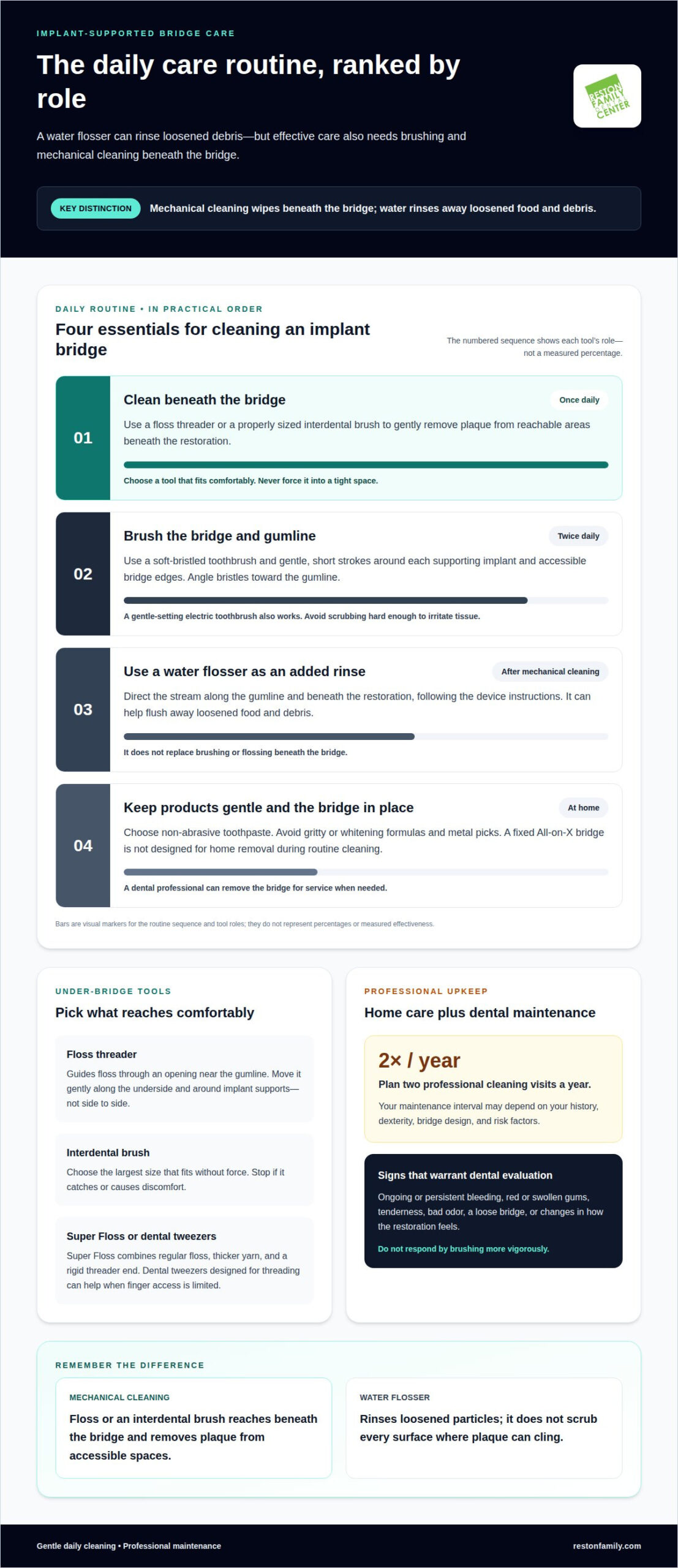
A water flosser alone isn’t enough to clean beneath an implant-supported bridge. For effective cleaning under an implant-supported bridge, use a floss threader or a correctly sized interdental brush to gently remove plaque beneath the restoration at least once a day. A water flosser can rinse away loosened food and debris, but works best alongside mechanical cleaning.
With an All-on-X fixed bridge, the area underneath can be difficult to reach, and the restoration isn’t designed for you to remove at home for routine cleaning. That can make daily care feel more complicated than cleaning natural teeth. This guide explains how to reach beneath the bridge, which tools can help, and how to clean its exposed surfaces. You’ll also learn when a water flosser is useful, why it shouldn’t replace brushing or cleaning beneath the bridge, and which changes around your gums or restoration warrant dental attention.
Key Takeaways
- Brush the bridge and nearby gumline gently as part of your daily care, and choose a non-abrasive toothpaste.
- Use a floss threader or a properly sized interdental brush to reach beneath the restoration without forcing a tool into a tight space.
- Treat a water flosser as an added rinse, not a substitute for brushing and cleaning beneath the bridge.
- Keep a fixed All-on-X bridge in place at home, and seek dental evaluation for ongoing bleeding, tenderness, odor, looseness, or changes in the restoration.
How do I care for my implant-supported bridge?
Brush twice daily and clean beneath the bridge once daily. For cleaning under an implant-supported bridge, use a floss threader or a properly sized interdental brush.
-
Brush Around and Beneath the Bridge
Brush exposed bridge surfaces twice daily with a soft-bristled toothbrush, angling the bristles toward the gumline. Use gentle, short strokes around each supporting implant and beneath accessible edges. A gentle-setting electric toothbrush also works. Focus on the junction between the bridge and gums, where plaque can collect. Avoid scrubbing hard enough to irritate the tissue.
-
Thread Floss Beneath the Bridge
Guide floss beneath the restoration with a floss threader. Gently move it along the underside and around each implant support. Regular floss may not pass straight down, so guide it through an opening near the gumline. Move it up and down, not side to side. When cleaning under an implant-supported bridge, never force floss through a tight space.
-
Clean Between Teeth with an Interdental Brush
Slide an interdental brush into spaces it can enter comfortably, including accessible areas beneath the bridge. Choose the largest size that fits without force, and ask your hygienist or dental professional to help you select one. An interdental brush can remove plaque from reachable spaces. Stop if it catches or causes discomfort.
-
Choose Cleaning Products and Set a Routine
Use a soft brush and non-abrasive toothpaste. Avoid gritty or whitening formulas and metal picks, which can scratch surfaces or irritate gums. Clean beneath the bridge daily and brush at least twice daily. Plan two professional cleaning visits a year; your maintenance interval may depend on your history, dexterity, bridge design, and risk factors. Red, swollen, or bleeding gums, persistent tenderness, bad odor, or a loose bridge need dental evaluation.
Is a water flosser enough by itself?
No. A water flosser can rinse away loosened food and plaque, but it generally doesn’t replace mechanical cleaning beneath a bridge.
-
Consider the Limits of a Water Flosser
Use a water flosser alongside your toothbrush and under-bridge cleaning, not as your entire routine. Its stream can help flush surrounding areas after floss or an interdental brush has loosened debris, but it doesn’t scrub every surface where plaque can cling.
Direct the stream along the gumline and beneath the restoration, following the device instructions. A water flosser supports dental hygiene, but the cleaning methods differ: water rinses, while floss physically wipes the bridge’s underside. It can also be a helpful extra tool a few times a week.
-
Guide Floss with Dental Tweezers
Thread floss beneath the bridge with a reusable floss threader, then gently clean the underside and spaces around the supports. Insert about one-third of the floss into the threader before guiding its tip through an opening. Move the floss along the bridge rather than snapping it against the surrounding gum.
For larger spaces, try Super Floss, a three-in-one option with regular floss, thicker yarn, and a rigid threader end. Dental tweezers designed for threading can also help guide floss where your fingers have limited access. Choose a tool that reaches comfortably, and don’t force floss through a tight gap.
Use mechanical cleaning first, then rinse with the water flosser to clear loosened debris. If your routine is difficult to manage or the bridge is hard to reach, a professional dental cleaning can support ongoing hygiene.
How Do You Clean Under an All-on-X Dental Bridge?
Clean beneath the fixed bridge and around each implant connection every day. Your hygienist can provide professional maintenance, and a dental professional can remove the bridge for service when needed.
-
Clean Around the Implant Connections
Guide floss beneath the bridge and gently wipe its underside near each connection. Food and plaque can collect beneath replacement teeth, including the pontic, so clean along the full span rather than just the visible surfaces. A floss threader can help carry floss through an opening near the gumline. Don’t force it through a tight space.
Follow with an interdental brush wherever it fits comfortably. Use a controlled back-and-forth movement to clean accessible gaps, then rinse away loosened debris. Aim to reach the tissue and restoration edges without scraping or pressing hard against the gum.
-
Clean Around Supporting Implants and Titanium Posts
Brush around every supporting implant, paying attention to where the gum meets the bridge. Fixed full-arch bridges attach to underlying titanium fixtures, so clean the accessible gumline around each support rather than trying to reach inside the restoration. A soft toothbrush cleans exposed surfaces, while floss or an interdental brush reaches beneath areas the bristles miss.
Natural teeth can decay, but implant materials cannot. The gum and bone around dental implants can still become inflamed or infected, so daily cleaning remains essential after placement. Use tools gently around each post, and avoid metal picks that could scratch restorative materials or irritate tissue.
- Keep the bridge in place during your home routine. A fixed All-on-X restoration isn’t designed for you to remove for daily cleaning. Clean beneath it with floss or an interdental brush, then use a water flosser to rinse away loosened particles if it’s part of your routine.
- Professional maintenance can address areas that remain difficult to reach. A dental professional can clean hard-to-reach areas and assess tissue health and bridge integrity. At home, watch for persistent bleeding, swelling, tenderness, odor, or changes in how the bridge feels. These signs warrant dental evaluation, not more vigorous brushing.
Cleaning underneath an implant-supported bridge
Cleaning under an implant-supported bridge works best as a steady routine: reach the gumline, loosen trapped debris, then rinse. Clean beneath the restoration at least once a day, paying attention to the underside and supporting areas.
- Start with a clear view of the restoration. Slightly close your mouth and pull your lip down to see the gumline and bridge edge more easily. Brush exposed surfaces with a soft-bristled toothbrush, then note where food gets trapped beneath the replacement teeth. A small mirror can help you inspect the full span.
- Pass a floss threader through an opening near the gumline. Pull floss beneath the bridge and gently move it up and down along the underside. Work around each supporting implant, using a fresh section as debris appears. When cleaning under an implant-supported bridge, don’t snap floss against the gum or force it through a narrow gap.
- Use an interdental brush only where it fits without pressure. Guide it beneath accessible sections and between the bridge and gum, moving carefully to dislodge remaining particles. A brush that bends or catches may irritate tissue. Avoid metal picks, which can scratch restorative surfaces.
- Rinse after mechanical cleaning. A water flosser can wash away loosened debris, but it doesn’t replace wiping plaque from beneath the restoration. Make cleaning under an implant-supported bridge part of your daily routine, and note any spots that remain difficult to reach. Persistent bleeding, tenderness, swelling, odor, or looseness needs dental evaluation, not harder scrubbing.
At a professional appointment, maintenance can include cleaning hard-to-reach areas and checking tissue health and bridge integrity. If buildup repeatedly remains inaccessible, a dental professional can assess the bridge’s cleanability. Schedule a dental cleaning appointment for help maintaining your implant restoration.
Reston Family Dental Center: Dental Implants
Reston Family Dental Center provides dental implants, implant-supported dentures, and dental cleanings to support ongoing oral health. If your bridge is difficult to clean or you notice persistent bleeding, tenderness, swelling, or a change in fit, a dental visit can help assess the restoration and surrounding tissues. Professional maintenance can address hard-to-reach areas and check the bridge’s condition. For patients considering implant treatment, the practice can also discuss dental implant care and options.
Contact Reston Family Dental Center to discuss dental cleaning or implant care.
Make Your Daily Care Work for You
A routine is most useful when you can repeat it comfortably and reach the areas your bridge design leaves exposed. If a tool repeatedly catches, access feels awkward, or you’re unsure whether you’re cleaning beneath an implant-supported bridge effectively, raise that specific concern at your next dental visit. A demonstration can help you adjust your technique and identify areas that need attention, rather than brushing harder or forcing a tool into place.
Changes such as ongoing soreness, bleeding, an unpleasant odor, or a bridge that feels different also deserve attention. Home care supports oral health, but it cannot assess the restoration or surrounding tissues. Reston Family Dental Center can discuss your implant-related concerns and care needs. Contact Reston Family Dental Center to take the next step with a clear, practical conversation. A comfortable routine can start with one small adjustment.
Frequently Asked Questions
How Do Oral Irrigators and Water Flossers Protect Implant Health?
Oral irrigators help flush loosened food and plaque from around the bridge, but they don’t replace brushing or wiping beneath it. Use the stream along the gumline and beneath the restoration after mechanical cleaning, so rinsing carries away debris you’ve already dislodged. Persistent bleeding, swelling, or discomfort won’t be solved by increasing water pressure; arrange a dental evaluation instead.
What tools are best for cleaning under an implant bridge: floss threaders, super floss, interdental brushes, or water flossers?
No single tool suits every bridge opening. A floss threader guides regular floss through a narrow access point, while Super Floss combines a rigid end with a thicker cleaning section for larger spaces. An interdental brush can reach gaps where it fits comfortably. A water flosser rinses loosened debris but doesn’t provide the same wiping action as floss.
Can you use regular floss or a floss threader under an implant bridge?
Yes. Regular floss can clean beneath an implant bridge when guided underneath through an opening near the gumline. A floss threader helps carry it through when the floss can’t pass straight down. Move the floss gently along the underside and around the supports. If it won’t fit, don’t force it; choose another suitable tool.
What happens if you do not clean under an implant-supported bridge?
Food and plaque can accumulate beneath the bridge and form biofilm, irritating nearby tissues. Inflammation or infection can affect the gums and bone around implants, even though the restoration itself can’t decay like natural teeth. Persistent bleeding, swelling, pain, a loose bridge, or unpleasant odor warrants dental evaluation. Patients in Reston, Great Falls, Ashburn, Chantilly, Herndon, and Vienna can discuss these changes during a local dental visit.