
Local Dentist for Nervous Patients in Chantilly
Dental anxiety doesn’t automatically rule out combining treatments in one visit. The plan may include nitrous oxide, clear communication, and coping strategies to make a longer appointment more manageable. A local dentist for nervous patients in Chantilly can discuss your concerns and how to pace your visit.
If dental care makes you tense, staying comfortable through several procedures may feel difficult to imagine. You deserve to be heard, understand what’s happening, and have a way to pause or communicate during treatment.
Learn how nitrous oxide may help, what patient-led communication and coping strategies can look like, and what to consider when planning several treatments in one visit.
Key Takeaways
- Dental anxiety is nothing to be ashamed of; identifying what makes visits difficult can help you take a manageable first step back to care.
- Learn how nitrous oxide may support a calmer experience and what to discuss when considering it for treatment.
- Set expectations with your dental team by sharing your concerns, agreeing on pause signals, and speaking up about your comfort.
- Explore simple coping and distraction techniques, and how your treatment plan can account for your needs during a longer visit.
Breaking the cycle of dental avoidance and shame
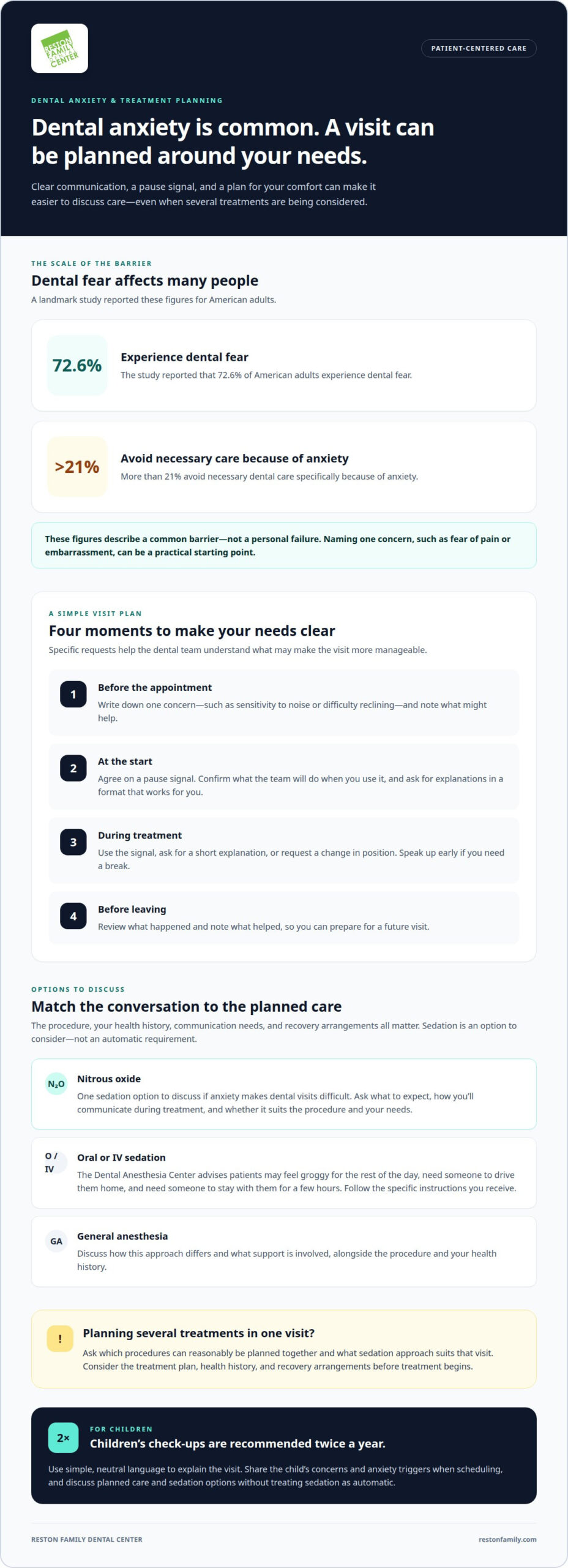
Dental anxiety can keep care out of reach for years. Some people avoid dental visits for decades at a time. A landmark study reported that 72.6% of American adults experience dental fear, and more than 21% avoid necessary dental care specifically because of anxiety. These figures describe a common barrier, not a personal failure. Naming one concern, such as fear of pain or embarrassment, gives you a practical starting point.
Yes. Your first visit can focus on discussing anxiety and planning before treatment begins. An anxiety-friendly appointment may include clear explanations, an agreed signal for pauses, and a pace shaped around your concerns.
Before your first appointment, note what makes dental care difficult and what might help you feel more in control. You could request step-by-step explanations or a pause before a procedure. Share relevant medical, sensory, communication, or mobility needs so the visit can be planned accordingly. Specific requests are easier to discuss than a general fear of “the dentist.”
For children, use simple, neutral language to explain the visit and share their concerns when scheduling pediatric care. Children’s check-ups are recommended twice a year. If sedation might help, discuss the child’s needs and planned care rather than treating sedation as the automatic response to anxiety.
Patients with special needs may benefit from planning for sensory sensitivities, communication preferences, or mobility requirements. Note what helps, what can feel overwhelming, and how the patient can signal discomfort. These details help the dental team understand the patient’s needs before care begins.
Finances can also affect whether someone moves forward with treatment. Before your appointment, organize insurance information and list questions about payment arrangements or financing. Compare the proposed treatment plan with your coverage and budget, then consider which needs are most pressing. A written list can keep the conversation focused and clarify the next step.
How does nitrous oxide help alleviate dental anxiety during procedures?
Nitrous oxide is one sedation option to discuss if anxiety makes dental visits difficult. Before treatment, explain what worries you, such as sounds, sensations, or difficulty staying still. The dentist can describe the planned approach, how you’ll communicate during treatment, and what to expect afterward. This conversation can help determine whether nitrous oxide suits the procedure and your needs.
What do local patients say about dentists’ care for dental anxiety in Chantilly? Experiences vary. Look for comments about clear explanations, respectful communication, and support for anxious children.
Sedation approaches can include nitrous oxide, oral or IV sedation, and general anesthesia. Discuss the procedure, your health history, and the support involved, since these approaches differ. For oral or IV sedation, the Dental Anesthesia Center advises that patients may feel groggy for the rest of the day, need someone to drive them home, and need someone to stay with them for a few hours. Plan transportation and support according to the specific instructions you receive.
For a child, discuss the planned treatment, anxiety triggers, and sedation options before the appointment. For example, explain whether the child is most worried about unfamiliar sounds, waiting, or the procedure itself. A clear plan can help caregivers prepare the child and understand what support may be needed afterward. Sedation is an option to consider, not an automatic requirement for every young patient.
When several treatments are being considered, ask which procedures can reasonably be planned together and what sedation approach suits that visit. The treatment plan, health history, and recovery arrangements all matter. If anxiety has delayed routine care, explore dental care options and raise your concerns before treatment begins.
Patient-led communication and control
Stress can build when you don’t know what a procedure involves or how long it may take. Before treatment, agree on a simple communication plan with the dental team. For example, choose a hand signal for “pause” and confirm the team will stop to explain the next step. Knowing how to communicate can help you feel more involved in your care.
Ask for explanations in a format that works for you. You might prefer a brief overview before each step, plain language instead of technical terms, or a moment to prepare before instruments are used. If you need a break, say so early. The team can also explain which parts of a procedure require you to stay still and when it’s practical to pause.
- Before the appointment: Write down one concern, such as sensitivity to noise or difficulty reclining.
- At the start: Agree on a pause signal and confirm what the team will do when you use it.
- During treatment: Use the signal, ask for a short explanation, or request a change in position.
- Before leaving: Review what happened and note what helped for the next visit.
Specific preferences are easier to follow. If uncertainty causes stress, ask the dentist to describe each stage before it begins. If reclining feels difficult, mention that before the chair is adjusted. Clear requests give the team practical guidance, while regular check-ins let you say whether the plan is working.
Feeling in control also means understanding your choices. Ask what a procedure involves, which alternatives may suit your oral health needs, and how each option affects the treatment plan. You can take time to consider the explanation before deciding. A written note after the appointment can help you remember what was discussed and prepare questions for future care.
Coping and distraction techniques during treatment
Prepare for your appointment by listing your triggers, choosing a calming activity, and writing down questions. For example, note whether sounds, reclining, or uncertainty about the next step makes you anxious. Share your list before treatment so the team understands what may help you feel more relaxed.
Distraction gives your attention a familiar focus during a procedure. Choose music, a podcast, or a mental task, such as picturing a familiar walk through a favorite park. If you use headphones, agree on how the dental team will get your attention before treatment starts. This keeps instructions clear while giving you something steady to focus on.
- Use paced breathing: Breathe slowly and comfortably, letting each exhale become your focus.
- Picture a familiar place: Imagine details such as the colors, sounds, and layout of a room you enjoy.
- Relax one area at a time: Notice your shoulders, hands, and jaw, then release tension where you can.
- Break treatment into steps: Focus on the current stage rather than the entire appointment.
Try one technique at a time before your visit, such as listening to a playlist during a quiet moment at home. This can help you decide whether it suits you. During treatment, tell the team if a sound or position increases your stress, then use your agreed pause signal to reset or adjust your approach.
For a longer appointment, ask which stages are planned and where a natural pause might fit. For example, you could pair music with breathing during one stage, then take a short break before the next. Your needs may change during the visit, so keep communicating instead of forcing a technique that isn’t helping.
Ready to plan a routine visit with comfort in mind? Schedule a dental cleaning and share which coping strategies you’d like to use.
Reston Family Dental Center: Dental Implants
Reston Family Dental Center provides Dental Implants for patients exploring ways to replace missing teeth. If dental anxiety has delayed care, sharing your concerns and preferred communication approach can make the first conversation more focused. You can discuss whether Dental Implants or Implant-Supported Dentures suit your needs and learn about the treatment steps.
For other concerns, Reston Family Dental Center also provides Root Canals and Dental Cleaning. Bring a short list of questions, such as what a procedure involves and how you can communicate during your appointment. This can help you discuss both your oral health and what could make care feel more manageable.
Contact Reston Family Dental Center to discuss your dental needs and the next step.
Make your next dental step your own
You don’t need to resolve every concern before seeking care. Choose one priority for your next visit, such as understanding a treatment plan or discussing what helps you feel comfortable. That gives the conversation a clear starting point and lets you focus on one practical step rather than your entire history of dental anxiety.
When you’re ready to discuss your needs, a local dentist for nervous patients in Chantilly can be a practical next step. Bring your most important questions and describe what would make the appointment feel manageable. You can take the conversation one decision at a time, keeping your comfort and oral health in view.
For care related to Dental Implants, Implant-Supported Dentures, or Root Canals, reach out to Reston Family Dental Center when you’re ready. Contact Reston Family Dental Center to start a conversation about your dental needs.
A thoughtful first step can make future dental care feel more approachable.
Frequently Asked Questions
Can I receive multiple dental treatments under sedation in one visit?
Possibly, if the treatment plan and sedation approach suit combining the procedures. The dentist considers which treatments you need, their sequence, and the likely appointment length. Ask which parts could be completed together and which may be better scheduled separately. For example, a cleaning and another procedure involve different steps, so planning helps set realistic expectations.
Can modern dentistry truly be pain-free for sensitive patients?
No dentist can promise every procedure will be completely pain-free, but your comfort concerns can shape the plan. Tell the dental team if you’re sensitive to temperature, pressure, or a particular area of your mouth. During treatment, describe pressure or pain as clearly as you can. This helps the team respond to your experience rather than make assumptions.
What should I do if I feel overwhelmed or panicked in the dental chair?
Tell the dental team promptly if you feel overwhelmed and need a pause. If speaking is difficult, use the signal you agreed on before treatment. Once care pauses, explain what triggered the feeling, such as a sound or sensation, and what might help next. You can ask for an explanation, a change in position, or time before continuing.
Who Is a Candidate for Sedation Dentistry?
Adults and children with dental fear or sensitivity can consider sedation dentistry. Reston Family Dental Center offers sedation dentistry for both. Describe the specific challenge, such as difficulty tolerating dental procedures or sensitivity during care, and the treatment being planned. This helps focus the discussion on whether sedation belongs in your care plan.
Will the dentist judge me if I have not seen a dentist in years?
No. A long break from dental visits is useful context for planning, not a reason to feel ashamed. Be candid about when you last received care, any symptoms you’ve noticed, and what made returning difficult. For example, mentioning a chipped tooth or sensitivity can focus the conversation on your current concerns and a practical next step.
Which dentists in Chantilly, VA specialize in treating nervous or anxious patients?
Reston Family Dental Center offers sedation dentistry for adults and children with dental fear or sensitivity. For anyone seeking a local dentist for nervous patients in Chantilly, this is an option to discuss. The practice serves patients in Chantilly, Reston, Great Falls, Ashburn, Herndon, and Vienna. Share your concerns and the treatment you’re considering.