
New Dental Crowns in Reston: Care and When to Call
You leave the dental office with a new crown, then pause before biting into dinner: Is slight tenderness expected, and could a crunchy snack damage the restoration? It’s understandable to feel cautious while your mouth adjusts. This guide to caring for new dental crowns Reston patients receive explains how to build a comfortable routine and what to do if something feels wrong.
Good crown care depends on the restoration stage and the symptoms you notice. A temporary crown may need different attention from a permanent one, and mild sensitivity is different from a bite or fit problem. Learn how to eat and clean around your crown, what changes to monitor, and when to contact your dentist. Reston Family Dental Center provides restorative and emergency dental care if a concern comes up.
Key Takeaways
- Follow the instructions for your specific crown and treatment stage, especially if you have a temporary restoration.
- Monitor how the crown feels after placement, and discuss changes such as a worsening ache or an uneven bite with your dentist.
- Brush and clean between teeth consistently to care for the crown, the tooth beneath it, and the surrounding gums.
- If something feels wrong, note what changed, avoid adjusting the crown yourself, and contact your dental team.
- A temporary crown, a final crown, and a same-day final restoration can each call for different care guidance.
Caring for a New Dental Crown in Reston Starts with Knowing What Was Placed
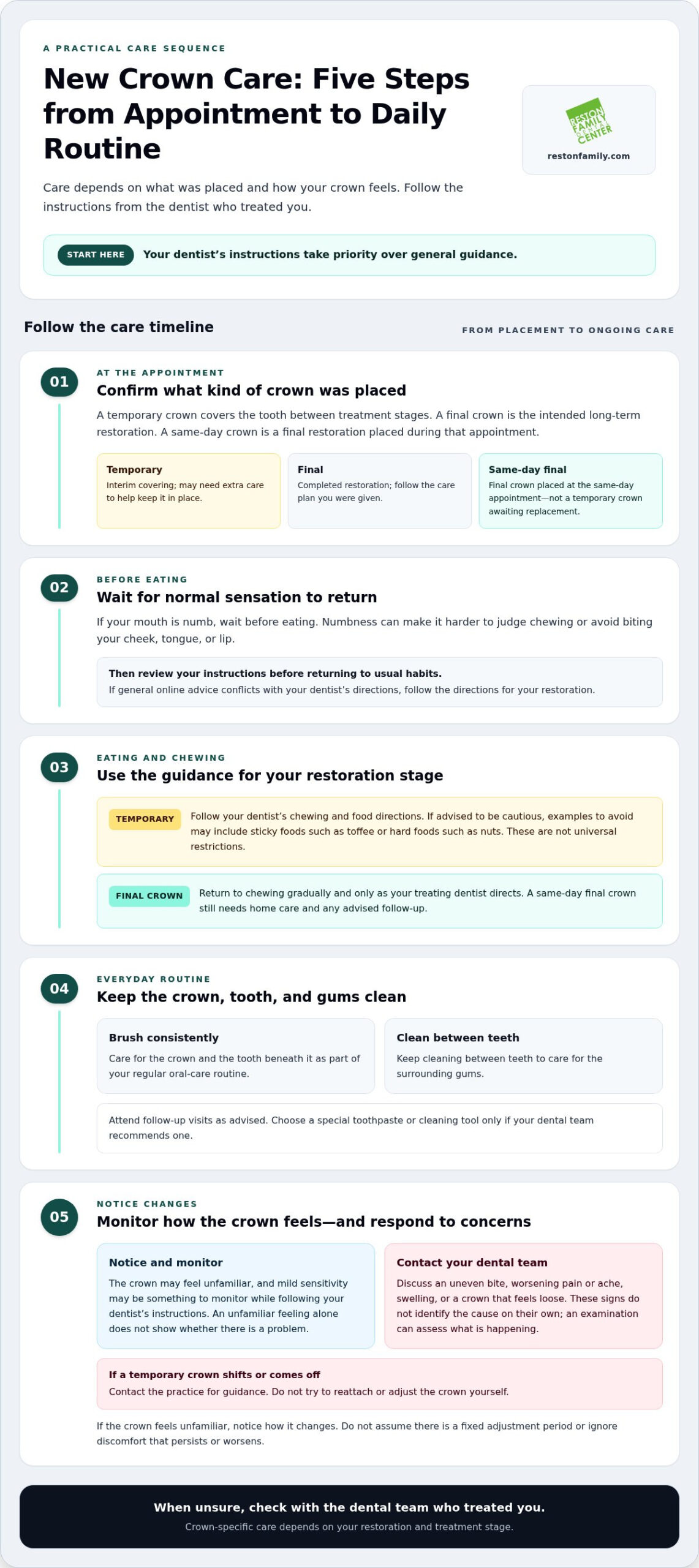
After a crown appointment, first confirm what type of restoration was placed and follow the care instructions from your dentist. A dental crown covers a prepared tooth to help protect and restore it. Care can differ between a temporary crown and a final restoration, so general online guidance may not fit your treatment stage.
A temporary crown covers the tooth between treatment visits while the final crown is being made or before it is placed. A final crown is the intended long-term restoration. With same-day crown treatment, the final restoration is placed during the same-day appointment. For background on dental crown types and uses, you can explore how crowns serve different restorative purposes. For your own care, follow the instructions from the dentist who treated you.
Follow your treating dentist’s specific instructions. They’re based on your crown and treatment stage, not a general set of rules. That’s the best starting point for caring for new dental crowns Reston patients receive.
What changes when you leave the dental appointment?
If your mouth is numb, wait until normal sensation returns before eating. Numbness can make it harder to judge how you chew or avoid biting your cheek, tongue, or lip. Before eating or returning to your usual habits, review the instructions you were given. If general online guidance conflicts with those directions, follow your dentist’s advice for your restoration.
Why a new crown may feel unfamiliar at first
You may notice the crown when your tongue moves over it or when you close your teeth together. That unfamiliar feeling alone doesn’t show whether there’s a problem. Notice how it changes and follow your dentist’s guidance. Don’t assume there’s a fixed adjustment period or ignore discomfort that persists or worsens. If your bite feels uneven, or the crowned tooth seems to meet its opposing tooth before the others, contact your dental team. An examination can assess the cause and determine whether an adjustment or other care is needed.
Temporary and final crowns may come with different precautions, so use the instructions for your specific restoration. If you’re unsure what type of crown was placed or what an instruction means, contact the treating dental team rather than guessing. Knowing the restoration stage helps you make sense of everyday care and recognize when a new concern needs attention.
Temporary vs. Permanent Dental Crowns: How Care Differs After Placement
The main difference is how much protection and stability to expect while eating and cleaning your teeth. A temporary crown covers the tooth until the next treatment stage, so your dentist may recommend extra care to help keep it in place. A final crown, including one placed during a same-day crown appointment, is the completed restoration. It still needs regular oral hygiene and any follow-up your dentist advises.
Temporary crown: Follow your dentist’s directions for chewing and food choices while it’s in place. Contact the practice if it loosens or comes off.
Final crown: Return to chewing as your dentist directs, and keep brushing and cleaning between teeth as part of your oral-care routine.
Same-day final restoration: This is a final crown placed during the same-day appointment, not a temporary crown awaiting replacement. Follow the care and follow-up instructions you receive.
Temporary restorations generally need extra care because they’re an interim covering, not the final crown planned for the tooth. That doesn’t mean every temporary crown has identical restrictions. Your procedure and dentist’s assessment inform the instructions you receive. Don’t add products or techniques based on general advice; use the care plan for your restoration.
How to protect a temporary crown between visits
Use your dentist’s directions to guide your chewing and food choices. If you’ve been told to be cautious, you may need to avoid sticky foods such as toffee or hard foods such as nuts while the temporary crown is in place. These are examples of precautions, not universal rules, so follow the advice you received rather than relying on a generic food list. Keep up with the cleaning routine your dentist recommends, and don’t try to reattach or adjust a loose crown yourself. If it shifts or comes off, contact the practice for guidance.
What to keep in mind after the final crown is placed
With a final crown, return to your usual chewing gradually and only as directed by your treating dentist. A same-day restoration skips the temporary-crown stage, but it doesn’t skip home care. Brush and clean between teeth consistently, and attend follow-up visits as advised. Your dentist’s instructions may reflect details of your procedure and the material used, so you don’t need to choose a special toothpaste or cleaning tool unless your dental team recommends one.
For caring for new dental crowns Reston patients, a practical rule is to distinguish treatment-specific precautions from habits that support oral health. The first category depends on your procedure; the second includes ongoing cleaning and recommended visits. If you have questions about a temporary crown or your final restoration, Reston crown care is part of the support available from your dental team.
What Feels Normal After a New Crown, and What Deserves Attention
A new crown can feel different from your natural tooth, and mild sensitivity may be something to monitor while following your dentist’s instructions. A changed bite, worsening pain, swelling, or a crown that feels loose deserves a conversation with your dental team. These signs don’t reveal the cause on their own. A dental examination can assess what’s happening and whether care is needed.
Persistent or worsening symptoms deserve individualized dental advice, not a guess based on a general timeline. Sensitivity and adjustment experiences vary. Notice how your symptoms change instead of assuming they should resolve by a certain day.
Changes to monitor without self-diagnosing
Mild sensitivity or simply noticing the crown with your tongue may be worth observing while you follow your care instructions. Keep track of what brings on the sensation, such as chewing or hot or cold foods, and whether it is improving, staying the same, or getting stronger. These details can help your dentist understand what you’re experiencing.
Signs to raise with the dental team
Call your dental team promptly if your bite feels uneven, pain is worsening, swelling develops, or the crown feels loose or becomes damaged. Don’t wait for a routine visit if a change is progressing. If symptoms feel severe or are rapidly worsening, seek urgent professional guidance. Your dentist can advise you on the next step.
Use this guide to distinguish what you can observe from what to report. It helps organize your next step, but it can’t diagnose a dental problem.
Monitor and describe
- Mild sensitivity or an unfamiliar feeling you can track while following your dentist’s instructions.
- What seems to trigger the sensation, how often it occurs, and whether it changes over time.
- Any difference between how the crown feels at rest and when you chew.
Discuss promptly with your dentist
- A bite that feels uneven or a crown that seems to hit first when you close your teeth.
- Pain that worsens, swelling, or a crown that feels loose or is visibly damaged.
- A concern that interferes with eating or your usual routine, especially if it is getting worse.
Don’t adjust your bite, glue a crown back in place, or repair damage yourself. These steps can complicate assessment or affect the restoration. Instead, note what happened and contact your dental team. For caring for new dental crowns Reston patients can use a simple guide: monitor mild changes, but report worsening symptoms or changes in crown fit promptly. A clinician can assess the cause and advise you based on your situation.
A Daily Dental Crown Care Routine to Protect Your Tooth and Gums
A crown covers the tooth, but the surrounding gum and the rest of your mouth still need consistent care. Plaque can collect around the edge where the restoration meets the tooth, so clean the area thoroughly without scrubbing aggressively. A steady routine supports oral health and helps your dental team assess the crown during regular visits.
Brush and clean between teeth consistently
Use a gentle, thorough approach each day. Brush the crown, nearby teeth, and gumline, reaching all sides rather than focusing only on the restoration’s visible surface. Clean between teeth daily with an interdental method you can use comfortably. If sensitivity makes brushing difficult, or you’re unsure how to clean around the crown, ask your dental team for guidance suited to your needs.
Build these steps into your everyday routine:
- Brush thoroughly. Clean all tooth surfaces, including the crowned tooth and the gumline around it. Ask your dentist about oral-care products if sensitivity or another concern affects your comfort.
- Clean between teeth. Use a method you can manage comfortably and consistently. If flossing or another interdental method causes pain or is difficult around the crown, don’t force it. Ask your dental team to demonstrate an appropriate approach.
- Keep regular dental visits. Attend examinations and cleanings as recommended. Your dentist can assess the crown and surrounding tissues. Mention any changes in comfort, bite, or your ability to clean the area.
Support crown care with ongoing dental visits
Home care is important, but it doesn’t replace professional assessment. At routine visits, your dentist can examine the restoration and the tissues around it. Share details such as whether the crown feels different when you chew or whether cleaning has become uncomfortable. These observations help your dental team understand what has changed and decide whether to assess the area more closely.
Keep the routine manageable: brush gently, clean between teeth daily, and attend visits on the schedule recommended for you. Don’t skip appointments just because the restoration feels comfortable. Regular examinations let your dentist monitor it as part of your overall oral health. If discomfort or sensitivity changes how you clean, seek individualized advice instead of switching to a special product or technique on your own.
For more guidance on maintaining your oral health, explore preventive dental care in Reston. If you have questions about cleaning around your crown or a change in comfort, contact the Reston dental team for support.
When to Contact Your Reston Dentist About a New Dental Crown
If something about your new crown concerns you, take three steps: note what has changed, avoid trying to fix it yourself, and contact your Reston dental practice. Discuss a crown that feels loose, a bite that seems uneven, swelling, or pain that is getting worse. Calling is a practical first step, but a phone conversation can’t replace an examination when one is needed.
Some symptoms call for emergency medical attention rather than a routine dental call. If you have difficulty breathing or swallowing, seek emergency care immediately. For other concerning changes, contact your dental team promptly and explain what you’re experiencing. Don’t wait for a scheduled visit if the problem is worsening.
What to tell the dental team when you call
Clear details help your dental team understand the concern and guide the conversation. Describe any pain or sensitivity, a change in your bite, swelling, or movement of the crown. Mention when the symptom began, whether it is changing, and what seems to trigger it, such as chewing or temperature. Share when the crown was placed, whether it is temporary or final if you know, and any care instructions you were given. The team may recommend an examination to assess the cause.
Before you call, you can jot down a few notes:
- What you noticed and when it started.
- Whether it happens during chewing, brushing, or at rest.
- Any recent change in comfort, bite, or crown stability.
- The treatment stage and instructions you recall.
Don’t glue, adjust, or attempt to repair a crown at home. Avoid repeatedly testing a loose restoration. A short, accurate description is more helpful than trying to diagnose the issue yourself.
Getting crown care in Reston
Reston Family Dental Center provides restorative care and emergency dental work for local patients with crown-related concerns. The practice also offers same-day dental crowns. Your dentist can assess your individual situation and determine the appropriate treatment. If your crown feels different or you’re unsure what to do next, reach out for guidance.
Good caring for new dental crowns Reston guidance includes knowing when home care is no longer enough. Your dentist can evaluate the restoration, consider your symptoms and treatment history, and recommend an appropriate next step. Reston Family Dental Center serves patients in Reston, Great Falls, Ashburn, Chantilly, Herndon, and Vienna.
Schedule an appointment with our Reston dental team.
Feel Confident About Your Next Step
A crown concern doesn’t have to leave you guessing. Keep your treating dentist’s instructions close, and reach out when a change in comfort or fit needs professional attention. A dental team can assess your situation and help you decide what care is appropriate.
For caring for new dental crowns Reston patients can turn to Reston Family Dental Center for support with crown-related concerns. The practice offers same-day dental crowns, along with restorative and emergency dental care in Reston. Whether you have a question about your restoration or need an evaluation, contacting the dental team is a practical next step.
Schedule an appointment with our Reston dental team. You deserve care that helps you move forward with confidence.
Frequently Asked Questions
Can a tooth still get a cavity under a dental crown?
Yes. A crown covers the visible part of a tooth, but natural tooth structure remains beneath it, including near the crown’s edge. Plaque collecting along that margin can contribute to decay or gum problems. Brush carefully around the edge and clean between the crowned tooth and its neighbors. At routine visits, your dentist can check the restoration and surrounding tissues for changes that may not be easy to spot at home.
Do I need special toothpaste for a new dental crown?
Usually, you can continue with your regular toothpaste unless your dentist recommends a different product. If brushing the crowned tooth feels sensitive, mention when the discomfort occurs and ask what may suit your needs. Patients in Reston, Great Falls, Ashburn, Chantilly, Herndon, and Vienna can ask their dental team for product guidance based on their oral health and restoration. Don’t switch products solely because of an advertising claim.
Can a dental crown be whitened?
No, whitening treatments generally change the shade of natural teeth, not an existing crown. If you’re considering whitening, talk with your dentist about the order of treatment, especially if the crown is visible when you smile. Whitening natural teeth may make a crown look different by comparison. Avoid abrasive products intended to alter the crown’s color, since they won’t whiten the restoration. Your dentist can discuss options for your individual smile.
Can I use an electric toothbrush with a dental crown?
Yes, an electric toothbrush can be part of your routine if you use it gently and follow the manufacturer’s directions. Guide the brush around the crown and along the gumline without pressing hard or holding it forcefully against one spot. If brushing brings on discomfort, bleeding, or sensitivity, ask your dentist to review your technique. A small adjustment in how you brush may make cleaning more comfortable.
Can a loose dental crown be glued back on at home?
No. Don’t use household glue or attempt a home repair, since a dentist needs to assess the crown and the tooth beneath it. Contact your dental team for instructions, and avoid chewing on that side until you receive professional guidance. If the crown comes off, place it somewhere clean and safe, such as a small container, and bring it with you if the practice asks.
How do I clean between teeth around a dental crown?
Clean between the crowned tooth and its neighbors daily with a method you can use comfortably. Move carefully around the gumline, and don’t force floss or another tool if it catches or causes pain. If the cleaning motion feels difficult beside the crown, ask your dentist or hygienist to demonstrate an approach suited to that area. The right technique can depend on your restoration and gum health.
Does a dental crown need to be replaced eventually?
It may need repair or replacement if it becomes damaged, loosens, or no longer protects the tooth adequately. There isn’t one replacement timeline that applies to everyone; oral hygiene, bite forces, and individual circumstances can affect how a crown holds up. Keep routine dental visits so your dentist can assess it over time. Mention small changes, such as a new rough edge or altered fit, rather than waiting for them to worsen.