Preventive Dental Care in Reston, VA: A Practical Guide to a Healthier Smile
What if the best way to avoid dental surprises isn’t a more complicated routine, but a consistent one shaped around your needs? If you’re looking into preventive dental care Reston VA, you may be wondering what happens during a routine visit, how often to schedule one, and whether a concern could be developing before you feel it.
Daily brushing and cleaning between your teeth matter, but advice about products and checkup schedules can feel contradictory. Prevention works best when home habits, professional assessment, and timely follow-up support one another, rather than relying on a one-size-fits-all checklist.
This guide covers practical home-care habits, what a dental professional may consider when assessing your needs, and why follow-up can matter even when your mouth feels fine. Reston Family Dental Center offers dental cleanings. Whether you’re in Reston or nearby Great Falls, Ashburn, Chantilly, Herndon, or Vienna, you can ask a dental professional how to shape a preventive routine around your oral health and priorities.
Key Takeaways
- Build a steady home routine with daily brushing and cleaning between your teeth. Ask a dental professional which habits suit your needs.
- No pain doesn’t necessarily mean every concern is absent. An assessment can help identify changes and discuss your individual risk.
- Prepare for a preventive visit by noting questions about sensitivity, bleeding, dry mouth, or other changes in your mouth.
- When exploring preventive dental care Reston VA, ask how dental cleanings may fit into a routine tailored to you.
What Preventive Dental Care in Reston, VA Includes
Preventive dental care combines everyday habits with professional guidance to help maintain oral health and identify concerns. Brushing and cleaning between your teeth are part of the picture. A dental professional can also assess your teeth and gums, discuss any changes, and explain what care may suit your needs. This is the foundation of preventive dental care Reston VA, but there isn’t one routine that fits everyone.
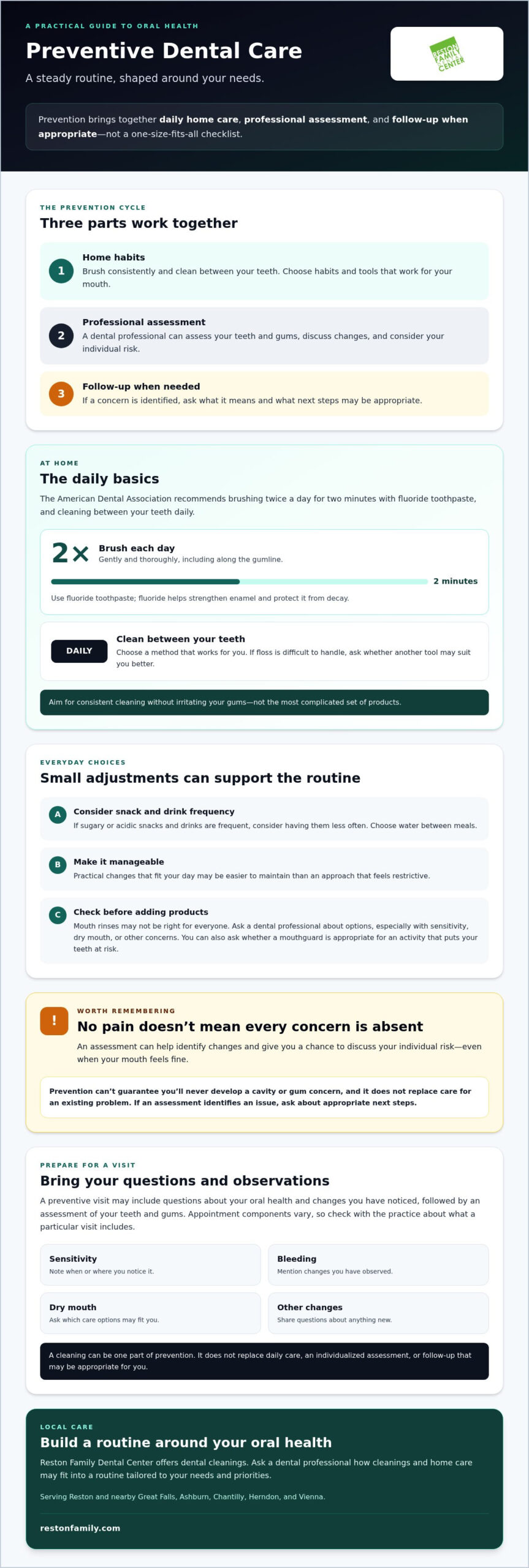
Your oral health history, current concerns, and individual risk can influence what prevention looks like for you. The aim is to support healthy teeth and gums and notice changes that may need attention. Prevention can’t guarantee that you’ll never develop a cavity or gum concern, and it isn’t a substitute for treating an existing problem. If an assessment identifies an issue, ask a dental professional about appropriate next steps.
What can be part of a preventive dental visit?
A preventive visit may start with questions about your oral health and changes you’ve noticed, such as sensitivity or bleeding. A dental professional may assess your teeth and gums and explain what they observe. Appointment components vary, so check with the practice about what a particular visit includes. Reston Family Dental Center offers dental cleanings. A cleaning can be one part of prevention, alongside guidance based on your needs.
A professional assessment gives you a chance to raise questions and understand areas that may need attention. It can also help you discuss follow-up that makes sense for you. The broader field of dentistry includes the prevention of oral diseases, as well as care for concerns that have already developed.
Why does prevention involve more than a cleaning?
A cleaning doesn’t replace daily care or an individualized assessment. Home habits continue between visits, while professional guidance can help you evaluate whether your routine works for your oral health. Together, these steps offer a more complete approach than relying on a cleaning alone.
Think of a cleaning as one opportunity to support oral health, not a guarantee against future problems. Your teeth and gums may still need attention, and your needs can change over time. If an examination identifies a concern, ask what it means and what options may be appropriate. A clear plan connects your home routine with professional guidance and any recommended follow-up.
How Daily Habits Support Preventive Dental Care
What you do between visits makes prevention an ongoing routine, not a task reserved for appointment day. Consistent brushing and cleaning between your teeth can remove food and plaque from areas that are easy to miss. The American Dental Association’s guide to daily home oral care offers practical guidance. A dental professional can help you adapt your technique and tools to your needs.
How should you brush and clean between your teeth?
Brush gently and thoroughly across the surfaces of your teeth, paying attention to the gumline. The ADA recommends brushing twice a day for two minutes with fluoride toothpaste. Fluoride helps strengthen tooth enamel and protect it from decay. Clean between your teeth daily, choosing a method that works for your mouth. If you’re unsure about pressure, angle, or technique, ask a dental professional to demonstrate.
Make the routine manageable. If floss is difficult to handle, ask whether another tool may suit you better. The goal is to clean consistently without irritating your gums, not to use the most complicated set of products.
Which everyday choices can support oral health?
Food and drink choices can complement, but not replace, brushing and cleaning between your teeth. If you often reach for sugary or acidic snacks and drinks, consider having them less frequently and choosing water between meals. Water can help rinse away food residue, while balanced food choices support overall well-being. Practical changes that fit your day are more sustainable than an approach that feels restrictive.
Fluoride toothpaste is a common part of home care, but additional products such as mouth rinses may not be right for everyone. Ask a dental professional which options fit your oral health, especially if you have sensitivity, dry mouth, or other concerns. You can also ask whether a mouthguard is appropriate if an activity puts your teeth at risk.
Notice what feels difficult, bring questions to an appointment, and revisit your approach if your needs change. For a local starting point, learn about dental cleanings in Reston from Reston Family Dental Center. A conversation with a dental professional can make your home routine clearer and easier to maintain.
Do You Need Preventive Dental Care If Nothing Hurts?
A comfortable mouth is reassuring, but it can’t confirm that every tooth and gum area is healthy. Some changes may not cause noticeable pain, and symptoms alone aren’t a reliable way to assess oral health. An assessment gives a dental professional a chance to discuss what they observe, hear about changes you’ve noticed, and consider your individual needs. It can inform next steps, but no visit can guarantee that every concern will be found or prevented.
Can dental concerns develop without obvious symptoms?
They can. A change may be present before you feel discomfort, so pain isn’t the only reason to seek guidance. A symptom also doesn’t reveal exactly what’s causing it. Mention changes such as sensitivity, bleeding, or a new rough spot to a dental professional rather than trying to diagnose the issue yourself.
Daily care remains important, too. The American Dental Association recommendations offer guidance for home care, while a dental professional can help you consider how your habits and oral health fit together. Preventive dental care in Reston, VA, is most useful when it supports an informed conversation, not when it promises a problem-free smile.
How often should you schedule preventive visits?
There isn’t one interval that suits every patient. Visit timing depends on your oral health, history, and a dental professional’s assessment. Ask how your individual needs affect follow-up and what changes might mean you should get in touch sooner. This gives your schedule a reason behind it instead of relying on a general rule.
A dentist may consider what they observe alongside concerns you report and your previous dental experiences. Your recommended timing may differ from someone else’s and may change as your needs change. Routine visits can support ongoing attention to oral health, but they don’t replace speaking up when you notice something new.
If you’re researching preventive dental care Reston VA, ask what an assessment can tell you, which follow-up timing makes sense, and what symptoms or changes merit a call. Reston Family Dental Center offers dental cleanings in Reston. Contact the practice to ask how to discuss your preventive needs with the care team.
How to Build a Preventive Dental Care Routine in Reston
A routine is easier to follow when you know what to do next and why it fits your needs. Use this sequence to connect home care with professional guidance:
- Review your habits. Note what’s working and where you’d like practical advice, such as choosing a comfortable way to clean between your teeth.
- Write down changes or concerns. Record sensitivity, bleeding, dry mouth, or anything else you’ve noticed. Include when it started or what seems to affect it.
- Arrange an assessment. Contact a Reston dental practice to ask about appointment details and what to expect.
- Follow the guidance you receive. Clarify next steps and follow-up timing, then revisit the plan if your needs or symptoms change.
Bring relevant medical history, a current list of medications, and information about recent health changes. These details can help the dental team understand your circumstances. If you’re unsure what to bring, ask when arranging your visit. Appointment components, insurance acceptance, and other policies can vary, so confirm them directly with the practice.
What should you prepare before a preventive visit?
A short note on your phone or paper is enough. Include symptoms, changes in your mouth, questions about your home routine, and anything you might forget during the appointment. Share relevant health and medication information with the care team. You can also ask about appointment details and accepted insurance before you go.
What questions can help personalize your routine?
Good questions turn general advice into practical next steps. Consider asking:
- Which brushing and between-teeth cleaning methods suit my mouth?
- When do you recommend my next assessment or cleaning, based on my oral health?
- Are any additional preventive steps appropriate for me, and why?
- What changes should I watch for, and how should I follow up if they occur?
Ask for the reasoning behind recommendations. Understanding why a particular tool, habit, or follow-up interval suits you can make it easier to maintain the plan at home. Your routine may need adjustment over time, so keep sharing new concerns and asking questions.
If you’re ready to discuss preventive dental care Reston VA, Contact the Reston dental team to ask about arranging a visit and confirming current appointment details.
What to Expect from Preventive Dental Care at Reston Family Dental Center
Planning a dental visit can feel easier when you know what you want to discuss, even if you’re not sure what the appointment will involve. Reston Family Dental Center serves Reston and offers dental cleanings. The team can discuss your preventive needs, but appointment components may vary. Contact the practice beforehand to ask what a cleaning or assessment involves and what information may be helpful to bring.
How can you discuss your preventive care needs?
Start with what matters to you. You might want advice about a home-care habit, have a question about a change in your mouth, or want to understand how to maintain your oral health. Share your concerns and goals openly. Ask what the visit will involve before it begins, and let the team know if you feel uncertain or have questions along the way. Clear communication keeps the conversation focused on your needs.
Bring a short list of questions, along with relevant health and medication information. You might ask whether your brushing or between-teeth cleaning method suits you, what the team will assess, and what follow-up they recommend. You don’t need to know the right terminology. Describe what you’ve noticed in your own words.
When should you contact a dentist sooner?
Don’t wait for a routine preventive visit if you notice a new or worsening symptom. Contact a dental professional to ask what to do next, especially if discomfort or another change is affecting your daily activities. Severe or urgent symptoms warrant timely professional assessment. A dental professional can advise you based on your situation. Avoid trying to diagnose the cause on your own.
If you’re exploring preventive dental care Reston VA, contact Reston Family Dental Center to ask about dental cleanings, appointment details, and how to discuss your preventive needs with the team. Confirm current policies, including appointment availability and insurance acceptance, directly with the practice. A conversation can help you decide what feels appropriate for your oral health.
Take the Next Step Toward a Healthier Smile
A practical preventive routine is built over time. Consistent home care supports your teeth and gums, while a dental professional can assess your needs and recommend appropriate follow-up. You don’t need to wait for discomfort to ask questions, and your visit schedule should reflect your individual oral health rather than a one-size-fits-all rule.
If you’re exploring preventive dental care Reston VA, focus on practical steps: share changes you’ve noticed, ask which home-care habits suit you, and clarify what comes next. Reston Family Dental Center serves the Reston community and offers dental cleanings, along with general and restorative dental care. If an assessment identifies a concern, you can discuss it with the care team.
For people in Reston and nearby Great Falls, Ashburn, Chantilly, Herndon, and Vienna, contact Reston Family Dental Center to discuss preventive care and ask about arranging a dental cleaning.
Frequently Asked Questions
Is preventive dental care necessary if my teeth do not hurt?
It can be helpful to discuss preventive care even when your teeth feel fine. Symptoms alone can’t confirm your overall oral health, and some changes may not cause discomfort at first. A dental professional can assess your needs and explain whether follow-up makes sense for you. There’s no need to assume something is wrong. Use the visit to ask questions and get guidance suited to your situation.
How often should I get a dental cleaning in Reston, VA?
The right timing depends on your oral health and a dental professional’s guidance, so there isn’t one schedule for everyone. Ask what interval they recommend for you and what factors inform that advice. Your needs may change over time, so bring up new symptoms or changes rather than relying only on a general checkup rule. Confirm current appointment details with the practice.
What happens during a preventive dental visit?
A preventive visit may include a conversation about your oral health and any changes you’ve noticed, an assessment by a dental professional, and a cleaning if appropriate. The exact components can vary by practice and individual needs. Reston Family Dental Center offers dental cleanings, but contact the team to confirm what a particular visit includes. You can ask about each step beforehand and share questions or concerns during your appointment.
Can brushing and flossing replace professional preventive dental care?
No. Daily brushing and cleaning between your teeth support oral health at home, while professional guidance provides an assessment of your individual needs. Each plays a complementary role, and neither guarantees that cavities or gum concerns won’t develop. If you’re unsure about your technique or which tools to use, ask a dental professional for advice tailored to you. Keep up your home routine and follow the guidance you receive.
Can a dental cleaning prevent cavities and gum disease?
A dental cleaning can support oral health, but it can’t eliminate every risk of cavities or gum disease. Consistent home habits, including brushing and cleaning between your teeth, matter between visits. Your dental professional can discuss factors specific to your oral health and suggest appropriate next steps. Think of a cleaning as one part of an ongoing routine, not a guarantee against future concerns.
What should I do if my gums bleed when I brush?
Make a note of when you notice bleeding and contact a dental professional for personalized guidance, especially if it continues or you notice other changes. Bleeding can have different causes, so it’s best not to diagnose it yourself or assume a particular explanation. Share how often it happens, when you first noticed it, and any relevant changes in your home-care routine. A professional can advise you on an appropriate next step.
How do I find preventive dental care in Reston, VA?
Start by checking whether a local practice offers the services you’re seeking. Ask what an appointment includes and how the team can discuss your needs. Confirm current availability and insurance details directly with the practice, since policies can vary. If you’re in Reston or nearby Great Falls, Ashburn, Chantilly, Herndon, or Vienna, contact the practice to ask about a suitable next step and preventive dental care Reston VA.