
Professional Teeth Whitening in Reston, VA: Achieve a Brighter, Healthier Smile
What if the whitening strips you bought to save money leave you with sharp “zingers” and a smile that still looks yellow? If brushing hasn’t lifted stubborn stains, consider professional teeth whitening Reston VA patients can receive with dental guidance. It’s understandable to want a brighter smile without more discomfort or another disappointing over-the-counter purchase.
At Reston Family Dental Center, teeth whitening is part of cosmetic dental care, with your comfort and oral health considered in the treatment plan. A dentist can assess your teeth, discuss sensitivity, and explain what results may be realistic. In-office whitening may create a noticeable change in one visit, while dentist-guided take-home options brighten your smile more gradually. This guide compares those approaches with drugstore products, explains what to expect, and covers how whitening may fit after Invisalign or restorative care.
Key Takeaways
- Learn why professional teeth whitening Reston VA can offer a more personalized approach than one-size-fits-all store-bought kits.
- Understand how the type of stain affects whitening results and why some discoloration responds differently than surface stains.
- Compare in-office whitening with professional take-home trays to weigh treatment pace and convenience.
- Find out why an oral health evaluation matters and how crowns, fillings, or veneers can affect your whitening plan.
- Explore how whitening may complement Invisalign or restorative care as part of a naturally brighter smile.
Why Professional Teeth Whitening Outperforms Over-the-Counter Kits
Drugstore strips are convenient, but they are designed for a wide range of smiles. Professional whitening starts with an assessment of your teeth, sensitivity, and oral health. For patients considering teeth whitening Reston VA, a dentist’s guidance can help match the approach to the type of staining and reduce avoidable discomfort.
Whitening products use peroxide-based ingredients to lighten discoloration. Professional treatment uses an application method suited to supervised care, while store-bought strips are made for general use. The Tooth whitening overview explains how whitening ingredients work and how methods differ. Strength is only one consideration. Careful application also helps target teeth while limiting contact with gums.
The Limits of Drugstore Whitening Strips
Strips may miss narrow spaces between teeth or fit unevenly over teeth with different shapes, which can lead to patchy results. Whitening toothpaste serves a different purpose. Abrasive formulas may remove some surface stains, but frequent or aggressive use may wear enamel over time. Charcoal products can also be abrasive. A “natural” label doesn’t make them a proven or risk-free way to whiten teeth.
Safety and Comfort in a Clinical Setting
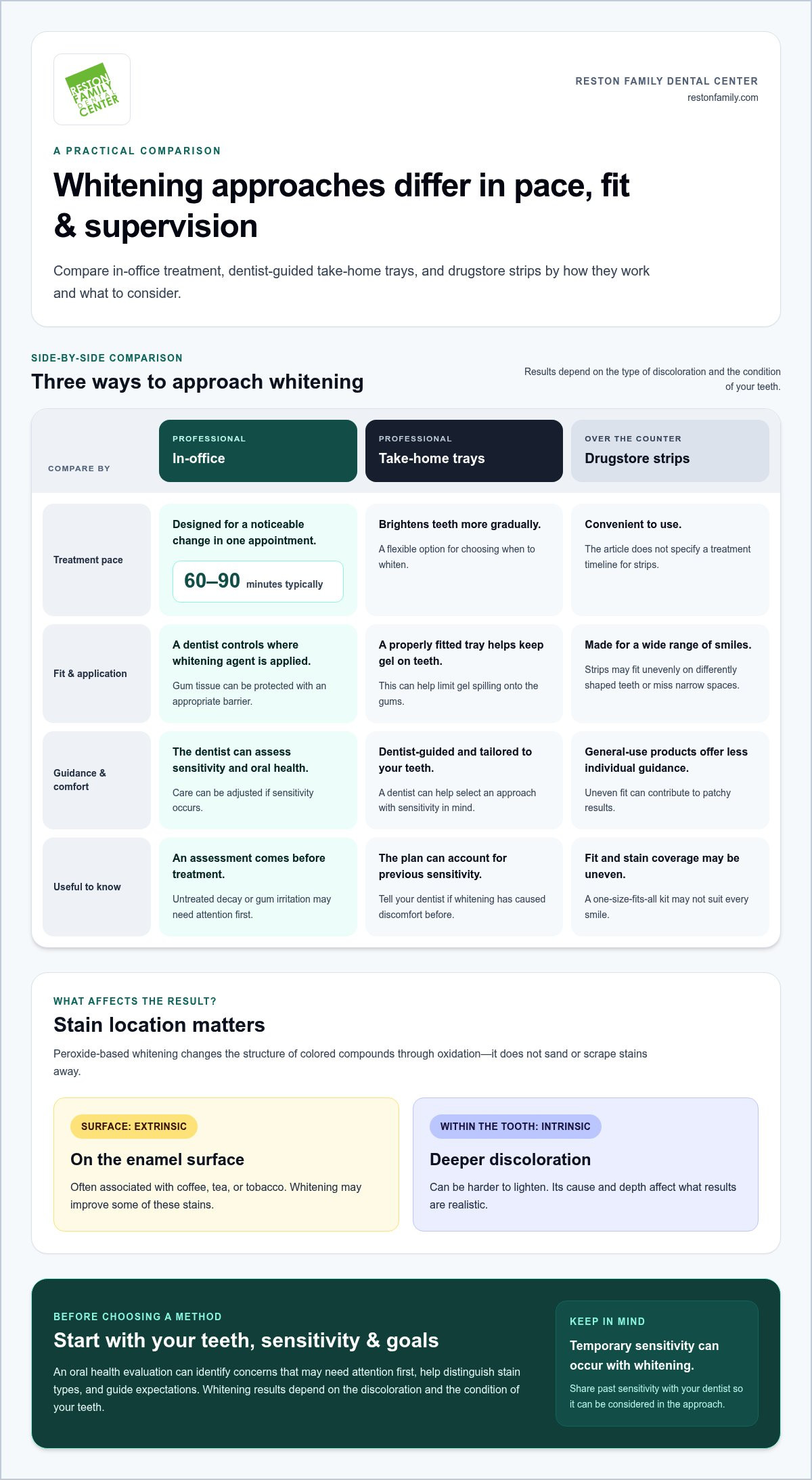
During professional whitening, a dentist can protect gum tissue with an appropriate barrier and control where the whitening agent is applied. A properly fitted take-home tray can help keep gel on the teeth rather than spilling onto the gums. These steps are especially relevant if past whitening caused gum irritation or sudden “zingers.”
Professional supervision can help address sensitivity by identifying factors that may increase discomfort, selecting an appropriate approach, and adjusting care if sensitivity occurs.
An evaluation before whitening can identify concerns such as untreated decay or gum irritation that may need attention first. It’s also a chance to discuss previous sensitivity and your desired shade. Results depend on the cause of discoloration and the condition of your teeth, so an individualized plan is more useful than repeating a kit that hasn’t worked.
Comfort and enamel health belong in the plan from the start. At Reston Family Dental Center, professional cosmetic care includes whitening guidance tailored to your teeth and goals.
The Science of a Brighter Smile: How Modern Whitening Works
Discoloration can start in different places. Extrinsic stains build up on the enamel’s surface, often from coffee, tea, or tobacco. Intrinsic discoloration lies within the tooth and can be harder to lighten. Its cause and depth affect what results are realistic. A dental assessment helps distinguish between these types and plan teeth whitening Reston VA patients can pursue with their sensitivity and oral health in mind.
Whitening doesn’t sand stains away. Peroxide-based ingredients release oxygen-containing molecules that react with colored compounds, changing their structure so they appear lighter. This oxidation can reach discoloration within enamel rather than relying on abrasion. Whitening may improve some coffee or tobacco stains, but results depend on the stain and the tooth. The American Dental Association’s overview of whitening explains common methods, whitening agents, and sensitivity considerations.
Oxygenation and Stain Removal
As peroxide breaks down, it releases oxygen and water. Reactive oxygen helps alter stain molecules through a chemical process, not scraping. A dental professional can assess whether discoloration is likely to respond and help set expectations, particularly when deeper intrinsic staining is involved.
Protecting Your Enamel Integrity
Whitening doesn’t “melt” healthy enamel when used appropriately, though temporary sensitivity can occur. Product formulation matters: pH-balanced gels are designed to support a suitable chemical environment during treatment, and careful use helps limit irritation. Some formulas also include desensitizing ingredients such as potassium nitrate, but formulations vary. If sensitivity is a concern, tell your dentist before treatment so it can be considered in the approach.
A professional cleaning can remove plaque and surface buildup that may interfere with an even assessment of tooth shade. It also gives the dental team an opportunity to look for oral health concerns that should be addressed before cosmetic treatment. For more on keeping teeth and gums healthy, explore comprehensive preventative dental care in Reston.
At Reston Family Dental Center, cosmetic care takes a gentle, patient-focused approach. Learn more about cosmetic dental care in Reston and how whitening can fit into your smile plan.
Choosing Your Treatment: In-Office Instant Results vs. Professional Take-Home Trays
The right whitening approach depends on how quickly you want to see a change, how much flexibility you need, and how your teeth respond. For teeth whitening Reston VA, a dental professional can help you compare those factors with your sensitivity and oral health before you choose.
In-office treatment is designed to create a more noticeable change in one appointment. Professional take-home trays brighten teeth gradually and offer flexibility in when you whiten. A literature review on tooth whitening safety and efficacy discusses peroxide-based approaches and considerations such as sensitivity, reinforcing the value of a plan tailored to your comfort.
In-Office Whitening for Busy Reston Professionals
An in-office visit may suit you if you have a wedding, interview, or other event coming up and prefer not to follow a multiweek routine. Professional treatment typically takes about 60 to 90 minutes, and results can be visible in one visit. The degree of change varies with your starting shade and the type of staining, so a specific result can’t be promised in advance. Your dental team can discuss sensitivity and include comfort in the treatment plan.
Custom Take-Home Trays for Long-Term Maintenance
Professional take-home whitening is a gradual option if you prefer to fit treatment into your routine. Custom-molded trays fit more closely than generic boil-and-bite styles, helping the whitening gel stay where it’s intended and limiting excess contact with your gums. Follow your dentist’s instructions for wear time and gel use. More product or longer wear doesn’t necessarily mean better results.
With guidance from your dental team, trays may also be used for occasional touch-ups as new stains develop. An in-office treatment followed by dentist-guided home maintenance is another possible approach, but it isn’t necessary or suitable for everyone.
Use these practical questions to compare options:
- Schedule: Would a single appointment suit you, or is a gradual routine easier to fit in?
- Sensitivity: Have past whitening attempts caused discomfort? Share that history before treatment.
- Budget: Consider the overall approach and any maintenance you may want, then discuss your options during your visit.
Reston Family Dental Center provides cosmetic care with your goals and comfort in mind. Explore cosmetic dental care in Reston to learn more.
Your Whitening Journey: What to Expect and How to Maintain Your Results
A good whitening plan starts before the gel is applied. At Reston Family Dental Center, your dentist considers your oral health, existing dental work, and desired shade so treatment supports a healthy, natural-looking smile. For teeth whitening Reston VA, an individualized assessment also helps set expectations and plan for comfort.
The Consultation and Prep
Your dentist checks for concerns such as cavities or gum disease because whitening may irritate sensitive areas, and underlying problems may need attention first. The team also reviews crowns, veneers, fillings, or other restorations in visible areas. Whitening changes natural tooth enamel, not restoration materials, so existing dental work may remain a different shade. If you’re planning restorative treatment, discussing shade goals in advance can help guide color matching.
A whitening visit may begin with recording your current shade and preparing your teeth for treatment. After whitening, your dentist can assess the result and recommend next steps for comfort and care. Depending on your needs, fluoride may be part of post-treatment care. If you’re also considering alignment, read about Invisalign vs. traditional braces in Reston as you plan a broader smile transformation.
Post-Whitening Care and Longevity
For the first 48 hours after treatment, follow your dentist’s instructions and limit foods and drinks that can stain, such as coffee, red wine, dark sauces, and berries. Choose lighter-colored options when practical, and rinse with water after having something deeply colored. You don’t have to give up your favorites permanently. Mindful habits can help reduce new surface staining.
If you use a straw for a dark drink, position it toward the back of your mouth and avoid letting the liquid wash over your front teeth. A straw can help limit contact, but it won’t eliminate staining risk.
Regular professional cleanings help remove plaque and surface buildup that can dull your smile, while daily brushing and flossing support oral health. There isn’t one touch-up schedule for everyone. Your habits, starting shade, and whitening method all affect how long results last, so follow your dentist’s guidance rather than repeating treatment on a fixed schedule. Whitening can also be a finishing touch after Invisalign or restorative care, once your dentist has considered the shade of any restorations.
Ready to plan a brighter smile with individualized care? Explore teeth whitening care in Reston.
Experience a Gentler Approach to Cosmetic Dentistry in Reston
A brighter smile should feel like a personal choice, not a one-size-fits-all makeover. At Reston Family Dental Center, professional guidance and attentive care help keep your goals, dental history, and comfort in view as you consider cosmetic treatment, including teeth whitening Reston VA.
Whitening can complement other treatments, but timing and shade planning matter. Natural teeth can become lighter with whitening, while crowns and other restorations won’t change color. If you’re planning restorative work, discussing your desired shade beforehand can help guide color selection for a new crown. After Invisalign, whitening may be considered as a finishing touch to brighten natural teeth once alignment treatment is complete.
A Comprehensive Smile Makeover
A smile plan may involve more than one step. If you’re weighing alignment options, learn about Invisalign and traditional braces in Reston. For restorative care, including dental implants, explore dental implant treatment in Reston. The sequence of whitening and restorative treatment depends on your needs, particularly because restorations retain their existing shade.
Natural-looking results start with a plan suited to your features and expectations. A dental professional can discuss your current shade, the type of staining, and what whitening may realistically achieve, rather than aiming for an artificial or uniform appearance. Raise sensitivity concerns before treatment so they can be considered in your care.
Ready for a Brighter Smile?
Reston Family Dental Center serves patients from Reston, Great Falls, Ashburn, Chantilly, Herndon, and Vienna with cosmetic and restorative care. The practice offers advanced restorative and surgical technology alongside thoughtful planning and communication. The right approach respects both your smile goals and your oral health.
If you’re ready to discuss whitening as part of your smile plan, schedule your teeth whitening consultation in Reston today.
Take the Next Step Toward a Brighter Smile
A brighter smile starts with an approach tailored to your teeth, goals, and comfort. Professional whitening provides dentist-guided care, while the choice between in-office treatment and custom take-home trays depends on your schedule and preferences. An evaluation also helps account for staining, sensitivity, and restorations that won’t change color.
At Reston Family Dental Center, cosmetic care is patient-centered, with restorative and surgical technology supporting the practice’s broader dental services. Whitening may be a finishing touch after Invisalign or part of a wider smile plan, with timing guided by your needs.
If you’re considering teeth whitening Reston VA, take the next step with a team that puts your comfort and oral health first. Book your Reston teeth whitening consultation now and start planning a smile that feels naturally bright and confidently yours.
Frequently Asked Questions
Is professional teeth whitening in Reston covered by insurance?
Professional teeth whitening is generally considered a cosmetic treatment, so dental insurance often doesn’t cover it. Coverage depends on the terms of your plan, and any exceptions are determined by your insurer. For teeth whitening Reston VA, Reston Family Dental Center serves patients from Reston, Great Falls, Ashburn, Chantilly, Herndon, and Vienna. Review your policy’s cosmetic treatment details to understand your benefits before planning care.
How long does professional teeth whitening last?
Results can last for varying lengths of time, depending on your starting shade, whitening method, and habits. Frequent coffee, tea, red wine, or tobacco use can contribute to new staining, while consistent brushing, flossing, and professional cleanings help maintain your smile. Touch-ups may be appropriate for some patients, but there’s no single schedule for everyone. Follow your dentist’s guidance rather than repeating whitening more often than recommended.
Will whitening my teeth cause permanent sensitivity?
Whitening may cause temporary tooth sensitivity or gum irritation, but this doesn’t necessarily mean the sensitivity will be permanent. Your comfort and oral health can affect how you respond, so tell your dentist about past sensitivity before treatment. A dental evaluation can identify issues that may need attention first, and your dentist can guide you on managing discomfort. If sensitivity persists or feels severe after whitening, seek dental advice.
Can I whiten my teeth if I have crowns, veneers, or fillings?
You may be able to whiten natural teeth if you have crowns, veneers, or fillings, but whitening won’t change the shade of those restorations. This can make them look different from nearby teeth if your natural enamel becomes lighter. Before treatment, discuss which restorations show when you smile and whether replacement or shade planning may be relevant. Your dentist can help set realistic expectations and consider timing if you’re planning new restorative work.
How many shades whiter can I expect my teeth to get?
There isn’t a reliable shade-change number that applies to every smile. Your result depends on your starting tooth color, the cause and depth of discoloration, and the whitening approach. Some stains respond more readily than others, and restorations won’t lighten with natural enamel. A dentist can record your starting shade, discuss your goals, and explain what may be achievable after assessing your teeth. The aim is a brighter result that still looks natural.
What is the difference between professional whitening and laser whitening?
Professional whitening describes treatment guided by a dental professional, using a whitening agent in an office or with dentist-directed take-home trays. “Laser whitening” usually refers to whitening treatment where a light or laser is used alongside a whitening agent. The light isn’t the same as the whitening ingredient itself, and methods vary. Ask your dentist to explain the approach being used, expected results, and sensitivity considerations for your teeth.
Is whitening safe for pregnant or breastfeeding women?
Because whitening is elective and information about its use during pregnancy or breastfeeding may be limited, a cautious approach is to postpone treatment until after pregnancy or nursing. If you’re considering whitening during this time, discuss it with your dentist and healthcare professional, who can advise based on your circumstances. Don’t assume that over-the-counter products are automatically a safer alternative. Regular brushing and professional dental care can continue as advised by your care team.
What should I do if I experience “zingers” after whitening?
If you feel sharp, brief “zingers” after whitening, pause any at-home whitening and avoid very hot or cold foods and drinks if they trigger discomfort. Sensitivity can happen, but severe, worsening, or persistent pain deserves a dentist’s attention, since another dental issue may be involved. Share when the pain started, what triggers it, and which whitening product or treatment you used. Your dentist can assess the cause and recommend appropriate next steps.