
Signs of a Failed Root Canal: Pain and Tooth Discoloration
A root canal can fail even after the tooth initially feels better. Signs of a failed root canal include persistent or worsening pain, sensitivity to hot or cold, swelling, and a tooth that darkens or turns gray. These changes may point to ongoing or renewed infection, but only a dental examination can identify the cause.
If you’re concerned about a treated tooth, it’s understandable to wonder whether discomfort is part of healing or a reason to seek care. Mild soreness should ease, while pain or sensitivity that persists or gets worse deserves prompt attention. The good news is that a failing root canal can often be assessed and treated, especially when the problem is addressed early.
Learn why root canals can fail, how to recognize changes in pain and tooth color, and what may happen next. Reinfection, a crack, or a problem with a filling or crown can all affect a treated tooth. Knowing the signs can help you decide when to arrange a dental evaluation.
Key Takeaways
- Ongoing or worsening pain, sensitivity, swelling, or a darkening tooth can signal a problem that needs dental evaluation.
- Root canals may fail when infection remains or returns, or when a crack, decay, or a damaged restoration lets bacteria back in.
- Retreatment may involve removing the old filling material, disinfecting the canals, and sealing them again.
- Tooth discoloration has several possible causes; an examination and X-ray can help assess whether it’s related to root canal failure.
Why Do Root Canals Fail?
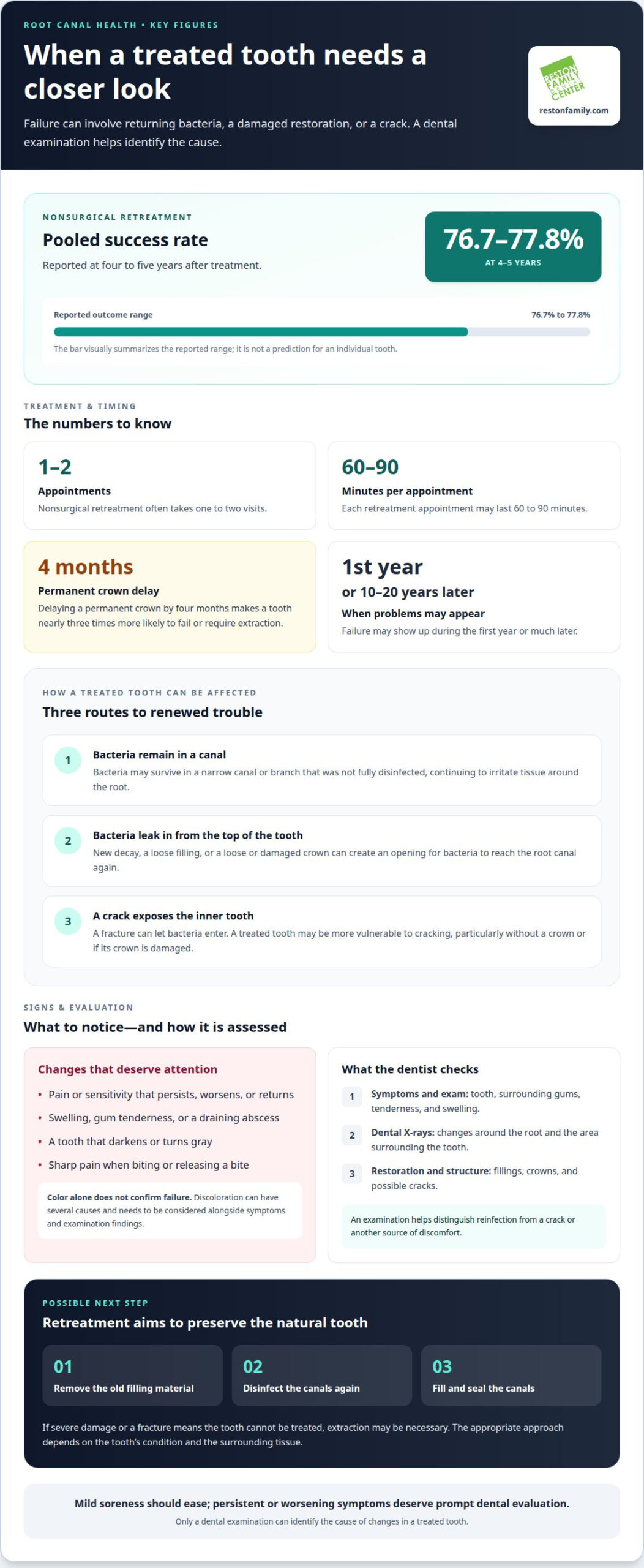
A root canal is considered failed when the treated tooth doesn’t heal properly or becomes reinfected. Bacteria may remain in a narrow canal, or enter later through new decay, a leaking filling, or a loose or damaged crown. A crack can also expose the tooth’s inner spaces, allowing infection to return. Problems may appear in the first year or after 10 to 20 years.
Dentists assess possible failure by examining the tooth and surrounding gums, reviewing symptoms, and using dental X-rays to look for changes around the root. They also check restorations for damage and look for cracks, tenderness, swelling, or an abscess. These findings help distinguish reinfection from other causes of discomfort and guide the next step.
Endodontic retreatment aims to preserve the natural tooth. The dentist removes the old filling material, disinfects the canals again, then fills and seals them. Retreatment may address bacteria that remained in a canal or entered through a compromised restoration. Nonsurgical retreatment has a pooled success rate of approximately 76.7 percent to 77.8 percent at four to five years. It often takes one to two appointments, with each lasting 60 to 90 minutes.
When the tooth’s structure remains treatable, retreatment may offer a way to preserve it. Severe damage or a fracture may make extraction necessary instead. A dental implant can replace a missing tooth after extraction; the appropriate choice depends on the tooth’s condition and surrounding tissue. An untreated infection can also contribute to jawbone loss or eventual extraction, so persistent pain, swelling, or a draining abscess warrants prompt evaluation. Early assessment helps determine whether retreatment or another approach is appropriate.
Tooth discoloration
A treated tooth that darkens or turns gray may signal internal damage or a problem following root canal treatment. Color change alone doesn’t confirm failure, so consider it alongside symptoms such as sensitivity or gum tenderness.
Changes in Tooth Color
Discoloration is a visible change in the shade of a treated tooth, often appearing as darkening or graying. It can indicate internal damage, but doesn’t reveal the cause by itself. A dental X-ray can help assess whether changes around the root are associated with the color change.
Gum tenderness or swelling near a discolored tooth adds useful context. For example, a gray tooth with recurring soreness deserves attention, even if the discomfort is mild. Tell your dentist when the color changed and whether sensitivity, swelling, or tenderness appeared too. These details can help guide the evaluation.
Failed Treatment or Cracked Tooth
A failed root canal means the tooth hasn’t healed properly or has become reinfected; a cracked tooth has a fracture in its structure. The conditions can overlap, since a crack may allow bacteria to enter and cause infection. Distinguishing them matters because an assessment needs to consider both the root and the tooth itself.
Sharp pain when releasing a bite can point to a crack or pressure from infection near the root. Discoloration may accompany internal damage, but it can’t identify a fracture. An examination and X-ray help evaluate the treated tooth and surrounding area instead of relying on color alone.
Root canal treatment can leave a natural tooth more vulnerable to cracking or breaking, particularly if it lacks a crown or the crown is damaged. Avoid hard foods, and don’t use your teeth to open packages or bite objects. These habits help reduce avoidable stress on a treated tooth.
New swelling or tenderness around the tooth can signal a problem, especially alongside worsening sensitivity or a visible crack. Contact a dentist promptly if these changes appear; an evaluation can help identify whether the concern involves discoloration, structural damage, or both. A dental evaluation can assess the tooth and surrounding gums.
Causes of root canal failure
An initial root canal can appear successful, yet bacteria may survive in a narrow canal or branch that the procedure did not fully disinfect. After the tooth is sealed, remaining bacteria can continue irritating tissue around the root, potentially causing tenderness, swelling, or an abscess. Discomfort alone doesn’t identify the cause, since a crack or damaged restoration can also affect a treated tooth.
A second route is bacterial leakage from the top of the tooth. New decay, a loose filling, or a damaged crown can create an opening, letting bacteria reach the root canal again. Delaying a permanent crown by four months makes a tooth nearly three times more likely to fail or require extraction. A loose crown can also let bacteria enter and trigger a new infection.
Cracks and fractures create another pathway. A root-canaled tooth may crack under biting pressure, especially if it has no crown or its crown is damaged. A fracture can expose inner tooth structures and allow infection to develop. Pain when biting or releasing a bite may indicate a crack, but that symptom alone doesn’t establish the cause. Both the tooth’s structure and its restoration matter.
Problems can emerge after an initially successful procedure, too. The American Association of Endodontists notes that a healed tooth may become diseased months or years later because of new decay or a loose filling. Without ongoing care, these changes may progress unnoticed. For example, a loose filling can create a route for bacteria before pronounced symptoms appear. Changes in comfort, biting, or the fit of a restoration can signal that the tooth needs assessment.
Persistent or worsening pain after root canal treatment
Mild soreness after root canal treatment should subside within about a week. Pain that persists, increases, or returns later deserves attention, especially with swelling or sensitivity.
Persistent or Returning Discomfort
Persistent or returning discomfort means pain or sensitivity that continues, worsens, or reappears after treatment. Infection can develop months or even years after the original procedure. Sensitivity to hot or cold that persists or increases weeks or months later may indicate reinfection. Note when symptoms started and what triggers them, then share those details with your dentist.
Pain Around Biting
Pain while biting or as you release your bite can point to a crack or pressure building near the root. A fracture and infection can both affect a treated tooth, but require different assessments. A sharp twinge on releasing a bite is especially useful to describe. Avoid chewing on the painful tooth and arrange prompt dental evaluation.
Severe Pain and Spreading Infection
Severe pain with swelling, redness, or tenderness can signal infection around the tooth. Swelling may extend from the gums to the cheek or face, while an abscess can cause pain and redness. Fever and chills after treatment may point to spreading infection. Contact a dentist immediately if your temperature exceeds 100.4 degrees Fahrenheit.
Mild swelling during the first few days after treatment can also need prompt attention if it signals infection. Pain radiating toward the jaw, ear, or face adds another reason to seek assessment. Early evaluation can identify complications and help determine whether saving the tooth remains possible. If pain is persistent or worsening, schedule a dental evaluation promptly.
Reston Family Dental Center: Root Canals
Reston Family Dental Center provides root canal care when pain, swelling, sensitivity, or tooth discoloration raises concern about a treated tooth. A dental evaluation can help identify whether the tooth has reinfection, a crack, or another problem, and determine whether further treatment may help preserve it.
If the tooth can’t be saved, a dental implant may be one option for replacing it. The appropriate next step depends on the tooth’s condition and the surrounding bone and tissue. Persistent or worsening symptoms are a reason to arrange an evaluation rather than waiting for them to settle.
Contact Reston Family Dental Center to discuss your symptoms and arrange dental care.
Choose a clear next step for your tooth
Uncertainty about a treated tooth can make it difficult to know what to do next, and navigating persistent discomfort or health-related worry can be emotionally stressful. While professional therapy practices like Tracy Kimberg help individuals and families develop strategies to manage ongoing stress and anxiety, addressing the dental complication itself requires clinical attention. Rather than trying to diagnose the cause yourself, use your concerns to start a conversation with a dental professional. Signs of a failed root canal can overlap with other tooth problems, so an evaluation helps clarify which options suit your situation.
Reston Family Dental Center provides root canal therapy, dental implants, and implant-supported dentures. These services address different needs, from treating a tooth to replacing one that can’t be preserved. The appropriate option depends on the tooth and your oral health needs.
You don’t have to make that decision alone. Contact Reston Family Dental Center to discuss your concerns and possible next steps. Contact Reston Family Dental Center to begin a conversation about your dental care.
Frequently Asked Questions
How do I know if I need retreatment or an extraction?
Retreatment may be an option when enough healthy tooth structure remains to restore the tooth and the infection can be addressed. Extraction is more likely when a deep fracture or extensive damage makes the tooth unsalvageable. A dental evaluation considers the crack’s location, the remaining tooth structure, and the condition of the surrounding bone. If removal is necessary, replacement options include a dental implant, bridge, or denture.
What Are The Signs that the procedure failed?
Ongoing or returning discomfort, sensitivity, gum swelling, or a newly darkened tooth can indicate a problem after treatment. Pay attention to changes in the pattern: pain that returns after settling, or sensitivity that persists well beyond recovery, deserves assessment. A loose tooth or unpleasant taste can also provide useful clues. Note when each change began and whether biting makes it worse.
What Might Be Causing the Pain?
Pain can come from reinfection, a crack, pressure around the root, or a problem with the tooth’s filling or crown. A sharp jab while releasing a bite differs from steady soreness or gum tenderness. Describe the location, trigger, and timing to your dentist. Those details can help distinguish tooth-related pain from irritation in nearby tissue.
Why Does This Happen?
Root canal problems can develop if bacteria remain in a canal or enter later through decay, a loose filling, or a damaged crown. A crack can also create a pathway for bacteria. Even a tooth that healed after its initial treatment can become diseased later. For example, new decay around an old restoration may allow infection to return without an obvious injury.
What are the common signs of a failed root canal?
Common signs of a failed root canal include pain that persists or returns, sensitivity to temperature, gum tenderness, swelling, and tooth discoloration. An unpleasant taste or persistent bad breath can occur when infection drains. These clues don’t establish the cause individually, so consider them together. A change from your usual comfort, especially with swelling or bite pain, is a reason to arrange a dental assessment.
What symptoms of a failed root canal require urgent dental care?
Seek urgent dental care for facial swelling, fever, chills, or severe pain that is worsening. A temperature exceeding 100.4 degrees Fahrenheit with possible infection calls for immediate contact with a dentist. Swelling that extends from the gum toward the cheek or face can indicate spread. Patients in Reston, Great Falls, Ashburn, Chantilly, Herndon, and Vienna should promptly arrange professional assessment for these symptoms.